WordPress is in the doghouse, it seems, and rightly so. Thank you, Fish of Gold, for saying so well and with such great humor what many of us are fuming about. Let’s hope WP listens. (We can always hope, can’t we?)
I am loath to write yet another letter to you, since I typically prefer to spend my time writing actual blog posts, but I’ve been bitching on Twitter and in your forums to no avail, so maybe you’ll pay attention to a blog post. It’s not likely, but hey, you never know.
Please, stop. Just put down whatever you’re working on and stop with the futzing. You have been tinkering under my hood long enough and you know what? None of the “improvements” you’ve made are actually improvements.
Below, you will find explanations as to why your improvements aren’t improvements sorted conveniently by feature.
Post Editor
Let’s talk about this “Beep beep boop” post editor nightmare with less than half the functionality of the old editor. Thankfully, you haven’t taken away the old editor yet. However, I fully expect that one day, I will go to write a…
It will be the Super Bowl this weekend and this list is inspired by watching the last Forty Eight Super Bowl celebrations both on-screen and in various rooms around the planet. Hope you enjoy.
Top Ten Things Not to Do at a Super Bowl Celebration
10 If you are attending a Super Bowl celebration, do not arrive wearing team clothing for a team not playing. If you do, at best everyone will think you are a sore loser or are drunk. At worst, the crowd may come to the conclusion you’ve had a stroke or burst aneurysm and call for EMT support and you will end up watching the game on a fifteen inch screen beside your gurney next to the nurses station while waiting for an attending physician.
9 If you are attending a Super Bowl celebration, remember a lot of people like to watch the ads. If you…
I have to reblog this. Jaq shares a perspective on indie book promotion that, frankly, I think needs to be shares more often. So go over to Chris’s blog, read the post, and then share the bejesus out of it!
Ever since the indie publishing explosion, I’ve been watching the adjustments in marketing that have tried to keep up with a rapidly changing industry.
To put things in perspective, I started out as a traditionally published author in the late 1980s and decided to cross the line into indie publishing in 2012. I was a little late to the party, which really started in 2009 and was going strong through 2010-11, but I came from a tradition where self-publishing was considered the realm of the unpublishable and old attitudes die hard.
I started studying the business of writing when I was very young and even in high school, I knew how to format a proper manuscript, what was expected when approaching a publisher and how to put together a press pack. However, the rules all changed with indie publishing. Even the definition of ‘publisher’ has changed. Once a small publisher…
Although I’m far from ready to have a beta reader (much less than editor) read my WIP, I am very glad I came upon this post on editing and pricing from The Sarcastic Muse. [Note to self: Add to Evernote for future reference.]
I was chatting with my cousin a few weeks ago about freelance work. He used to work as a graphic designer—doing logos and such—and so he knows how difficult it can be to find work or, at the very least, to find people willing to pay for good work. Business owners would ask to have a professional logo made for next to nothing. And I thought: If that’s all the money they were willing to put into their business, then what does that tell me they think their company is worth?
The same issue occurs in the editing world, too. While many writers do understand that quality editing takes time and doesn’t come cheap, others seem to underestimate just what exactly editing entails—and what exactly they’re paying for.
I understand why writers may wish to find cheaper editing options—monetary issues or otherwise—but as with any business (and publishing novels is…
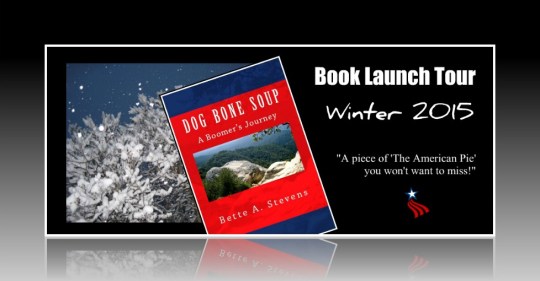
DOG BONE SOUP is not only the title of Bette A. Stevens’s debut novel; it ranks high among the paltry meals that the book’s protagonist, Shawn Daniels, wants to forget. Plodding through mounting snow and battling howling winds, Shawn is ready to leave it all behind—living in poverty, Dad’s drinking, life in foster care, the divorce, the bullies….
Travel with Shawn Daniels through the guts and the glories of life. You’ll find them all in DOG BONE SOUP, a Boomer’s coming-of-age saga. Available now at “YOUR AMAZON”
From the Reviewers
“Dog Bone Soup is the poignant tale of a dysfunctional family struggling to survive in America in the 50s and 60s, when most others were on the crest of a wave. It will make you laugh, it will make you cry. But most of all it will make you glad you read it.” ~ Charlie Bray, founder of the Indietribe
If you are short on time, don’t read other blogs before you reblog the Monday post from John Howell, otherwise Monday might be almost over by the time you get to it ;)
Mondays creep up on me sometimes. I guess I should remember how quickly the weekend goes and not be surprised. Needing to do another Top Ten list got me thinking about time and being under the gun so to speak. I decided to use this situation as an inspiration for this week’s list.
Top Ten Things Not to do When you are short on time.
10 If you are short on time, do not stop to talk to sweet old Mrs. Beagly while she walks her dog. If you do, at best the latest tale will have you captive until you are late. At worst, Mrs. Beagly will sense you are trying to avoid a long chat and in doing so she will believe she has cause to stick those pins she has been soaking in bat guano in that doll that has a lock of your hair on its…
This post could also be titled, “A Book Review Discussion Without End.” In as many days, I’ve come across three separate blogs discussing the pros and cons, the ups and downs of positive and negative book reviews. If you want to go off and read these posts before mine, go right ahead. I’ll wait. Each post has its merits and is well-worth the read.
Great, you’re back! Let’s continue … But first, a caveat:
This post on reviewing is for I would call creative writing only: memoirs, fiction, poetry. In the case of manuals, self-help, or how-to books, 1-star reviews are sometimes well-deserved. Even if the majority of reviews are positive, there is often a shelf-life for certain kinds of how-to books. Buy with extreme caution.
Because I taught First Year Composition (one semester only; I swear the experience sped up the graying of my hair), I find these discussions interesting but also confusing. Why do we even need to have a discussion?
For one, we know there are people out who like to write negative reviews of novels for the sake of negatively reviewing someone. These are undoubtedly people who feel so miserable they want everyone else to feel miserable too. Yes, their 1-star reviews can undermine an almost perfect 5-star average rating, but such reviews are usually useless and “not helpful.” The above-mentioned posts will do nothing to stop nonconstructive 1-star reviews. So what are we talking about?
Can a reader leave a constructive, rational 1-star review that would be helpful to other readers? Possibly, but what is the point? In my training for First Year Composition, I learned to take any student’s essay, no matter how badly written, and find something positive to say about it. (Believe me, I did have to be trained to do that. I would never have developed such a skill naturally.) And maybe it’s because of this training that I’m loathe to leave 1-star reviews for any book I’ve ever read. If we limit starred reviews to Amazon, the one star means “I hate it.” Who would want to say they hated any book? Okay, maybe you might want to say you hated Mein Kampf on principle and so you give the book one star. (By the way, the average rating for Mein Kampf is 3.8 and the median looks like it’s tilting toward 5 stars.) But should you leave a 1-star review because you disagree with a book’s content?
I’ve perused a few of the 1-star reviews given to Mein Kampf and many of them take exception to the quality of translation. I guess you can “hate” that a book has been poorly translated. I definitely wouldn’t like one that was and if I were a researcher, I would feel compelled to let other readers know. Still, 300 readers gave that book 5 stars, and some of those extol the translation. Go figure.
So what’s my point (something I myself often lose sight of)? That reviews are … tricky. Even with something like a translation, there are differing opinions. Do the 300 5-star reviews outweigh the 1-star reviews? I’m not sure. Since I don’t speak or read German, I won’t know a good translation from a bad one.
And there often, if not always, is some bias at play in reviewing. Not the sort of bias that comes from our perennial 1-star reviewing troll. But from our own sensibilities and preferences. I have read genres outside my comfort zone (XXX erotica, anyone?) for the sake of reviewing a debut indie novel and supporting that author. And when I write those reviews, I make it clear that this may be the first novel in this genre that I’ve read. Regular readers of that genre can then discount my review, or at least take it with considerable salt. Even in the rarefied atmosphere of literature and literary criticism, reviewers can be biased, having such a slant for what they deem good literature that they lack the imagination to enjoy something different.
“[…] it is striking how frequently [James Wood] finds that a novel has succeeded when it deals with the questions Wood himself likes to ask and that it has failed when it strays into territory alien to him.” Christopher Beha, How Much Damage Can It Do? On the intellectual element in modern fiction. Harper’s Magazine, Feb. 2015, p.85
So the bottom line? For me, anyway: do your fellow readers a service and write reviews of novels you’ve read, especially those independently published. Be honest in your reviews, but be constructive. If you really think a novel warrants a 1-star review, explain, clearly and concisely, why it does. And in the case of Amazon, you have to explain why you “hate” it. Think about that. A novel that I might not have the stomach to read again may be a favorite beach read for someone else.
And if that novel’s “territory” is “alien” to you, then I’d argue you have even more responsibility to write your review with a great deal of caution.
Following is a post from May 24, 2008. I had had my blog for several months, but was still finding my way. [And, frankly, I’m still finding my way but the journey is fun. I don’t know that I really want to make my destination.] I’m re-posting for two reasons: (1) to remind myself how quickly time goes by; (2) to remind myself (and perhaps others) that first you write for yourself. Cheers!
***
This is my new “slogan” for my blog. I know it’s not original, that you can find this phrase in use on thousands of websites (albeit with varied punctuation and case); but, I think the sentiment of the phrase captures why I write, or rather, why I cannot not write. I’ve gone through periods of not writing. I’ve had my dry spells, and, during those times, my sense of self would suffer. I’d feel lost and anxious. Lost because without writing I have no bearings. Anxious because words would still be welling up inside, waiting for an outlet.
My writing really dried up while I was a doctoral student in the social sciences (long story short: I bailed out of the program once all my miserable coursework was completed). Although I was considered a good writer by my professors, I hated the kind of writing I was expected to do. It was tedious, monotonous, one-dimensional. My school was neck-deep in quantitative studies, the kind of studies that attracted federal funding, the kind that reduced hundreds, even thousands of people into one data point. Any student who proposed a qualitative study, one that might involve in-depth interviews of a handful of subjects, would be encouraged to seek their degree elsewhere.
For a fiction writer, this was a lousy place to be, and because I had to struggle so hard to not tell stories in my papers, I eventually became depressed. I knew I had to drop out of the program when I found that I was no longer able to write, that every time I sat in front of my computer and tried again to work on my “specialization” paper, I’d break down and cry. I could never get past the first paragraph.
So I dropped out (unofficially, of course). My road to recovery involved one English course with a wonderfully encouraging professor, two years with a writing mentor, and now this blog. Now I find it difficult to not write whenever I’m on the computer. Now I feel more fully myself than I ever have in my life . . . because I am therefore I write.
What’s your story? What was the worst dry spell or writer’s block that you ever experienced? How did you recover?
My favorite dilettante has a new volume of “memoirs” coming soon. Who cares if her stories are fact or fiction? They are always decisively entertaining.
Memoirs of a Dilettante Volume Two is the second collection of reminiscences, following Helena Hann-Basquiat, a self-proclaimed dilettante who will try anything just to say that she has, and her twenty-something niece, who she has dubbed the Countess Penelope of Arcadia.
Speaking of Arcadia, this volume delves into Helena’s childhood, as she revisits what she calls the Arcadia of the mind — that place that keeps us trapped and holds us back from our potential. Some of her most personal stories are included here, interspersed with hilarious stories of misadventure. It’s not a novel, really, and it’s not a memoir, by the strictest definition. But most of what follows, as they say, is true. Sort of. Almost. From a certain point of view.
Discover Helena’s tales for the first time or all over again, with new notes and annotations for the culturally impaired — or for those who just need to know what the hell was going through her mind at the time!
Helena is going to be running a crowdfunding/pre-order campaign at Pubslush, a community focused solely on indie writers, and has set up a profile there to launch Memoirs of a Dilettante Volume Two.
If you just can’t get enough Helena, or you want updates on further goings on, release dates and miscellaneous mayhem, follow Helena on Twitter @hhbasquiat
What you need to know (aka Helena’s biography):
The enigmatic Helena Hann-Basquiat dabbles in whatever she can get her hands into just to say that she has.
She’s written cookbooks, ten volumes of horrible poetry that she then bound in leather she tanned poorly from cows she raised herself and then slaughtered because she was bored with farming.
She has an entire portfolio of macaroni art that she’s never shown anyone, because she doesn’t think that the general populous or, “the great unwashed masses” as she calls them, would understand the statement she was trying to make with them.
Some people attribute the invention of the Ampersand to her, but she has never made that claim herself.
In 2014, she published Memoirs of a Dilettante Volume One, several e-books which now make up Volume Two, as well as a multimedia collaborative piece of meta-fictional horror entitled JESSICA.
Memoirs of a Dilettante Volume One is available HERE in e-book for Kindle or HERE in paperback.
Helena writes strange, dark fiction under the name Jessica B. Bell.


 Ever since the indie publishing explosion, I’ve been watching the adjustments in marketing that have tried to keep up with a rapidly changing industry.





 Marie at 1 Write Way