Since a lot of us share in the fantasy of becoming a world famous author, here is the Thirteenth installment of Ten Top Lists of What Not to Do by John W. Howell of Fiction Favorites at http://johnwhowell.com and Marie Ann Bailey of 1WriteWay at http://1writeway.com. These lists are simu-published on our blogs each Monday. We hope you enjoy.
10. If you are writing the great American novel, do not begin your manuscript with the words, “It was a dark and stormy night.” These words have already been copyrighted by Snoopy and you could find yourself in a nasty lawsuit.
9. If you are writing the great American novel, do not let your spouse read a word of it. Your spouse will want to protect you from yourself and make suggestions that could lead to annulment proceedings by both of you.
8. If you are writing the great American novel, do not use your friends, neighbors or family members as easily identified characters. People tend to be a little touchy when they think you have exposed them for what they really are.
7. If you are writing the great American novel, do not include sex scenes that at some later time you will need to explain “how you knew that” to your spouse. Even worse would be the question, “why haven’t we done that?”
6. If you are writing the great American novel, do not tell anyone you are doing it until it is all done. If you talk too much, the people you tell will give you a number of stories that they are sure you can use. Even worse, you will have to listen to all the stories about how they are also going to write a book as if it is as easy as saying.
5. If you are writing the great American novel, do not start replacing frustrated moments with food and drink. The frustration will continue but you might be in a position to need new clothes beyond your tattered trusted terry cloth robe for that book launch party. It could also be that you will need to seek help for your addictions.
4. If you are writing the great American novel, do not assume everyone in the world is causing you to come down with a case of writer’s block. The interruptions are a way for normal people to test whether or not you are still of sound mind and body. The writer’s block is all you.
3. If you are writing the great American novel, do not try and get your family to understand why you would rather remain behind to tap on your keyboard than to go to the movies, theater, restaurant, bar or sporting event. Simply pretend to have come down with a bout of the flu and let it go. You may have to create some unusual sounds, but as world famous author you can do it.
2. If you are writing the great American novel, do not suspend normal hygiene routines. The wild eyed, disheveled, evil smelling iconic view of an author is long past. If you are clean and look healthy, you will avert unusual questions not to mention a threat of intervention from loved ones.
1. If you are writing the great American novel, do not let anyone tell you that you are wasting your time. The fact that you just might be doing so is nobody else’s business but yours. You will eventually reach your goal (or not), but at least it was you who had the faith to get there.
I have been going through what Cate has so neatly described in her post: I’m burned out. In my case, my day job has become more demanding which means: (1) I have less time during the work day to sneak-peak my blog, twitter, facebook, etc. and (2) I’m more often brain-drained by the time I get home. The idea of turning on my home computer is sometimes more than I can bear. So I’m taking much of Cate’s advice here: slowing down the blog, the social media, and making my life overall more manageable and fun. For me, when what I do is no longer fun (and that applies to my day job as well as blogging), then I need to stop and seriously consider what is wrong. Life is much too short to not be enjoying every minute of it. As much as I love my blogging and twitter community, I really don’t think that, on my deathbed, I will be wishing that I had blogged more ;)
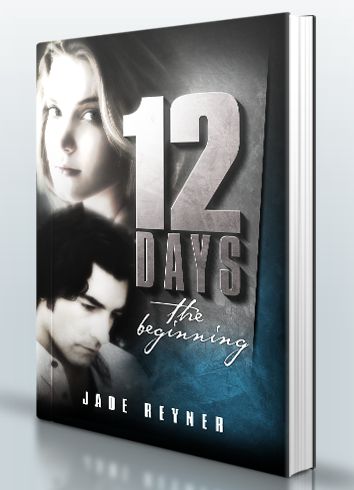
Welcome to an interview with Jade Reyner, author of Twelve Days: The Beginning. Jade also has a blog, Jade’s Jungle, at www.jadereyner.com where she takes you along on her “self-publishing safari”!
M: Jade, thank you so much for agreeing to be interviewed. I’m excited to be able to talk with you about your current novel, Twelve Days: The Beginning, as well as the two sequels I believe you have planned.
J: Marie, it’s a pleasure to be here and thank you so much for taking the time to talk to me!
M: Can I get you anything? There’s a bit of a time difference between us so I think you’re in the right time zone if you want anything harder than tea. Some sherry, perhaps?
J: Thanks – but I am a true Brit, tea, tea and more tea.
M: Wonderful! I’ll make us a pot of tea, then. Let’s sit here on my couch. Don’t mind the cats, especially Wendy. She’s young and quite curious.
J: Oooh, is she the one that you rescued from the restaurant? I would love to do something like that. I hope she’s settled in okay.
M: Yes, she has! Thank you for asking. OK, let’s get started. First, let’s talk about your first novel. How did you come about to write Twelve Days: The Beginning? What was the impetus?
J: This is going to sound odd but it just kind of ‘happened’. There are several events that have occurred throughout my life which I have used as inspiration but once I got started, the book really did write itself. I have always wanted to write a novel, it was on my bucket list so to speak and then after taking a Creative Writing course I decided to just sit down and give it a go. Twelve Days – The Beginning is the result.
M: Of course, I’ve read your novel and thoroughly enjoyed it. But I have to admit, I had read very few romances before yours and I was very surprised at the rather explicit sex scenes. They were well-done, not at all gratuitous, but is it common for such steamy scenes to be in romance novels? Or have I misunderstood your genre?
J: Yes is the short answer to that. Romance as a genre has probably evolved more than many in recent years and there are now distinct genres within the genre, if that makes sense. Twelve Days – The Beginning would sit at the erotica end of the spectrum and then your classic Mills and Boon would sit as far away from it as possible. There are a huge number of books that incorporate explicit sex scenes nowadays and I think that many women (and men) are more open about wanting to read these types of books. I tried very hard to make my scenes relevant however as I did not want to put the sex in just for the sake of it. I think that this development of the genre can only be considered to be a good thing because it allows authors more freedom if they wish, but it doesn’t take anything away from the classical romance which is still widely written and enjoyed.
M: Thank you for explaining. I was also quite impressed with how you handle the issue of domestic violence in your novel. As someone who has worked with victims of domestic violence, I thought your writing was spot-on. When you began the novel, did you know that domestic violence would be part of the storyline?
J: I always knew that there would be domestic violence in the book, the issue that I had was how in-depth it should be explored because although it is a major storyline, it is in no way the sum total of Twelve Days. I did draw on some personal experiences to write the part of Elise (the female protagonist) and I am just really pleased that someone with your experience, found the scenes to be spot on. I take that as a massive compliment.
M: (smile) I do appreciate how you approached domestic violence in your novel. Let’s talk a bit about your next two novels. I believe you have two in the works, based generally on the same characters as your first novel.
J: Yes, actually I have quite a few in the works, but at the moment I am nearly finished writing Twelve Days – The Future which is the sequel to Twelve Days – The Beginning. This is the final book covering the story of Elise and Vaughn and completes their tale which as anyone who has read Twelve Days – The Beginning will know, ends on a bit of a knife edge. There are many more twists and turns and the ride is in no way smooth, but I hope that readers will enjoy finding out how they both fare after what has been a hugely emotional journey for both of them.
I then plan to release two more books in the Twelve Days series which will be from two of the other major characters points of view and will cover the same twelve day period in which everything happened in the first book. I am planning to write both Twelve Days – Dale and Twelve Days – Cole as these are the two other major characters who I think readers have identified with.
I then have other projects which will move away from Twelve Days but the beauty of this series is that there are so many characters whose lives I can develop, and so it will be sitting there like my favourite slippers, to return to any time that I wish.
M: Oh, I love that metaphor: your favourite slippers! That’s a wonderful way to look at one’s writing. You know, so many writers are influenced by other writers. Are there writers who have influenced you?
J: Whenever I get asked this question I would really love to say something profound but actually the answer is no. I do not really have any particular literary heroes as I enjoy so many authors for so many different reasons. I think the only book that I can really say stuck in my mind and made me appreciate the power of words was An Inspector Calls by J B Priestley which I read at school. I think that it is such an amazing and clever piece of writing and I try to emulate some of the style and the twists and turns in my writing. I would like to say though that since I have been on WordPress, I have been hugely inspired by all of the wonderful writers that I have met and connected with. You truly are the unsung heroes.
M: I agree. There are some amazing writers in this community. What is a typical writing day for you? Do you set yourself goals like word or page counts? What needs to happen for you to say that you’ve had a productive and satisfying writing day?
J: I have a word goal usually. I try to do 4,000 words a day when I am on a ‘writing’ day and if I achieve that then I am happy. I have the morning’s only to write and so I have to try to fit in blogging, networking and marketing as well which we all know can take up a huge amount of time. There are days when I just don’t get any writing done and that is definitely not a satisfying day!
M: Four thousand words is impressive! You know, publishing, whether it’s self-publishing or traditional publishing, is very competitive. Writers who are coming out with their first novels or short stories may feel overwhelmed or intimidated by the marketplace. Do you have any advice for writers who aspire to be published authors?
J: I think my only advice would be that they need to take on board just how hard it is. I know that I definitely entered this with my eyes closed but now I am so much more aware of what it takes to get the book from inside your head to the bookshelf. I would urge everyone to follow their dream and to keep at it and just to believe in themselves as that is the key. I would also say that you need to build up a good support network. Without you Marie and my other blogging friends, I don’t think that I would have come anywhere near as far as I have. You are all such a great inspiration and support to me. So thank you for that.
M: Well, it’s truly been my pleasure to get to know you and read your novel and your blog. I want to thank you again for taking the time for this interview. I know I am one of many others who are eagerly awaiting the publication of your next novel. I assume you will announce it on your blog, which again is Jade’s Jungle. Would you like some more tea before you head back?
J: Marie, it was my pleasure to be interviewed by you and I never say no to a cuppa! Thank you for a brilliant interview, I had a great time.
And yes, Twelve Days – The Future should be out towards the end of the year but please keep watching my blog (www.jadereyner.com) for updates.
***
Well, that’s it, folks! My interview with romance author, Jade Reyner. Be sure to follow her blog Jade’s Jungle and pick up a copy of Twelve Days: The Beginning. Please stay tuned for more interviews by 1WriteWay.
To get your own copy of Twelve Days: The Beginning, visit any one of these links:
Welcome to an interview with John W. Howell, author of a new novel (working title: My GRL) soon to be published by Martin Sisters Publishing. John is also an editor at The Community Storyboard, a student of the haiku, a short story writer when he is not writing haikus or working on his next novel, and is my “partner in crime” in producing a weekly Top Ten List of Things Not To Do at both his blog, Fiction Favorites, and my own, 1WriteWay. John worked for 40-plus years in the private sector world before taking up writing full-time and is currently undergoing “margarita therapy” in an effort to overcome the unpleasant memories he has from that long, painful experience.
M: John, thank you so much for agreeing to be interviewed. Of course, I wanted to return the favor since you had interviewed me not too long ago. And I do need to return this margarita glass that I inadvertently took with me when we last met. All that aside, I am very interested in your writing, how it all came about and where you want your writing career to go from here.
J: Marie, it’s a pleasure to be here. Thanks for returning the margarita glass. It was getting embarrassing to have to serve the odd margarita in a mason jar. Aren’t you going to offer me anything?
M: Oh, of course, my manners. I’m no good at mixing drinks so …
J: I’ll have some hot tea. I have a long drive back.
M: A pot of hot tea coming up. Be careful where you sit. There may be a cat on the chair.
J: Thanks for the warning. Since I have two cats as well and know they don’t like to be disturbed. Perhaps if you could just find me a chair without a cat in it.
M: Here you go. OK, let’s get started. So, elsewhere you’ve said that you worked for over 40 years in the business sector. If it’s not too painful, could you talk a bit about what you did, what your occupation was?
J: Yes, Marie (takes sip of tea). I actually had three separate careers. The first was in consumer marketing and sales where I worked for over twenty-two years. In that time I started as a section sales person and finished as President of a consumer healthcare division. The second career was as a consultant in consumer marketing. I worked as an independent consultant for about five years and then for my third career started when I was hired by one of my clients. The client was a major telecommunications company and I started as a cube dweller and worked for about fifteen years and finished as a director. I retired and began writing full time in 2012.
M: That’s really interesting! Has any of this experience influence or play a part in your writing?
J: I have a reoccurring character named Frank who embodies all the arrogance I witnessed by upper management when I was working. You know the attitude, believing everyone else is less than equal and not quite as smart. I am slowly torturing Frank by giving him a life that he loves mixed with a life of a homeless person. I do this in various stages of his dreams. So whenever Frank goes to sleep he wakes up under a different situation and the beauty is he remembers the previous dream and is in agony. I love it.
M: And you wrote a short story about Frank that received an Honorable Mention from Writer’s Digest in their Popular Fiction Contest. Our readers can enjoy “Cold Night Out” on the Community Storyboard. Congratulations on that award. So now you are retired from the business world. What prompted you to take up writing? Had you done any writing while you were employed before?
J: I actually did a fair amount of contract writing on my last job. I became very interested in the creative process which I then infused into the contracts I was creating. I was able to have living documents that two parties could embrace. It was this experience that got me to the keyboard so to speak. I finished my first book while still working. I printed it off and it is now holding the laundry room door open which seems the best purpose for a 122,000 word piece of trash.
M: I think a lot of us may feel the same way about our first novels. You’ve said that Kurt Vonnegut is a writer you look up to and that Catch-22 by Joseph Heller is the book that got you interested in reading. Do you have any other literary influences?
J: In college I studied comparative literature and part of the curriculum was a concentration on the classics. I guess if I were to pick another influence it would have to be Stephen Crain who wrote The Red Badge of Courage. It was not only a compelling story but also reflects the inner experience of its protagonist. This inner experience or feeling I continually bring out in my characters. One of the reasons I like to write in the first person is that my protagonist has the responsibility of interpreting the scenes around him and then explaining those scenes to the reader. This makes a story not so much as an external circumstance driving the protagonist but an inner conflict that is causing the behavior.
M: And it makes for a compelling story, much like “Cold Night Out” where the reader only knows as much as Frank knows. Let’s talk about Haikus. When did you start writing Haikus? You know, you are quite the master. For our readers, many of John’s haikus are featured on The Community Storyboard.
J: Oh, Marie, you are so nice to say Master, but I am a humble student. I was challenged by a fellow blogger who you know as Kirsten to bring some of my poetry out of the closet (so to speak). I had a great fear of being laughed out of the blogosphere with some of them. I started studying the various forms and somehow fell into Haiku since it comes close to my natural writing style. I practiced and read a lot about Haiku and so I guess I learned with a hands on method. Here is one for you:
Marie is the best, Truly cares for all near her . . . Secret of her smile.
M: (blushing) John, that is lovely and so sweet of you. Thank you. Here, have some tea (clears throat and sniffs). Now, I understand that My GRL is will be published by Martin Sisters Publishing. How did that come about? How has your experience with Martin Sisters been so far?
J: I finished the book and then went through the query process to find an agent. After about two months of no response, I went on line and looked up publishers who would take a chance on first time authors. Martin Sisters Publishing and a number of others came up and since they did not require an agent, I sent a query. They liked my query and asked for that I sign a contract which I was very happy to do. They are very thoughtful and have great respect for writers. I have really enjoyed the experience
M: As you know, many of our fellow writers are self-publishing these days. What are your thoughts on self-publishing? Did you consider self-publishing at all?
J: I was actually going to go the self-publishing route before contracting with Martin Sisters Publishing. I think self-publishing is the way to go if you have some aversion to relinquishing some control over your book. I was very faint of heart when I knew some rights like cover design were now in the hands of the publisher. Martin Sisters also has an option on the next book which I just finished so I am not sure I will be in the self-publish mode for a while. I would like to try it though.
M: Oh, you just finished your second novel? How exciting! Is this a sequel to the first?
J: Yes, it seems the story was too big to fit in one book so I ended the first with some question as to the justice system’s ability to bring the true perpetrator to trial. The second starts off with the protagonist being hailed as a hero and scheduled to appear at the White House for an award. All the while the person behind the original terrorist plot has another in mind and he wants to get his hands on the hero. Many more bullets fly in the next book.
M: Sounds like fun (big smile). So, what is a typical writing day for you? Do you set yourself goals like word or page counts? What needs to happen for you to say that you’ve had a productive and satisfying writing day?
J: My day starts with normal chores like walking dogs etc. By noon I am ready to write. I set a goal for one thousand words for the day on my WIP. Of course with blogs and e-mails I write more than that totally. A successful day to me is moving the story along and working out a twist or plot problem successfully. (Oh and getting all the 150 E-mails put somewhere.)
M: Hmmm, you get a lot of emails, too. Ah, you know, publishing whether it’s self-publishing or traditional publishing is very competitive. Writers who are coming out with their first novels or short stories may feel overwhelmed or intimidated by the marketplace. Do you have any advice for writers who aspire to be published authors?
J: Anyone who wants to be published needs to understand that the work is hard and the result needs to be a personal goal not driven by some other person. Given that understanding, the writer needs to write every day. It really doesn’t matter how much but every day is a must.
M: Well, John, that’s great advice. I agree that writing everyday, even if it’s just an email in response to 150 emails, is worth doing. I want to thank you again for taking the time for this interview. I know I am one of many others who are eagerly awaiting the publication of your first novel. I assume you will announce it on your blog, which again is Fiction Favorites. Would you like some more tea before you head back?
J: Marie, it was my pleasure to be interviewed by you. You have a lovely new kitchen and I must say your cats are well-behaved. Yes, I would love some more tea.
Well, that’s it, folks! My first interview with Haiku student (master), novelist, blogger, and all-around great guy, John W. Howell. Be sure to follow his blog Fiction Favorites. And please stay tuned for more interviews by 1WriteWay.
Bridget Whelan offers great reasons for why a writer should join Twitter. It’s not just to promote your writing. Perhaps, more importantly, it’s to build community.
I know writers and readers who embrace every kind of social media but still can’t stand the thought of twitter. I wrote this two years ago on another blog and I still think it’s true…
1) You exercise your writing and editing skills. It’s hard being pithy and witty in 140 characters
2) You can find out what’s happening in the publishing industry – many (most?) publishing houses, editors, publicists and some agents tweet.
Leading London agent Carole Blake (author of From Pitch to Publication) tweets. Chances are your favourite contemporary author tweets.
3) Feel part of it – I once got tweets from a dinner table at the Booker. It was fun to know what everyone was eating or being too nervous to eat (lamb) and who won before it was on the news.
4) Make contacts and friends
5) Increase your blog readership 6) Promote your writing…
This is for Belinda of Busy Mind Thinking. She has asked friends to post pictures of where they live as if on a travel tour. I’m going to do little something different. I am going to direct her to a series of photos for a kind of home improvement tour. Recently we had our kitchen remodeled. The upheaval started on June 26, 2013, with the cutting off of water to our kitchen and ended on August 21, 2013, with the reconnection of water to our kitchen. I invite Belinda and anyone else who is interested to view the transition of our kitchen from a rather claustrophobic dark space to a space filled with light and air. My pictures are available for viewing at http://www.flickr.com/photos/marieannbailey/sets. This is a public link so you do not have to create a Flickr account in order to view them.
I titled this post “Nearing Equilibrium” because I have felt so out of sorts, so unbalanced the last couple of months. Now that we are able to resume our kitchen routines, I feel myself approaching balance again. When we (finally) decided to remodel our kitchen, we made the decision with excitement and dread. We were excited because once we had settled on a design, we knew we would love the end product and immediately start berating ourselves for not having done it sooner. We also felt dread because, truth be told, my husband and I are “stick-in-the-mud”s. We are very set in our ways. We both have always been like that: not prone to spontaneity, feeling an exaggerated comfort in anticipating the same schedule every week. No surprises for us. So the idea of having to alter our routine for at least two months was, frankly, terrifying.
At first, though, it was fun and very satisfying to see how easy and efficient it was to wash our dishes in my shower with the shower hose. But that got old very soon; in fact, as soon as my lower back started to complain. We tried to make eating out or carrying in fun: hey, we have an excuse now to eat out a few times a week! But even that got tiresome as we felt the extra calories and extra expense pile up. And we couldn’t find things. If we did try to cook at home (which we did try once our cabinets were in and we could use our new microwave and old stove), it always felt like we were on an expedition, tearing through boxes and bags trying to hunt that one saucepan that we always used.
I started to get snippy when people would ask about our kitchen: Are the countertops in yet? Is it done yet? The cabinetry was in by July 6, but the countertops weren’t installed until August 19. That’s a long length of time to be always answering with, “Not yet. Not yet. NOT YET!” Once the countertops were installed, I had to contain my joy. There was still two days before the plumber would come and hook the water back up. I wanted to use my sink. My new deep single bowl sink where I could immerse large objects like the insert from my slow cooker and not get water all over the floor.
Now I consider my husband and I to be very fortunate people. Somehow we have managed to get through our lives without personal crises like being deeply in debt, fearing the loss of our home, or being unintentionally unemployed. It’s not that we haven’t suffered: we have lost loved ones too early and too painfully; I had cancer but was fortunate that it was early stage and resolvable through surgery; and we’ve had to make those emotionally wrenching decisions to euthanize a feline friend, never really wanting to let go.
But on the final day of our kitchen remodel, things could not go perfectly. The plumber came to hook up the water lines, the dishwasher and the garbage disposal. He wasn’t in the house for more than 10 minutes when I heard him say, “We have a problem.” A very quick consultation resulted in one of the cabinet shelves being moved up a notch in order for the pipes to be connected. But that’s not how the problem was presented; instead, the plumber first suggested that he would either have to cut through our new cabinetry or through our wall. Moving the shelf up one notch was his third suggestion. We went back to our respective rooms, our hearts slowly calming down from the near-horror of not having this kitchen done.
By the time the plumber left, nearly two-and-a-half hours later, everything was working except the garbage disposal. The plumber was perplexed since it was hooked up properly. We were stumped (and the horror of this not being done was rising in my chest) until my husband suggested that he needed to reconnect a couple of wires in the attic. So we let the plumber go, confident that we knew what the problem was and that we (my husband, that is) could fix it.
A few hours later, my husband’s idea was not working and he was hot and sticky with insulation from the attic. He was stressed because we did have to have the disposal working. We had gotten a single bowl sink, meaning the only drain was through the disposal. Putting it off was not an option. We went out to lunch.
Good Mediterranean food can help settle the mind, and my husband soon came up with a “work-around.” You should know that whoever originally wired our house did so in such a hodge-podge way that if you turn off the power to the kitchen, you will also be turning off the power to one of our bedrooms. My husband’s work-around meant that we would have to be mindful of when we ran the disposal (ideally, not when we have two or three other appliances running), but it seemed the only way to get the disposal working NOW.
By five o’clock that evening, my husband gave me the thumbs up as we both listened to the soft hum of the disposal as it ground air.
And now we are slowly resuming our old routines that were a couple of decades in the making. We are moving back into our kitchen one meal at a time. We have a lot of stuff and expect and hope that most of what we packed will wind up at a local charity. I’ve been able to create more space in my room by moving things into our new cabinets. As I create space, I feel my mind relax, my anxiety level get lower, and my desire to write return. I’m nearing equilibrium. It’s amazing the difference that space makes.
But is this odd? The experience with my kitchen was enough to sometimes drive me to drink, but it didn’t drive me to write. Has anyone else found themselves in this kind of no-writers-land? Is there anyone out there who is their most creative when their lives are the most stressful?
I’m writing to let all authors, poets, musicians, painters, and any artist types that I forgot!
The Community Storyboard is a new and exciting blog where you can submit your work and have it showcased. You can get important feedback and make friends with other artists. Aside from submissions, we are going to be doing a few prompts and weekly themes that you can use for some spontaneous creations.
We’re all friendly people there and want this to become a blog where all artists can come for support and fun. Being an artist is a tough road, so let’s try to unite and travel down it as a community
Is it August yet? OMG, it’s August! Yes, I’ve been lolling in the luxury of not having to meet a WORD COUNT for the past few days. Methinks it’s getting harder, not easier, to cough up 50K words, even if a third of those wind up on my blog or someone else’s blog :) NaNoWriMo in November will come soon enough and I might have to do something completely different for that word challenge. In the meantime, I’m still trying to decide what to do between now and then, besides the usual blogging, reblogging, commenting, tweeting, facebooking, and just general making a nuisance of myself. While I try to sort this out, let me revisit my RCC goals and see where I’m standing (or sitting or squatting as the case may be).
My Goals
(1) Get off my own back. I actually think I’m getting better at this. I did manage to push through to 50K in Camp NaNoWriMo but I was prepared to lose honorably, without any loss of pride. Any number of words I wrote was more than what I had started with and I could live with that. (But I’m glad I didn’t have to.)
(2) Set up a schedule of posting that gives me time to write, but doesn’t make followers think I’ve fallen off the face of the earth. I still haven’t sorted this out, and I’ve missed a number of tantalizing writing prompts on The Community Storyboard. If you haven’t been over there, do pay a visit. There’s plenty of great reading even if you not incllned to write.
(3) Get organized. That may have to wait another week or two. Here are my excuses: (1) my kitchen is in the last throes of being remodeled. I’ve been living without a kitchen sink for over a month now, and nothing makes me feel more disorganized than a unorganized house. Fingers crossed that the remodeling will be done by mid-August. (2) I have a business trip next week–a road trip no less with two other people meaning virtually no down time for the introvert that I am. (I admit that blogging has brought out my inner extrovert, as well as a few other inner things, but in the physical world, I am truly an introvert).
(4) Write the third novel in my series, The Widow’s Club (working title). OMG, I actually met this goal! And this is what I’ve been like since.
So I’m done for July. Hopefully I’ll have a schedule (eventually) for regular blog posts. Please stay tune for Monday’s Top Ten Things Not To Do posts that John Howell from Fiction Favorites and I collaborate on to give you all a chuckle for the beginning of your week.