I’m popping out of my self-imposed bubble long enough to share this essay by Anita Gill in BREVITY. So much of this short essay resonated with me and my perpetual struggle with my inner critic, and, of course, it prompted a comment from me. Please read the essay (and my comment below) and let me know: How do you handle your inner critic?
By Anita Gill On a chilly winter day in Oregon, Laura Hendrie, an award-winning fiction writer, gave a craft talk to a room full of graduate students on the topic of crafting the beginning lines of a story. She looked around the room and asked, “What is it about an opening that pulls me in […]
“And this would apply to fiction as well. Even when I’m purposely making things up, my inner critic argues against my authority to do so. The thing about memories–and why the inner critic can often win the battle against writing down memories–is that they are subjective. Your memory of a particular event may differ from every other person who witnessed that event. I’ve often gotten blank looks from family members when I recall an experience that I know we share, but they no longer remember … or choose not to remember. When I write down memories, my inner critic often takes on the voice of my mother or brother or sister, arguing against my version of events and whether I have the “right” to tell it as I remember it. If I go public, I risk being called a liar or of hanging out the family’s dirty laundry. So I write fiction, but my inner critic still knows what I’m up to. This essay is validating and makes it clear that the only way to silence my inner critic is to simply keep writing until my words drown her out.”
Ah, yes, I’m back, dear Reader. Back to my home, my blog, my blogging friends who were (and are) never far from my mind, my furry four-legged friends who I don’t think really missed us as much as they missed getting more than two meals a day. Then again, they might have missed our laps since our temperatures are a bit cooler these days. This picture isn’t very good, taken with my camera in poor light: Junior, our feisty, “I just wanna be outdoors all day”, male cat sacked out on my legs once the temperatures dipped toward the 60s. Yes, dear Reader. Our southern cats cannot abide the cold.
Junior crashed out on my legs.
We had a lovely trip overall. Aside from a bit of rain at the beginning, we had clear, sunny days for driving up to north NY, to visit my family. We gave ourselves plenty of time to drive so we had some flexibility with our itinerary, allowing us to make a detour to Gettysburg, PA, and to switch hotels at nearly the last minute when one day we realized we could drive further than originally intended.
I learned how to swim with whales, except these were land whales, or you might call them semi-trucks. On interstate 81 there often were more trucks than cars. Many times we found ourselves between two trucks with one truck cruising along side us on the two-lane road. It was … interesting.
We had only one rainy day in New York, but we were visiting relatives so that was fine. We spent time with my mother, who will be 92 this month, her remaining siblings, my sister and her husband, and two-thirds of their brood.
I met up with an old high school friend, someone I hadn’t seen or talked to in almost 40 years. It was to be a quick visit but, four hours later, we still had plenty we wanted to say and learn about each other. It was hard to say good-bye.
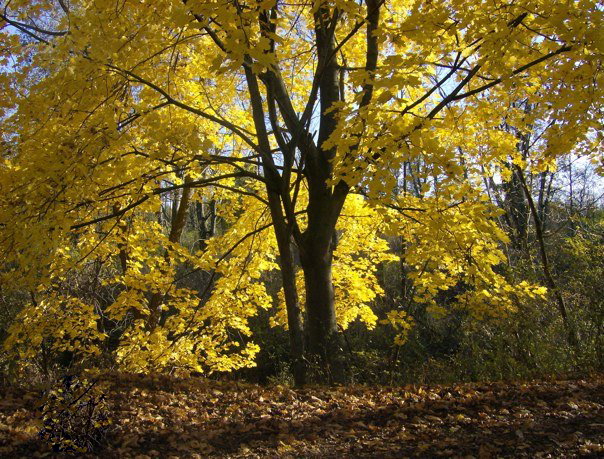
And much of the trip was filled with eye candy. Autumn is my most favorite season, but often when we’ve gone home, it’s been in summer or late fall, after the colors have started to fade. Our timing this time was perfect. It wasn’t riotous reds and oranges all the way, but that was part of the fun. We got to see some of the transition. Each day we drove off from my sister’s house, another tree was starting to turn.
Believe it or not, I took very few pictures. I was too busy enjoying the sights and often too busy driving anyway. My husband, however, took this “movie” of our drive away from Saratoga Springs where we had just spent the afternoon. Unfortunately, the movie is rather pixelated since it was taken with his iPad. But you get the idea of what we saw.
And, finally, a song that always makes me think of where I grew up …
Yesterday would have been my father’s 96th birthday.
I think he’s rather handsome.
He died in his sleep in November 1992. The kind of death anyone would want. At least at the end, someone (God?) cut him some slack. You see, he hadn’t had an easy life. Born in poverty. Never finished high school. Classified 4-F. And he couldn’t hold a job. That, in a weird sort of way, was my good fortune, or so one of my sisters told me once a long time ago.
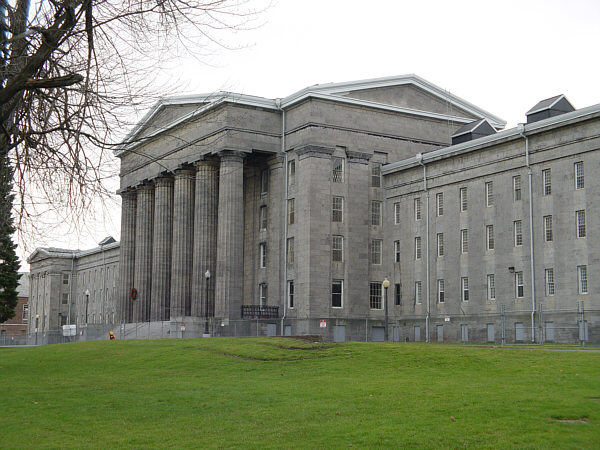
You see, I’m the youngest of four. My sisters are 13 and 11 years older than me, my brother 3 years older. The middle sister remembers our father as working during most of her childhood, not there to take her to matinees like he did for me. Not there to draw pictures for her on demand like he did for me. But she forgot that those were the earliest years of my childhood. By the time I was around 10, he was starting to spend less time at home and more time at Utica State Hospital, formerly known as the New York State Lunatic Asylum.
Not a fun place to visit your father.
I do agree with my sister that I had some fun times with my dad. He and I both took perverse pleasure in Grade-B horror films. You know, the ones produced by Hammer Film and that usually only showed during theater matinees or at 2 pm on the TV. And, yes, I have a memory of finding him on our neighbor’s porch (because we didn’t have a porch), sitting out the hot summer afternoon, sweat glistening on his dark hairy arms. But when I handed him a piece of paper and pencil and demanded, “Draw me a man,” he compiled. Even gave the man a corncob pipe to smoke.
I think my parents were happy once. Before it all got too much.
Happy Days
My mother told me that Dad had had his first nervous breakdown when he was only 17 and she didn’t know about it until later. But, she went on, she would have married him anyway. He was 23 when they married. She was 19. Perhaps as far as anyone knew, he was okay. They had met at a dance. My mother was one of seven sisters and five brothers growing up on a farm run by a father who was “not progressive.” (My mom’s words, not mine.) She might have felt a desperate need to leave. These are all fragments of memory. And they are all I have.
My father loved to play the piano, although I don’t remember him having much of a repertoire. I gave my mother a recital once. She was in the kitchen washing dishes while I banged away happily. I can imagine her standing at the kitchen sink, praying for mercy. I don’t remember when exactly, but it seemed that soon after, the piano disappeared.
I loved banging on this piano.
By the time I was a teenager, my dad was sometimes living at home, sometimes not. By then I had witnessed two of his nervous breakdowns. Once when I was about 9 or 10 and I heard, rather than saw, him fall apart over the Vietnam War and the loss of “our boys” and heard, rather than saw, my mother rubbing circles on his back, trying to soothe him. The second time when I was about 14 and he had just come home from the Village Tavern. He collapsed on the cot in the dining room, crying and banging on the wall, his back to me. I couldn’t make out what he was crying about. Something about not being able to take it, I think. I called my sister and stayed until she showed up. I was terrified the whole time. I was never afraid that he would hurt me. He had never laid a hand on me, and somehow I knew he never would. I was afraid of his pain, the utter anguish that poured through his tears.
I can’t tell you what was wrong with him. No one seems to really know. My mom and my middle sister have said that he was diagnosed as schizophrenic. But he didn’t hurt anyone. He wasn’t suicidal as far as I could tell. He just cried a lot and blamed himself for things that he couldn’t control. Like the Vietnam War. He had it in his head that the war started when he quit the creamery and so there was a connection. He felt responsible. I once accused him of thinking he must be God. When he laughed, slightly chagrined, I thought maybe he was really okay.
He had a fixation on Oral Roberts, a man I came to loathe for the spell he cast over my dad. He sent money to Oral Roberts and in return got a small plastic plaque that read “Something good is going to happen to you.” Nothing good happened to or for my dad. And he blamed himself because, you know, if Oral Roberts said “something good was going to happen to you” and nothing did, you had only yourself to blame.
We went on that way until I was 18 and my mother no longer received Social Security checks for me. And then she wanted to remarry. She felt she could finally go ahead and start living her own life. Whatever had been between her and my dad was no longer there. It just wasn’t sustainable through all the pain and struggle. By this time, my dad was well enough to live “independently,” but not at home. He lived in a “halfway house,” with other men who had had it rough, so to speak. I don’t think, I don’t remember if I ever visited him there.
So my mom and dad divorced, my mom remarried, and my dad start visiting my middle sister when he could. And then I moved to California. He became very ill at one point. Blood clot in his abdomen and we all thought that was it for him. And no one thought that was fair. My mother said, “He doesn’t deserve that.” He had never hurt anybody so why should he suffer?
But he recovered and my sister was able to move him to a facility where he could get round-the-clock care. It was essentially a hospital. It smelled like a hospital. He had a hospital room to live in. Nurses abounded. But it was also a five-minute drive from where my sister worked. On one visit home, I was treated to this.
I think the piano was the one thing, the one constant in my father’s life that gave him pleasure. You couldn’t count on people, especially your youngest daughter who avoided you whenever possible and rarely brought friends home when you were there. Then again, that middle daughter more than compensated.
On a visit from California. I don’t think I was ready to see him like this.
I am grateful that for the most part he seemed happy during his last few years. He was whittled down by God knows what kind of medications he was on and off, by the shock treatments he received in Utica. He had Parkinson’s as if having mental health problems wasn’t enough. Yet, his needs and desires were few. Give him a piano and he’d bang away, play the same song over and over, but be happy. Smile at him and he’d smile back. Send him cards with kittens on them and he’d carried them around in the little bag attached to his wheelchair.
He didn’t ask for much, and I gave him very little in return. I spent most of my youth and early adulthood fearing that I would turn out like him. I cry easily. Especially when I was a teenager, I did a fair amount of acting out. If my family had known half of what I did, they might have sent me to Utica too. It’s taken me a long time to understand that my father’s mental illness was not genetic, that it was more environmental than anything else. Maybe.
My father wasn’t always sick. I just have few memories of when he wasn’t.
This post is my way (pitiful though it is) of asking my dad for forgiveness. I wasn’t a good daughter. I let my sister and my mother do all the heavy lifting. I want to go back to that night, so many years ago, when I was staying up late because I wanted to watch some stupid horror movie. I heard Dad come down the stairs and I sighed. I didn’t want him there, with me. I wanted to be alone. But he came into the living room, “What ya watching,” and sat down. As the movie grew in suspense and we both jumped when a door was suddenly pulled open, we laughed and looked at each other. I think I said something like, “I’m glad you’re here.” Code for “this movie is too scary to watch alone.” He laughed again and we went back to watching the movie.
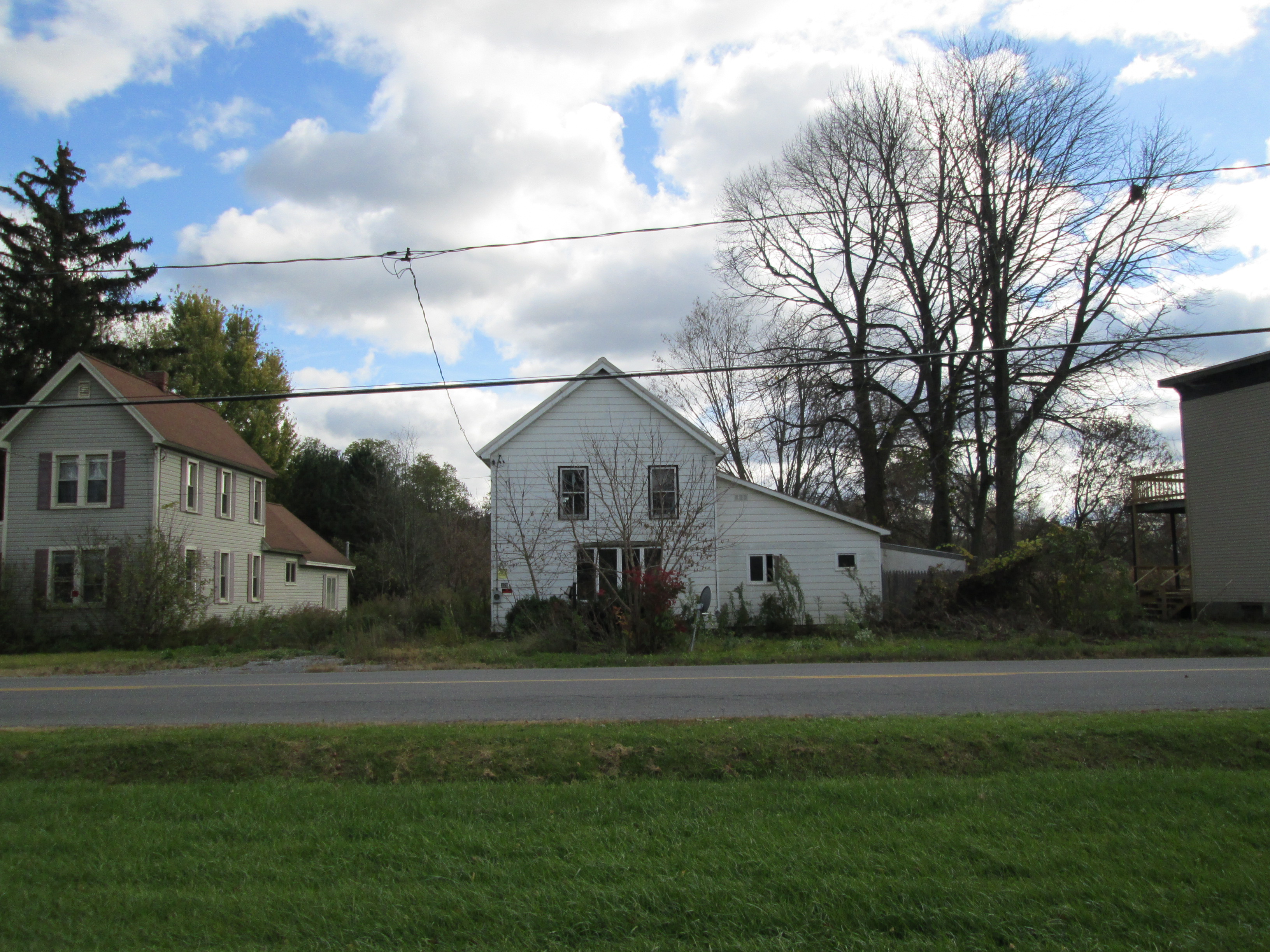
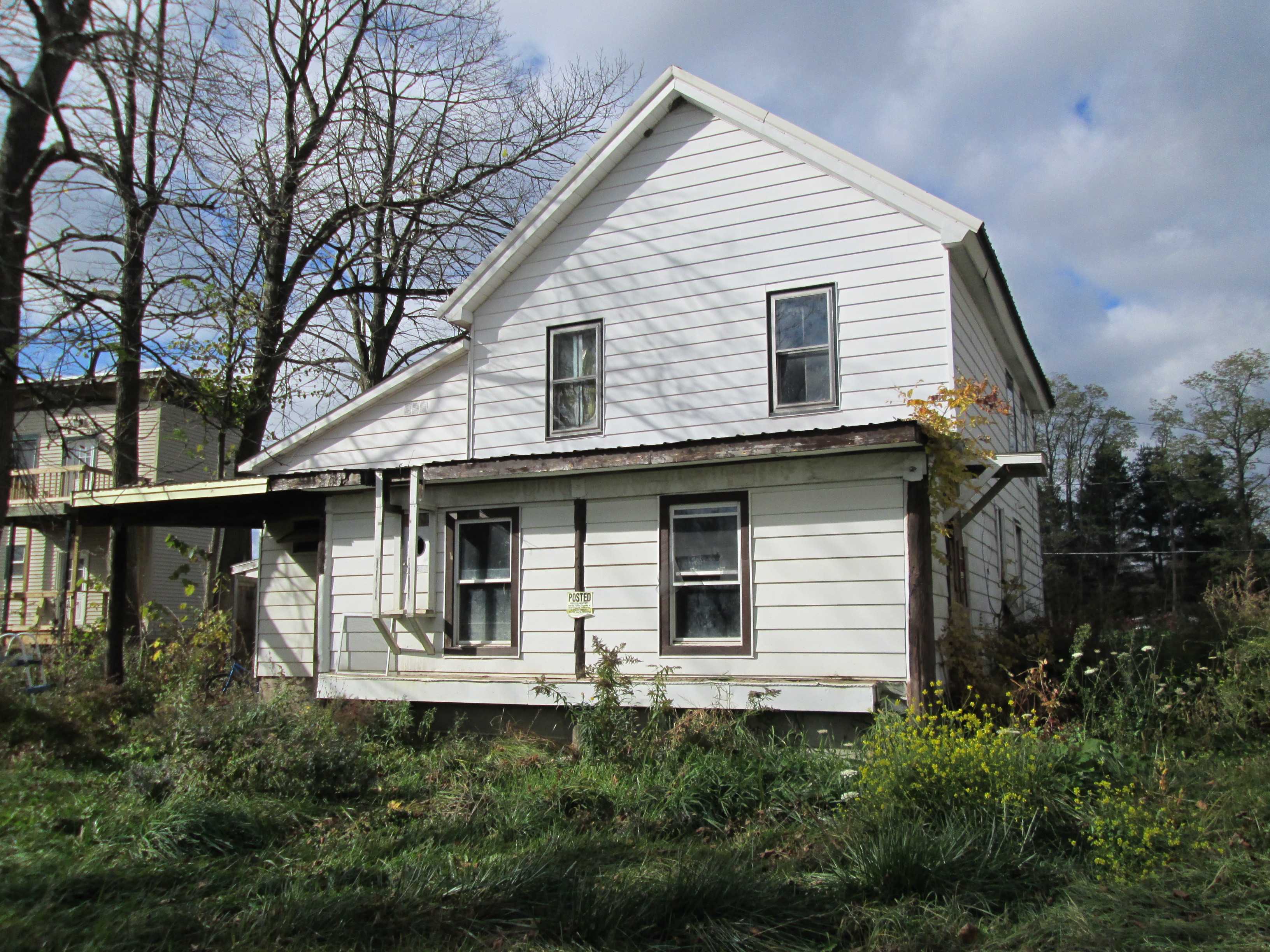
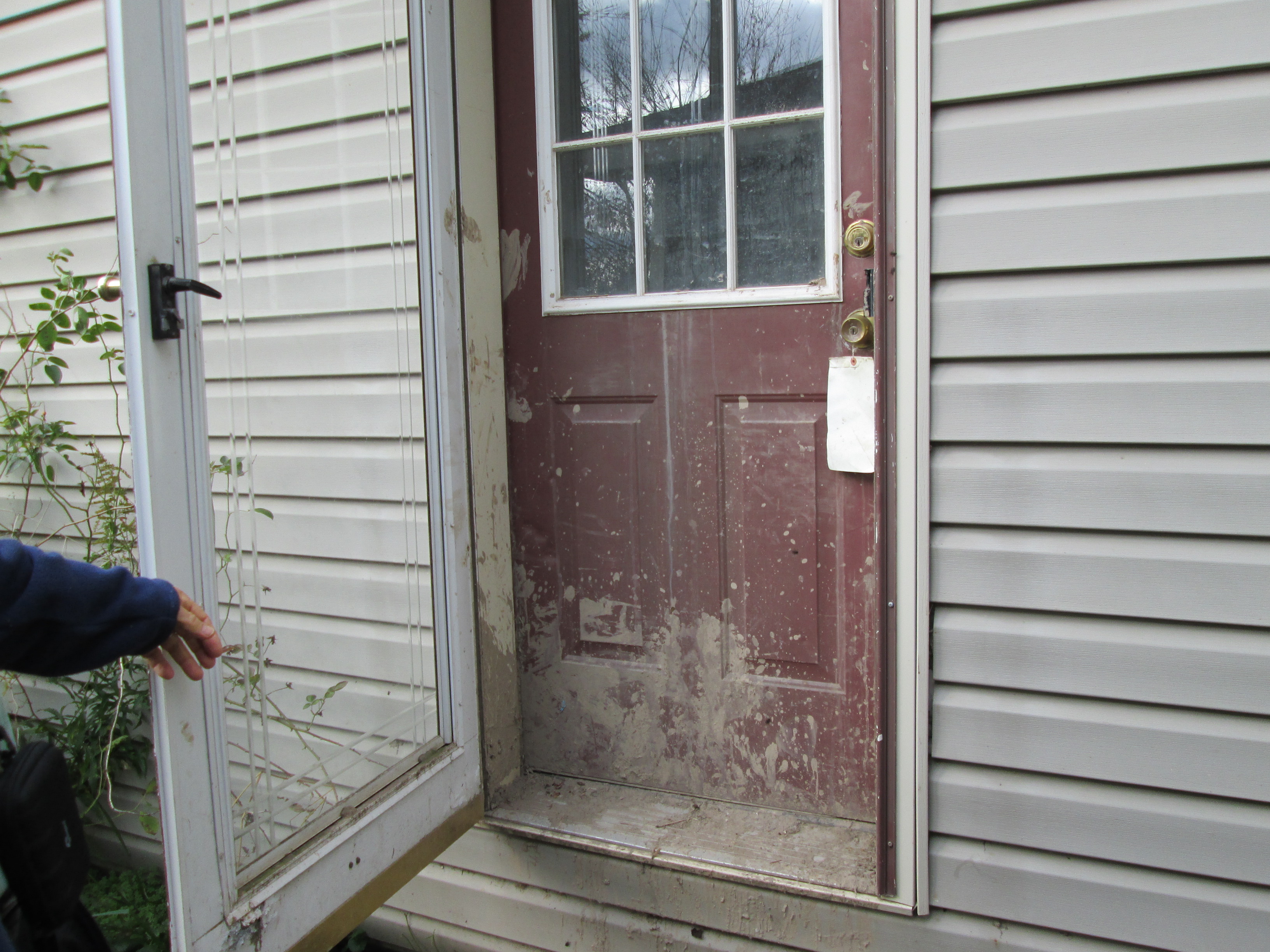
In response to this week’s Community Storyboard writing prompt, Tomorrow, I wrote a short story that you can read here. In the story, the characters are imaginary, but the memories, the places, and the flood are real. The following pictures are of my childhood home which was damaged in the flood and is now condemned. Fortunately, my mother had moved out of the house a few years before and it was only being rented, or so I understand since it was deeded to a family member and I had nothing more to do with it once my mother left.
My family home is on the right. View from across the road.A sidewalk lamp, no longer needed.Not the best greeting when you want to visit your old home.
Once the entrance to the porch and the house proper.Our neighbor’s house, showing how high the muddy water rose.The side of our neighbor’s house. Yup, that’s a hot tub on the deck.
The following YouTube video will give you a good idea of the magnitude of the flood. The bridge featured in the video (which was being painted when the waters rose) was one that I traveled many times a day for many years.








 Marie at 1 Write Way