Be prepared! Do you know the signs and symptoms of zombie cats?
-
Be prepared! Do you know the signs and symptoms of zombie cats?
-
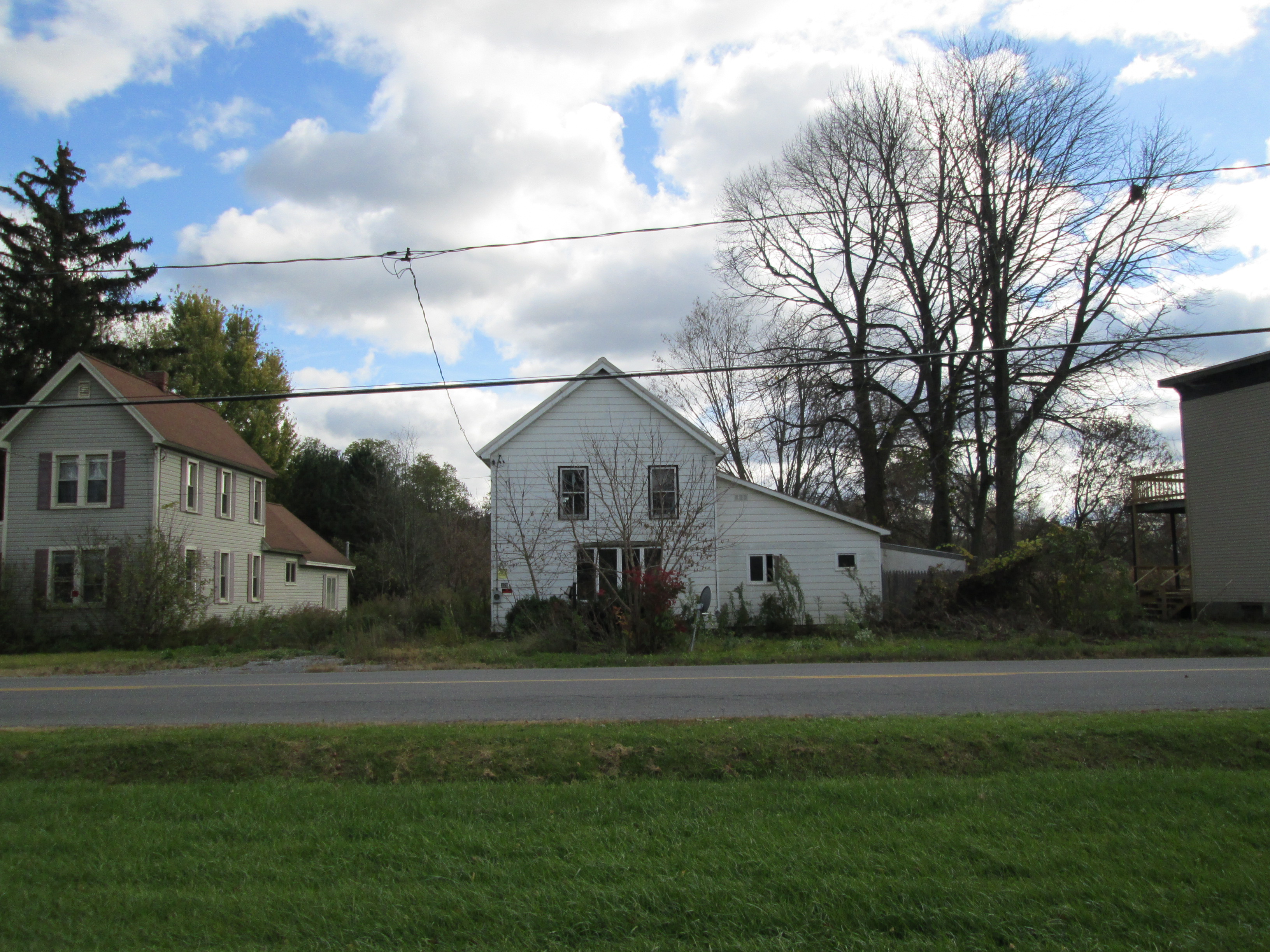
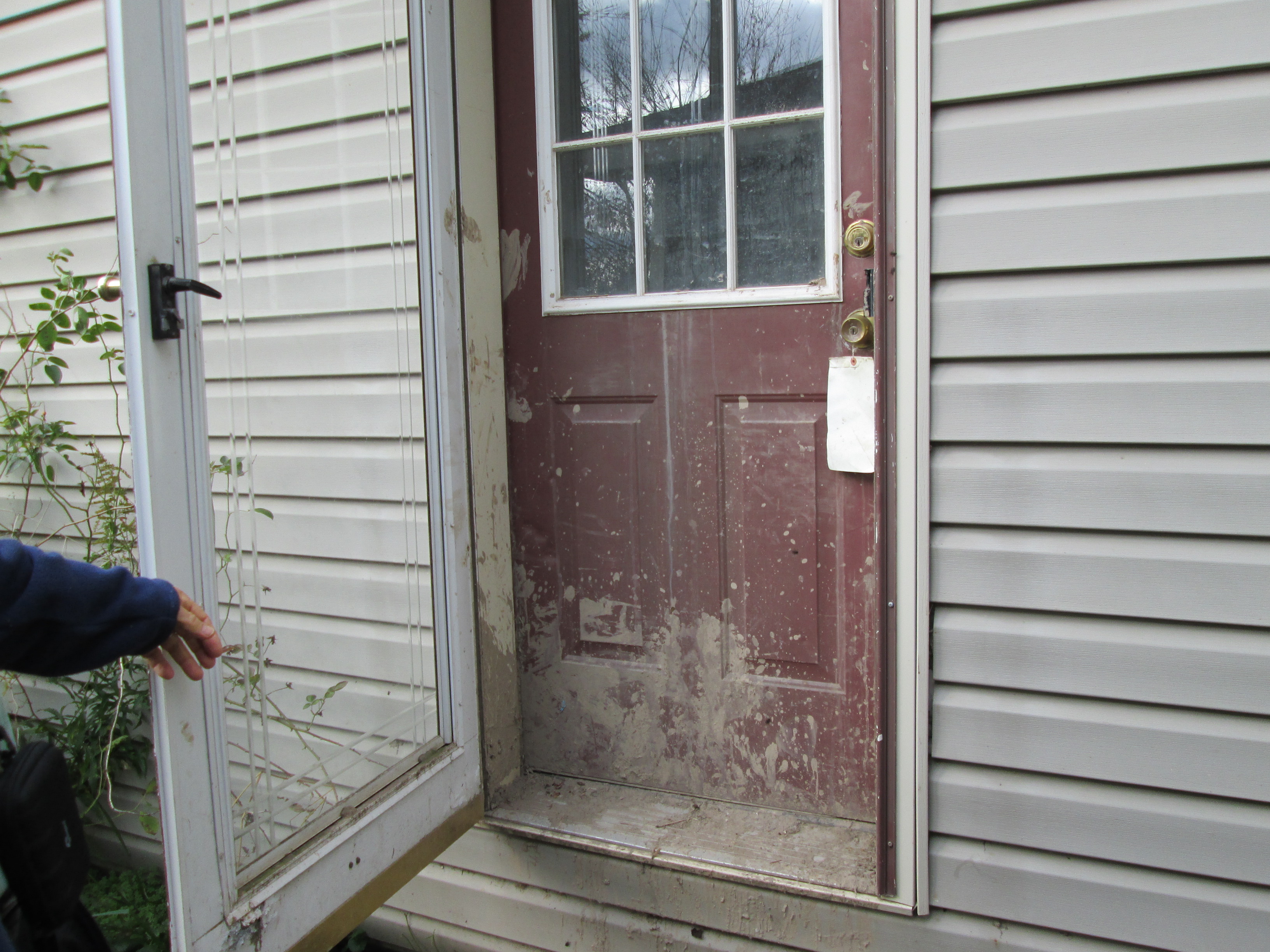
In response to this week’s Community Storyboard writing prompt, Tomorrow, I wrote a short story that you can read here. In the story, the characters are imaginary, but the memories, the places, and the flood are real. The following pictures are of my childhood home which was damaged in the flood and is now condemned. Fortunately, my mother had moved out of the house a few years before and it was only being rented, or so I understand since it was deeded to a family member and I had nothing more to do with it once my mother left.

My family home is on the right. View from across the road. 
A sidewalk lamp, no longer needed. 
Not the best greeting when you want to visit your old home. 

Once the entrance to the porch and the house proper. 
Our neighbor’s house, showing how high the muddy water rose. 
The side of our neighbor’s house. Yup, that’s a hot tub on the deck. The following YouTube video will give you a good idea of the magnitude of the flood. The bridge featured in the video (which was being painted when the waters rose) was one that I traveled many times a day for many years.
Related stories:
http://online.wsj.com/article/APc8bfa72960604d0bb80ba7bafe318f8f.html
-
My favorite is the literary connection to “unfriend.” Interesting stuff!
If you think ‘totes’, ‘fangirl’, and ‘trick out’ are recent idioms, then we’re here to surprise you. In a previous post on Twitter terms and literature we uncovered some of the ancient literary origins of words more commonly associated these days with the world of social networking.
View original post 825 more words
-
Interesting post on Wuthering Heights. As a young girl, I did love the novel (and the movie with Laurence Olivier). Frankly, however, Cathy annoyed the hell out of me.
By Laura Inman
1. Wuthering Heights was originally published as the first two volumes of a three volume novel, with Agnes Grey, Anne Brontë’s novel written at the same time, as the third volume, although the two works had nothing to do with each other. The manuscript of Wuthering Heights
has never been found, nor is it known what might have become of it.
2. Struggling novelists can take heart from the example of Wuthering Heights: publishers so consistently rejected the novel, that Emily Brontë paid the substantial sum of 50 pounds to have it published. It met with no popular or critical acclaim, and she died believing it had failed.
3. Twelve characters die in the novel (that count includes the infant Heathcliff Earnshaw, after whom the child rescued from the Liverpool streets is named), raising the question whether Brontë intentionally indulged in numeric symbolic play in…
View original post 514 more words
-
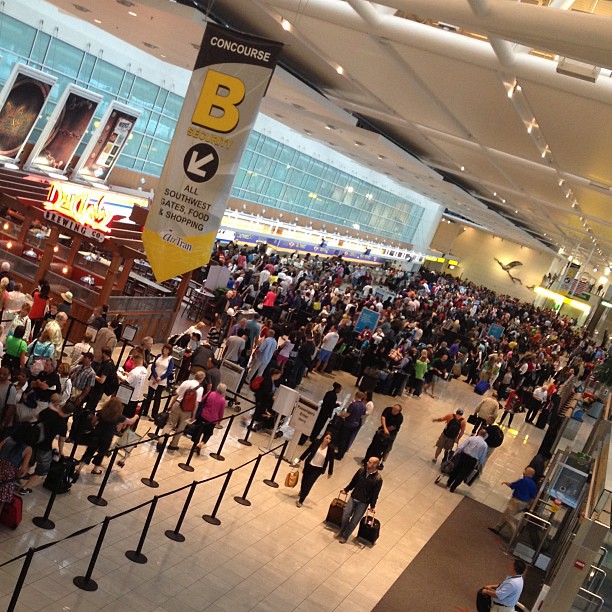
Here is the Nineteenth installment of Ten Top Lists of What Not to Do by Marie Ann Bailey of 1WriteWay at http://1writeway.com and John W. Howell of Fiction Favorites at http://johnwhowell.com. These lists are simu-published on our blogs each Monday. We hope you enjoy. This list is in recognition of those who are planning to travel during the Thanksgiving holiday.
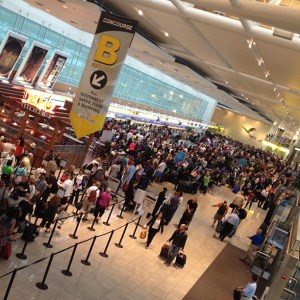
Photo credit: http://farm9.staticflickr.com/8132/8812335376_4150525bb8_z.jpg 10. If you decide to drive your car when traveling, do not pack the trunk and backseat so that all the passengers need supplemental oxygen to stay alive.
9. While traveling in the car, do not think your favorite onion and limburger cheese sandwiches will go unnoticed when you go for a snack. If you do, you may find yourself on the roof with grandmother.
8. If you are the designated driver for a portion of the trip, do not think you can rest your eyes for even a moment. If you do, you may find permanent rest as well as a handsome marker on the side of the highway with your name on it.
7. If you should experience a flat tire while driving on a trip, do not attempt to instruct your spouse or traveling companion on the intricacies of changing a tire while you stand off to the side observing. If you do, you may be wearing the spare for the rest of the journey.
6. If you decide to take an airplane when traveling, do not try to tell security why your religion forbids taking off your shoes. If you do, you may find a full body search applied as the viable alternative.
5. When on an airplane while traveling, do not call a flight attendant by repeatedly pressing the flight attendant call button. If you do, your reward may just be a visit from Mr. Coffee in your lap.
4. When on an airplane while traveling, do not complain loudly and frequently about the lack of food or water. If you do, the flight crew might insure that you may get the same experience as you would on the ground at Guantanamo.
3. When on an airplane while traveling, do not attempt to recline your seat without asking the person behind you if it is OK. If you don’t ask, the passenger behind you may choose to see you later in the terminal where no air marshals are present.
2. When getting off the airplane and you are seated in the back row, do not try to push your way forward while other people are trying to retrieve their carry-on bags . If you do, you chance being kidnapped by Somali pirates and held for ransom. (Oh, if it only worked that way.)
1. When walking as a group through the air terminal while traveling, do not walk five abreast while counting the steps to baggage claim to see who wins the bet. If you do, here’s hoping a baggage cart slides sideways trying to stop, but connects with your group like you are ten pins in a bowling alley.
-
Here is this week’s writing prompt from The Community Storyboard. It’s all about Tomorrow. Please submit your writing whether it be story, poem, essay, dialogue, whatever Tomorrow brings to your imagination.
-
Again, I’m having a bit of fun with my NaNoWriMo work-in-progress. Here is an excerpt featuring Maggie Reynolds and a story straight out of Irish-Lativan lore.
***
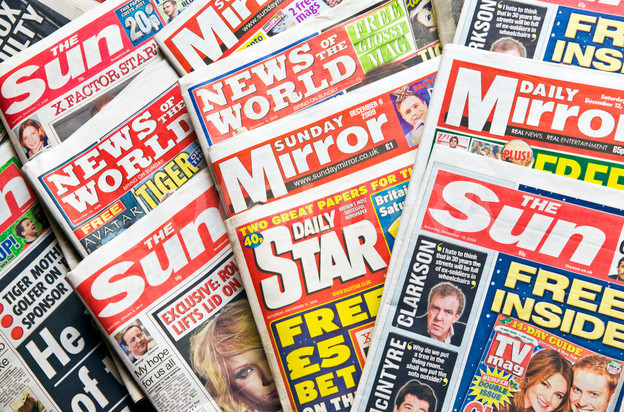
Maggie found a quiet corner in the cafe and set her tall Skinny Vanilla Latte on the table. It was one of her little pleasures to have a few minutes of quiet and caffeine before she opened her knitting shop next door. Another pleasure was to pick up a tabloid for a few minutes of humor. It had been one of her mother’s pleasures as well. Maggie’s mother was a college graduate (BA in philosophy and religion) but she occasionally sneaked home a copy of The National Enquirier or News of the World when she went grocery shopping. She told Maggie and her dad that the stories were sometimes too funny not to want to read beyond the headlines. And yet, she didn’t want her friends to know that she read such things: how could she say she read the rags for the stories?
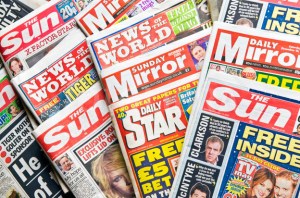
And Maggie had inherited both her mother’s attraction to the ridiculous and her reticence in admitting it. The headline that had caught her eye this morning had brought her up short, though. It was so bizarre that she couldn’t help but wonder if there were any truth in it: “Young Irish Lass Assaulted by Giant Latvian Penis” was the headline, but the story was relegated to page 13, with a warning that following pictures were graphic. Maggie almost knocked over her latte when she, rather quickly, opened the paper to page 13. There in full color was a picture of a woman hugging a giant penis.

Maggie’s mouth fell open and then promptly shut. The idea of reading about a penis with her mouth hanging open was somehow unsettling. She glanced around to make sure no one in the cafe had seen her expression and then proceeded to read:
“On the evening of September 19, 20__, a young Irish woman was found on the streets near her apartment slightly bruised and very giggly. It was quickly ascertained that the woman was intoxicated and had apparently fallen while on her way home from a local pub. Police say, however, that her bruises were not entirely consistent with a stumble along a cracked sidewalk so they took her to the local hospital for examination. At hospital, the young woman explained that she taught English to Latvian students which initially confused authorities since the woman is Irish. They also suspected her of being a Russian spy, but since she could not stop giggling, they eventually disregarded that suspicion.
“Since the woman may be a victim of assault, this paper will only refer to her as L. According to L, earlier that evening she had gone to the pub to meet a young Latvian man that she had met online through a dating website. She produced a picture of the man which the police has released to our paper in the hope that either he will come forward or that someone will know of his whereabouts.
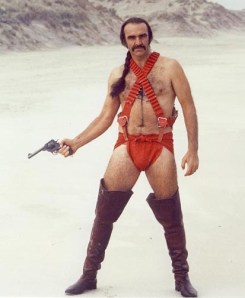
“L claimed that they had a pleasant conversation peppered with several pints of beer, but that they said goodbye at the pub with no plans to meet again. L lamented that this was typical of her dates so far with Latvian men. Our reporter, who is a Latvian woman, noted that L was not wearing the requisite stiletto heels and leopard-print, figure-hugging dress necessary for a first date. L responded with a few words which we cannot print in a family newspaper.
“When asked how she came to have bruises over her body, L said that while on her way home, she was confronted by a giant penis. The penis blocked her exit from the side street where the pub was located. L claimed that at first she thought the penis was just a costume worn by a Latvian with a sense of humor. She admitted that that was her first mistake. Her second mistake was in hugging the penis as if it were the “man of my dreams.” L stated that what happened next was not clear in her mind, but as the memory returned to her, she started giggling again. “It got p***ed off at me,” she said, obviously relishing the double entrende. Our reporter demonstrated considerable patience in waiting for L’s giggles to subside so she could wrap up the story.
“As it turns out, according to L, the penis was in fact offended by L’s “manhandling” of it and proceeded to knock itself against her head and arms in an attempt to get away from her. By this point, L was practically falling off her chair with laughter, the hospital staff had given up trying to treat her bruises (which in point of fact looked considerably benign), and our reporter was fed up with the whole story. The only “proof” that a giant penis even exists in Latvia is the picture at the top of this story, which L had been carrying around in her pocket.
“Since L will not say how she obtained the photo, it is up to our intrepid reporter to track down the giant penis and get its side of the story. A full update will be provided to our loyal readers once more information has been gained.”
Maggie quietly folded the tabloid. As she left the cafe with her now tepid latte, she slipped the rag into the newspaper recycle bin. Perhaps, she thought, she should find something else to read first thing in the morning.
***
With many thanks to my good friend Linda at http://expateyeonlatvia.wordpress.com.
Related post: http://expateyeonlatvia.wordpress.com/2013/11/06/janis-janis-wherefore-art-thou-janis/
-
I have been honored again with a Featured Post badge from The Community Storyboard for my response to this past week’s writing prompt, Childhood Memories. Many, many thanks to the CSB editor, Sarah M. Cradit, who presented the prompt and then selected my story. This story also happens to be an excerpt from my work-in-progress for NaNoWriMo 2013. Two things make this Featured Post selection particularly special: (1) the prompt was set up after I had returned from visiting my family home in upstate New York. Much like Melissa in the story, I would argue that I have few if any happy childhood memories. Yet, on this trip, I learned that they are there if I just make an effort to remember them. (2) I’m into Week 2 of NaNoWriMo so my confidence as a writer is starting to get shaky. I still have at least 30K words to go and I am definitely writing tribble. Except, perhaps, for this one story :)
So, make this Featured Post even more special to me by going to The Community Storyboard and reading all the other really wonderful stories, poems, and essays there. The CSB is a true treasure trove.
-
OK, fess up: Do you think Pride & Prejudice is a novel worthy of a bicentennial celebration? (I do :) )
2013 marks the bicentenary of the publication of Pride and Prejudice, surely Jane Austen’s most famous novel. Over 20 million copies are thought to have been sold worldwide. Here at Interesting Literature we thought we’d look around for some interesting facts concerning this Austen classic.
View original post 863 more words
-
Particularly interesting post on why the Bible can be considered literature.
By Emma England, University of Amsterdam
Eye rolls, sighs, outraged anger, and accusations of blasphemy are common reactions to the refrain “the Bible is Literature”. Such responses are based on a heady combination of perceptions of the Bible as a sacred text and literature as an art form. It does seems a little churlish though, to claim the Bible is not literature, assuming one accepts the premise that literature tells a good story, has beautiful phrasing of language, depth of meaning, invokes an emotional response, and offers insight into the human condition. Take the following as examples …
Stories. King Eglon gets killed on the toilet (Judges 3:12-30), Jonah gets swallowed and then vomited out of a giant fish (Jonah 1:17-2:10), and Saul visits the witch of Endor asking for help (1 Samuel 28:3-25). These narratives can all be read in their own right but they are also part of…
View original post 1,134 more words