Today we honor those who fought on behalf of our country.
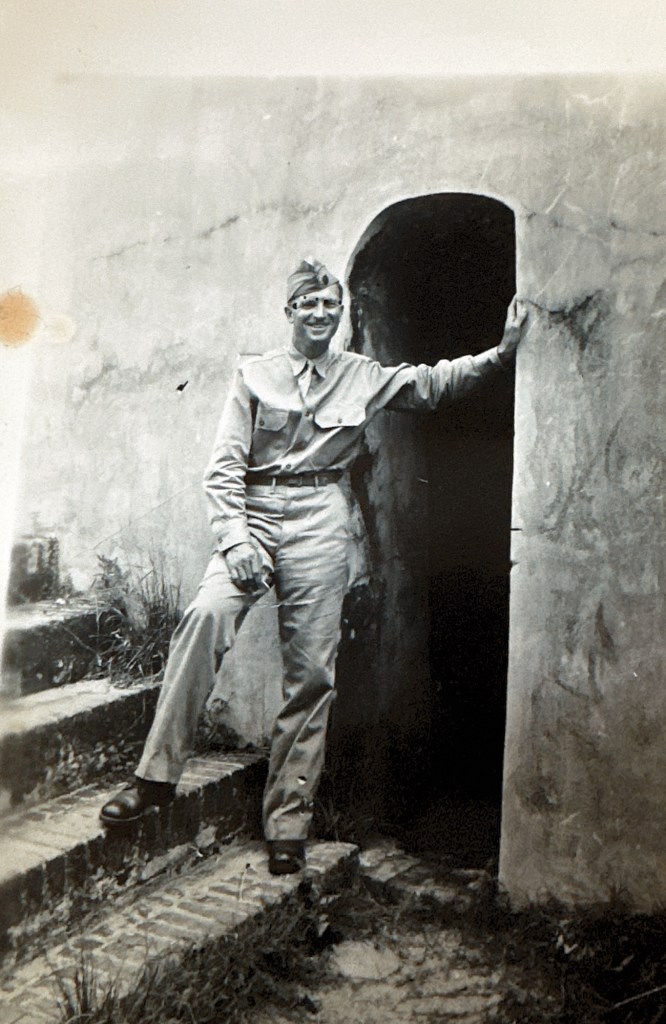
Theodore Albers, Army
I honor my dear surrogate grandfather, Ted Albers (RIP), who was drafted into the Army at the age of 34, captured at the Battle of the Bulge, and held as a POW under the end of WWII …
Greg admiring some tall Horrible Thistles at our happy place, St Marks National Wildlife Refuge.
I honor my husband, a Vietnam-era Navy veteran who flew in P3s looking for Russian submarines …
To honor them, I’ve made a donation to The New York Bar Foundation’s fundraiser to assist veterans in need of legal services (https://nylawyerslovevets.swell.gives/).
Don’t just thank a veteran for his or her service. Hug them. Hold them close and tell them you love them.
Support them. Make sure that what they fought for is not denied to them. Last week’s election should have secured their rightfully deserved benefits. Now their benefits are at risk by people who know nothing of sacrificing for their country and who consider POWs and wounded soldiers losers.
Do what you have to do to honor those who risked their all for our freedoms.
We are no longer trusted.
The hierarchy we must not debate
goes like this:
                 God
                 Leader
                 landowner
                 boss
                 father
                 husband
                 . . .
we, the foolish girls
A man has twenty-four ribs
A woman is one twenty-fourth
                                                          of a man."
From Eyes Open by Lyn Miller-Lachmann
Several months ago I won Eyes Open in a giveaway hosted by L. Marie at El Space. I did not take several months to read this compelling novel written in free verse. Procrastination–the one thing I excel at–preempted a timely review. But perhaps not.
Given the U.S. election results, perhaps this is the right time to share a review of this powerful book.
Eyes Open is the story of Sonia, a feisty, independent-minded teenager and her struggle to realize real independence in Portugal during 1966-1967, a slice of time during a dictatorship that lasted from 1926 to 1974. Sonia is in love with Zé Miguel, a dissident not much older than herself. Her family is against the relationship because they are both considered too young (in their mid- to late teens) and because of Zé Miguel’s anti-government activities.
At the beginning of the novel, Sonia’s family is enjoying a relatively middle-class life. They own their own restaurant and the five daughters (to Sonia’s father’s deep disappointment, he has no sons) attend a Catholic school. There Sonia and her friends create a poetry club and write poems honoring Zé Miguel after he is arrested and imprisoned.
Sonia writes in free verse because
I don’t have time to rhyme.
And indeed she doesn’t. Zé Miguel’s arrest causes suspicion among Sonia and her friends and her sisters. Sonia gets revenge on those who turned Zé Miguel in. The backlash is quick and fierce.
One step over the line. My boyfriend’s in prison.
One step over the line. Our family’s business is gone.
One step over the line. We leave our home forever.
We scatter, start over, refugees in our own land.
Sonia is a brave young woman but naive in that she seems to take men, at least the ones she is attracted to, at face value, despite (or perhaps in spite of) warnings from friends.
Zé Miguel breaks Sonia’s heart but she understands why: in this country, even among the dissidents, women are expected to be subservient. Another young man plays the long game with her, courting her, convincing her that he admires her poetry and her independence when, frankly, all he wants is to get into her pants.
Despite the betrayals, Sonia’s willingness to believe in people and, more importantly, believe in herself as a positive force is heartening.
Sonia takes many risks for the sake of her independence, suffers beatings from her father, survives dangerous work at a hotel laundry, and eventually manages to escape Portugal. (And it is an escape. As a female, she is prohibited from traveling freely.) Still, she does not give up.
I am a scatterling
one of many.
[...]
for the monsters among us
moved into our home
made colonies of our minds
and between a hostile neighbor
and the sea
I cast my lot with the sea
with the certainty that
like fishing boats sailing beyond
                                                             the horizon
      brave sailor
      eyes open
gazing toward a new world beyond
                                                             the horizon
I too will return.
I have tried to replicate the structure of the free verse used in this novel so you can see how effective that structure is to convey feeling. Eyes Open is available at Bookshop and Amazon.
An audio version is available through libro.fm. Such wonderful narration by SoneelaNankani! If you can afford it, I would recommend buying both, perhaps listening to the book as you read it.
I also highly recommend this interview with Lyn Miller-Lachmann on El Space: Check This Out: Eyes Open. L. Marie always conducts a great interview.
Eyes Open is a powerful story of one young woman’s fight for self-determination, for independence for herself and her country. It may well be necessary reading for these times.
And so. Here we are. I am struggling to keep my composure. I am struggling to take care of myself. I had looked forward to the end of the election so I could finally relax and refocus on all the things I’ve been neglecting during the campaigns. Instead of writing for my blog and knitting for myself, I had mailed letters and postcards, donated $ when and where I could. Stay informed. Voted.
I don’t regret a second of it. Instead, I wish I had written more letters, more postcards. Would it have made a difference? Probably not. But it’s who I am.
I no longer march and I don’t believe in text banking or phone banking. I’m one of those people who will not answer calls from unknown numbers and who finds unsolicited text messages annoying. But I can write so that I did.
I am fearful. I’ve often been literally sick to my stomach since early Wednesday morning. I know it’s going to get real ugly and dark and scary. I believe we will probably be okay because we’re old white people. Then again we might witness the end of Social Security and Medicare as well life-saving vaccines … but we are not panicking. Not yet.
For now, I’m grabbing any and every little bright star I can find. At last count, 69.1 million people voted for Harris so there are 69.1 million people in this country who still believe in Democracy. Another 2.2 million voted for someone other than Harris or what’s-his-name. I’m not sure what those voters believe in. But I will keep returning to that 69.1 million as 69.1 million brilliant stars in a very dark sky.
I find other brilliant stars in the Democrats who won local or state-level races, in the states that voted for reproductive rights, in the lawyers who are gearing up to stop or at least slow down the heinous policies set forth by Project 2025. I am not going to give up.
I can’t give up. I don’t want to give up. I think of Sonia and how much worse her life would have been if she had just given up and given in.
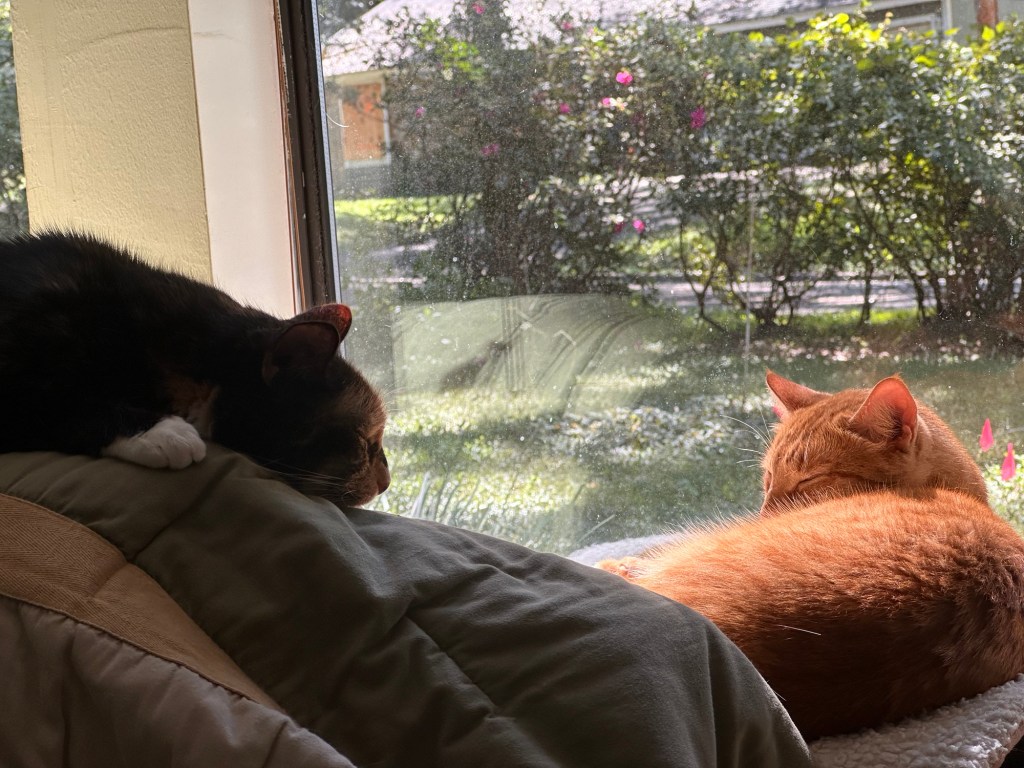
Lastly, these two need me.
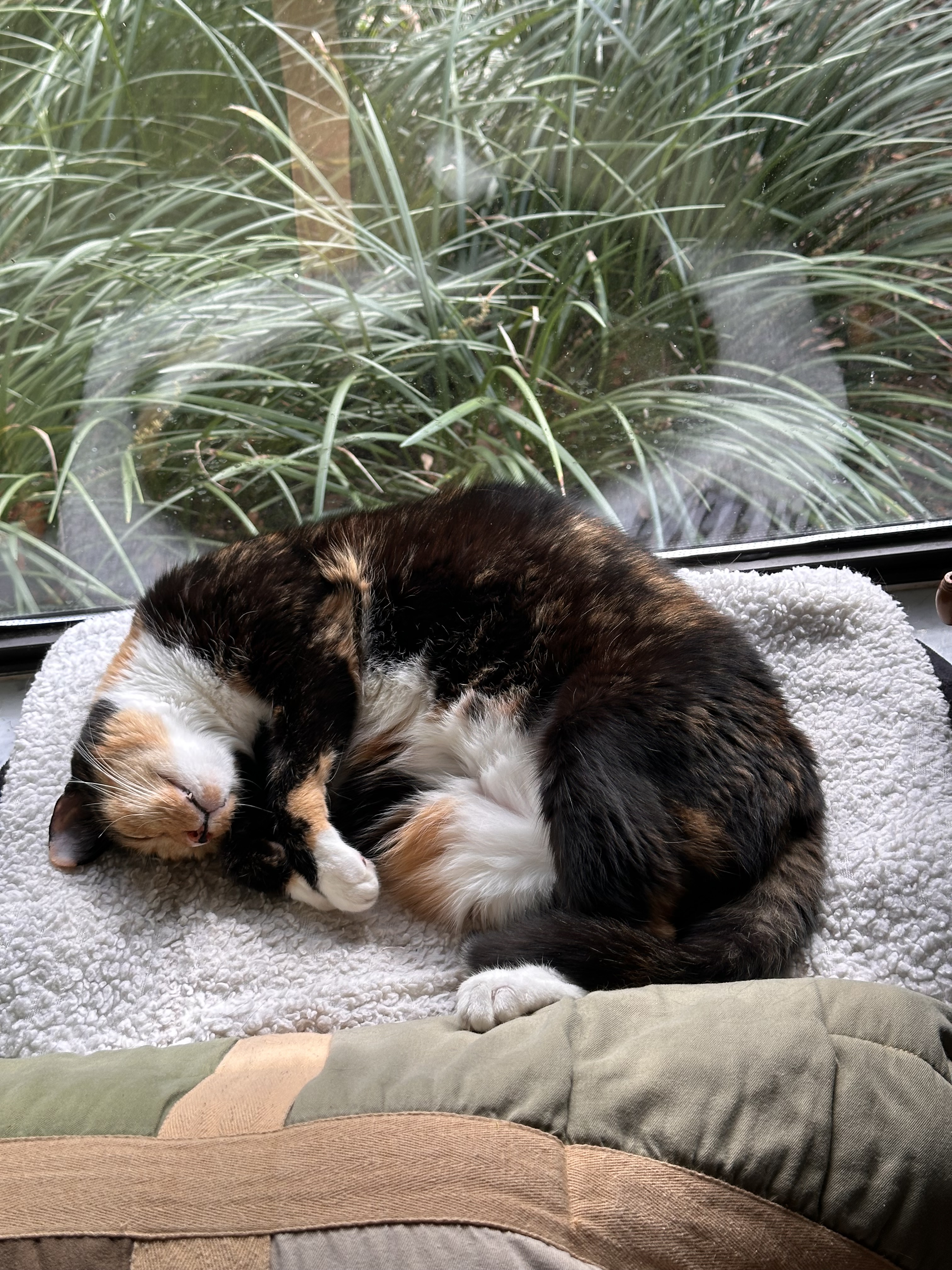
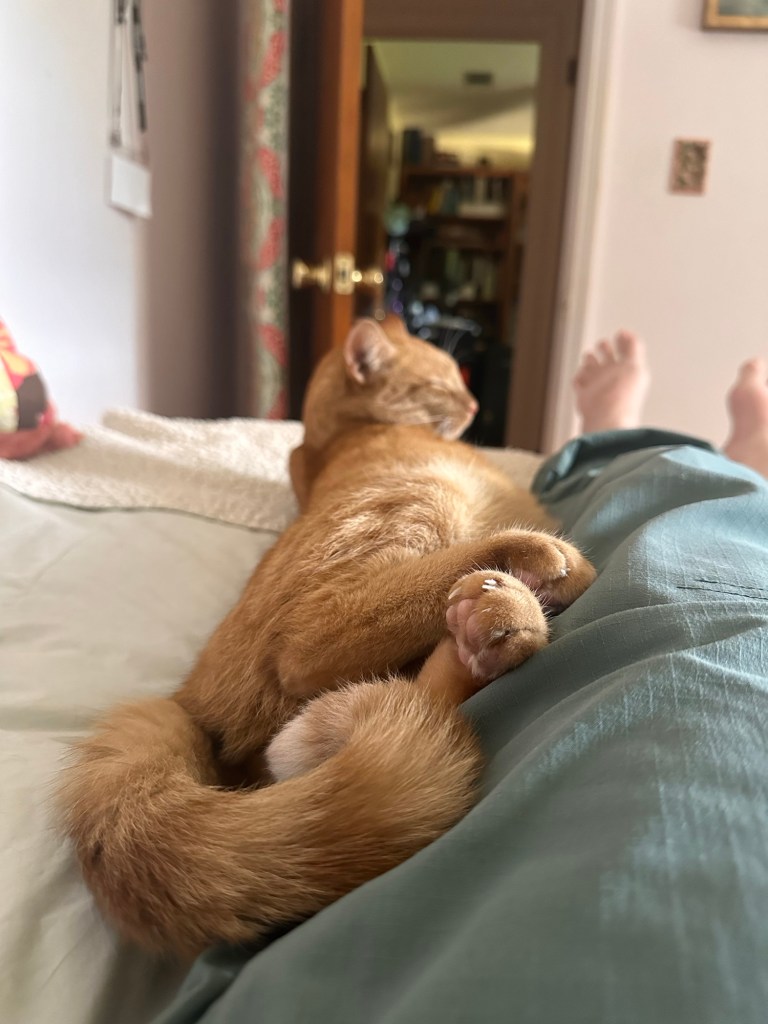
Raji showing off his best side … or end.Wendy in deep slumber.
Please take care of yourselves. I know that many of you who read my blog feel as I do. You are all brilliant stars to me.
I don’t know where you are right now. I don’t believe in Heaven or Hell, but if there’s a Heaven, then I imagine …
You sitting at a picture window, in front of a card table where a spread of 1,000 puzzle pieces wait for your attention which is distracted by the Baltimore Orioles and Cardinals and Bluebirds also vying for your attention outside your window.
Your oldest daughter Charlotte is watching TV which is permanently set to daytime soaps, the ones you and she would discuss on the phone when she lived in Florida and you in New York. She sits in her blue leather recliner, offering running commentary that you only half listen to.
Your other daughter Shirley is flipping through Amway receipts while she recites the latest accolades of her grandchildren. During commercial breaks she’ll pick up a James Patterson novel and read a bit. She sits in her chair, a facsimile of the recliner she left behind, the shawl I knitted for her draped over the back.
You watch your birds, piece together your puzzle, and maybe listen to your daughters. You don’t have to hear every word. It’s enough to have them near you.
Maybe you’re waiting for one of your siblings to drop by. Maybe Beatrice who was the first to go, or Alice who was the last before you. Maybe your brothers Virgil, Ed, Bob, or Leon will show up, or Mildred, Edith, or Leona. It’s been so long since you had seen your siblings. And you wonder about the last two–Howard and Orvetta. You want them to be well until it’s their time and then … no pain, no pain.
You miss berry picking and going to the casino, but then your daughters might take you when you’re in the mood. In this version of Heaven, Shirley does not have Parkinson’s and Charlotte can breathe easily on her own.
After your daughters–your girls–died, you missed them so much that you were relieved to miss your 100th birthday. You got close, very close. But the pull of your girls was too strong, the loss of them too much to continue to bear.
People ask me why your last two children–me and your son–weren’t enough to keep you going. Why did you openly lament the loss of your girls as if they were the only children you had?
They were the only children you had for eight years. You were in your twenties then. By the time your son and I came along, unexpectedly, you were nearly middle-aged with a sick husband and decades of hard and poorly paid work ahead of you.
I want to believe that those first eight years, when it was just you, my dad and your girls, were happy years. Maybe, when your girls died, that was the loss you felt most keenly. They were no longer around to remind you of that time.
No child should die before their parents. No parent should experience the death of their child.
I know you loved me as best as you could. I loved you as best as I could. Yes, I could have been a better daughter. My efforts paled compared to my sisters. Yes, you could have been a better mother. Hindsight is 20-20. There’s regret on both sides, but no point in it.
You were never one for regrets. You didn’t like to look back, and you didn’t pay much mind to the future. From you, I’m learning to live in the moment. That may be your greatest gift to me.
Yesterday, October 7, would have been my sister Charlotte’s 80th birthday. I meant to write a blog post celebrating her birthday. I felt that weird sort of self-consciousness that social media provokes: if I don’t publicly share what I’m doing, did I do it? By not writing a public post on my sister’s birthday, I can’t prove I thought about her that day. Trust me, I did.
Hurricanes
It wasn’t just her birthday that prompted me to think about Charlotte. It was also the hurricanes—one past, another on its way. Charlotte had lived in St. Petersburg, FL, in a mobile home park. If she were still alive, she’d be evacuating right now, trying to get as far away from Hurricane Milton as possible. Maybe.
When she was alive, and hurricanes had the Tampa Bay Area in their sights, I’d worry about Charlotte. I’d call her, ask if she had someplace to go. She’d get impatient with me, arguing that I didn’t need to worry. She’d argue that she didn’t have to evacuate, but then she would wind up staying with friends. I’d feel relieved but also guilty.
We didn’t have the kind of relationship where I’d drive almost 300 miles to pick her up and whisk her away. We didn’t have the kind of relationship where we were willing to risk being stuck with each other.
Health
It wasn’t always like that. Twenty-some years ago I spent a couple of weeks with her while she recovered from heart surgery. We had fun. We watched old movies, ordered pizza, ate Kentucky Fried Chicken. It was like a two-week slumber party.
While she was in hospital, I cleaned her tiny trailer, shampooing the worn carpet, replacing old appliances. And I cried. She was widowed by then, and she didn’t seem to have many friends. At least, not many that she could count on. I didn’t know yet that when she was very drunk, she wasn’t very nice. I cried because I saw how she was living on the edge. I wanted to fix things for her. I paid off her credit card that was several months past due. I told a bartender at the establishment she frequented that she had had heart surgery and should limit how much she drinks. I left her cash so she could pay her bills. I treated her like a child, much like our mother did.
History
Charlotte was almost 13 when I was born. Growing up, she was sometimes my favorite sister, sometimes not. I always saw her as tragic, fragile, fatalistic. Our mother infantilized Charlotte. Really, there’s no other word for it. My sister Shirley didn’t give our mother a chance. She went to nursing school and then married at 19, putting herself on the same playing field as our mother.
Charlotte, well, she was unlucky in love. She first married a guy who dealt in antiques and taught me how to pick the strings of a guitar. He was quiet and patient with me so I liked him.
Until Charlotte acknowledged that, yes, rape does occur in marriage. I was 12, a budding feminist, and I felt a chill when she responded affirmatively to what I had just read in a book. She didn’t look at me, and I had a fleeting image of her in a dark bedroom pleading No.
During that first marriage, Charlotte came down with scarlet fever. I didn’t know until years later that it was our mother who insisted that Charlotte go to the hospital. Her husband, apparently, was content to let her lie in bed. The fever weakened her heart, and she was told that she should never have children. All she ever wanted.
Sisters
A desire for children was something I never shared with either of my sisters. Maybe because I was the youngest. By the time babies entered my life—through my sister Shirley—I had turned inward, wanting to just be left alone. My family was crumbling. I was old enough to see that something was wrong with my dad, but too young to understand what it was. I was afraid of my mother and her cold temper. My brother was a boy.
Occasionally, I’d spent a night or two with Charlotte and her first husband. I guess it was my mother’s way of getting me out of the house. I remember Charlotte going with me to a quarry for clay and then making a mess of her kitchen trying to make little pots. I remember her being patient with me and quiet. And sad.
It’s taken me 67 years to realize that Charlotte and I were not destined to be friends. We were too alike in the wrong ways. Both of us had a wild side, no doubt spurred by our mother’s over-protectiveness. The things I didn’t like about myself, I saw in Charlotte: a tendency to drink too much, to judge, to be mercurial. I saw Charlotte as the woman I might have become if Greg hadn’t entered my life.
We’d been drifting apart when Trump decided to run for president. He made certain we wound up on different continents. Once Charlotte understood that I liked Obama and I didn’t like Trump, I was persona non grata.
And yet, I keep remembering our last phone call. How she called me “dear” in between her gasps for breath. How I wanted to say I love you but didn’t.
Thank you for reading. I’m very behind on reading, and I appreciate your patience as I try (and likely fail) to catch up.
Please keep everyone affected by hurricanes Helene and Milton in your thoughts and prayers. I’ve been reading wonderful things about World Central Kitchen if you want to help by donating: https://wck.org
Woot! Power is back on. Now my electronic life resumes … charging batteries, checking internet service, resetting clocks, plugging in the kettle, turning on the light in my windowless bathroom, sitting now with my iPad typing away.
Now complacency can set in since Helene (for us) turned out to be a minor inconvenience. Maybe it would have been psychologically worse for us if we hadn’t prepared for the worst, but as far as life and limb, we are so near normal now that Helene seems like a bad dream.
Yesterday, the hummingbirds came back in force, and my husband had to scurry to get the feeders back up. The butterflies (mostly long-wing zebras but we did see one Monarch yesterday) are also back and hungry.
While I’m glad to have power again, I’ll miss the dark sky, the relative silence (generators and owls competing for our attention), and the slowing down of life, the opportunity to “make do” and learn what I can live without.
Thanks to everyone for your good wishes!
Please keep in the mind all those who were hit harder by Helene than we were. We were saved by Helene tilting east, but that meant that others were not so lucky. Areas that were hit worse include Taylor County which has suffered through three hurricanes in the last two years.
I live in what is called the Big Bend of Florida, and tomorrow (Thursday) we will likely be cowering in place while a Category 3 hurricane blows through.
We live about 20 miles up from the M on the red Sharpie-like line in the above graphic.
Am I scared? Yup. This part of Florida has NEVER had a hurricane of this magnitude come through. My county has issued mandatory evacuations for people living in mobile homes, but not for the rest of us. But where would we go with two cats? There’s a greater risk that if we left, we wouldn’t be able to get home after the hurricane because of road closures.
Our house is solid, we have a metal roof, and a tall fence that could buffer our property if it doesn’t blow away. We have enough cat food for a few months. My husband is taking it all in stride since he grew up in Miami and weathered (pun intended) a number of hurricanes.
Still. Scary shit.
Worst case scenario is we and the cats will spend the day in the master bathroom.
This is an oldish photo but captures the cat attitude of “I’m fine as long as you feed me.”
Comments are closed since I’m likely to be offline for quite a long while.
Liza Larkin is a pathology resident with a schizoid personality disorder that makes interacting with people very difficult. Liza’s mom, who has schizophrenia, lives in an institution. Her father, who provided her stability and unconditional love as she grew up, is dead. Now she relies on her psychiatrist, Dr. Lightfoot, to assist her in dealing with the difficulties of social relationships. Her father taught her well, but challenges to her preferred reclusiveness continually beset her. For these reasons, Liza seems like an unlikely warrior for justice; yet, she has a visceral antipathy toward injustice that compels her to help people she cares. She knowingly puts herself in danger for the sake of others.
In this second book of the series, Liza suspects that a friend’s aunt was murdered despite no evidence to support her suspicion. While sleuthing on her own, she’s challenged to keep a major research grant (and her professional future) from falling through the cracks while her preceptor copes with a family crisis. Liza also runs up against Chopper, a shady character from the previous novel, who threatens to blackmail her. She (and we) really don’t want to know how he got that nickname.
The story is told from Liza’s point-of-view so we only know what she knows, making this novel a thrilling puzzle. I felt I was right there alongside Liza, trying to figure out how her friend’s aunt might have been murdered and why. My only criticism of the novel is that Liza spends a lot of time ruminating, thinking through all the possibilities of whatever problem she’s trying to solve. There were a few moments when I wanted her to stop thinking and start doing, but those ruminations also offer a deep dive into Liza’s brain. She is highly intelligent, capable of incredible focus and memory retention. Yet, like other humans, she has her flaws and vulnerabilities. “Seeing” Liza socially mature and learn to ask for help as well as offer help is a real bonus. Rubin has a gift for character development and for keeping the reader on the edge of her seat. I am looking forward to more novels in this series.
You can find Malignant Assumptions at Amazon (print and Kindle versions) and Bookshop (print versions). Audio versions are available at Audible, Libro.fm, and Spotify.
Thank you for reading! Here’s your prize:
Raji curled up on one of my weird pillow creations.
It is my honor to be part of Elizabeth (Liz) Gauffreau’s blog tour for her latest poetry collection, Simple Pleasures: Haiku from the Place Just Right. Liz is a wonderful poet, storyteller, book reviewer, and blogging friend. If you don’t already subscribe to her blog at lizgauffreau.com, please do so now! We’ll wait.
Okay, now that you’re back, let’s continue with the tour!
Today Liz shares photos of ruins in Pawtuckaway State Park as well as a bit of the area’s fascinating history.
Without further adieu, here’s Liz!
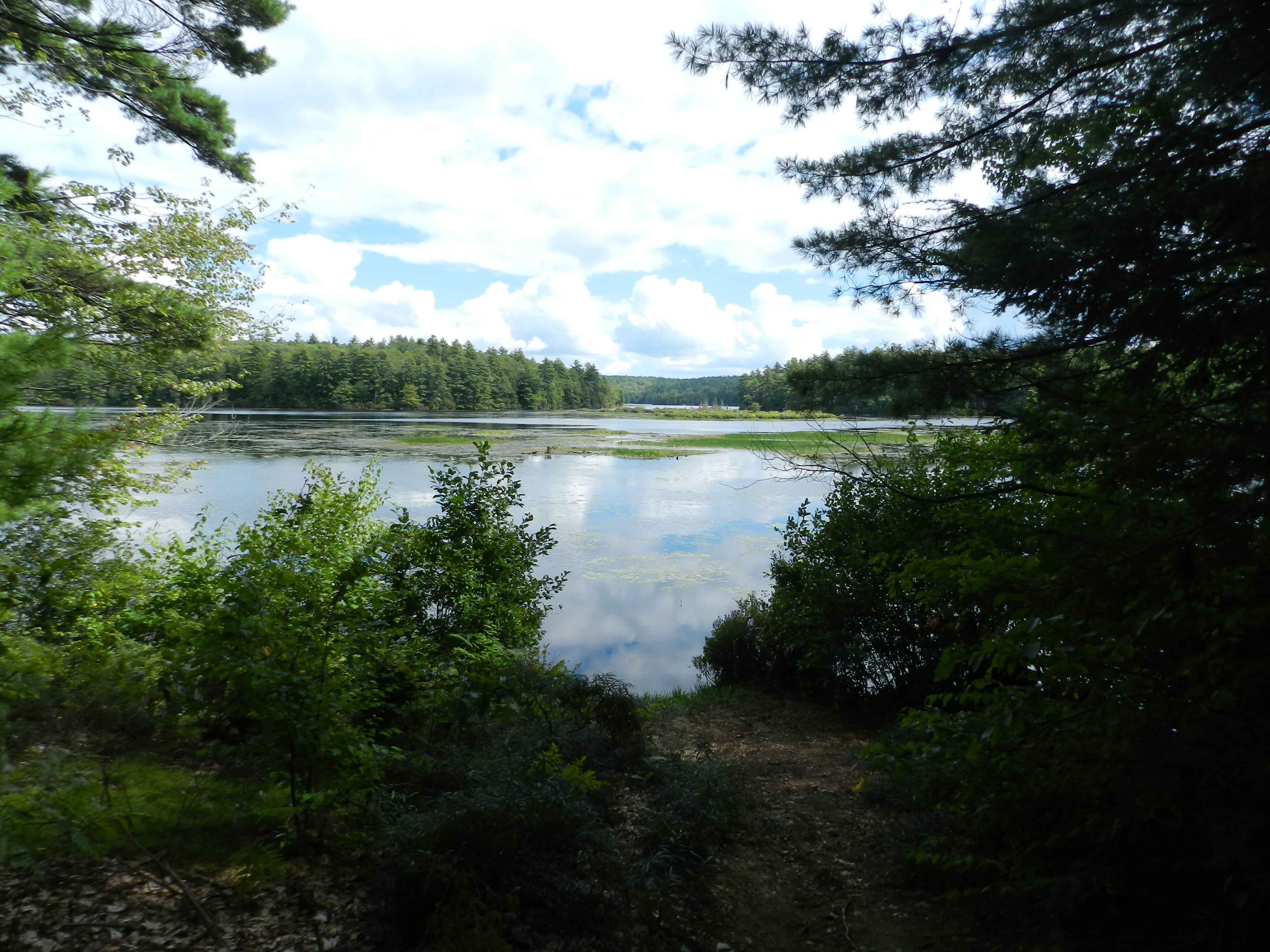
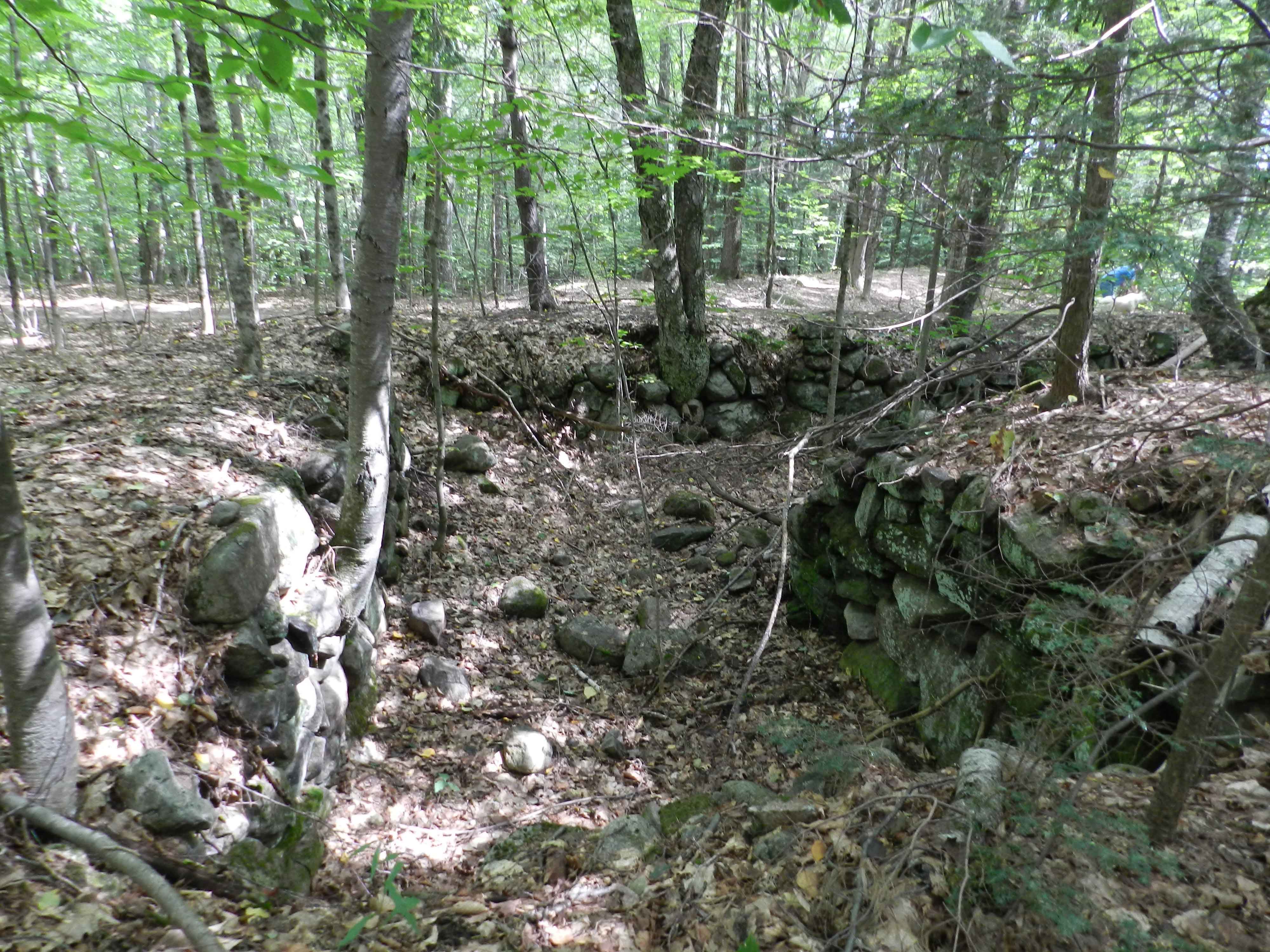
Thank you, Marie, for hosting me on my blog tour for Simple Pleasures: Haiku from the Place Just Right! For today’s tour stop, I’m sharing photos from a set of ruins in Pawtuckaway State Park, which is a hop, skip, and a jump from our house in Nottingham. These ruins provide the larger context for one of the poems in Simple Pleasures.
The Pawtuckaway region was originally inhabited by indigenous peoples, the Pennacook, a division of the Algonquin Natives. The Pennacook were hunter gathers, who referred to Pawtuckaway as the land of “sticks and stones” because it wouldn’t support crops. When European settlers moved in, they thought they knew better. They cleared the land of trees; built houses, barns, and stone walls; and planted crops. However, the farms were not profitable because—wait for it—the land wouldn’t support crops. The early settlers’ descendants finally abandoned their farms at the end of the 19th century and joined the westward expansion. (Source: https://blog.nhstateparks.org/tucked-away-in-pawtuckaway/)
Walking along the trail that goes around Pawtuckaway Lake, we come upon the last signs of those abandoned farms: derelict stone walls and cellar holes.
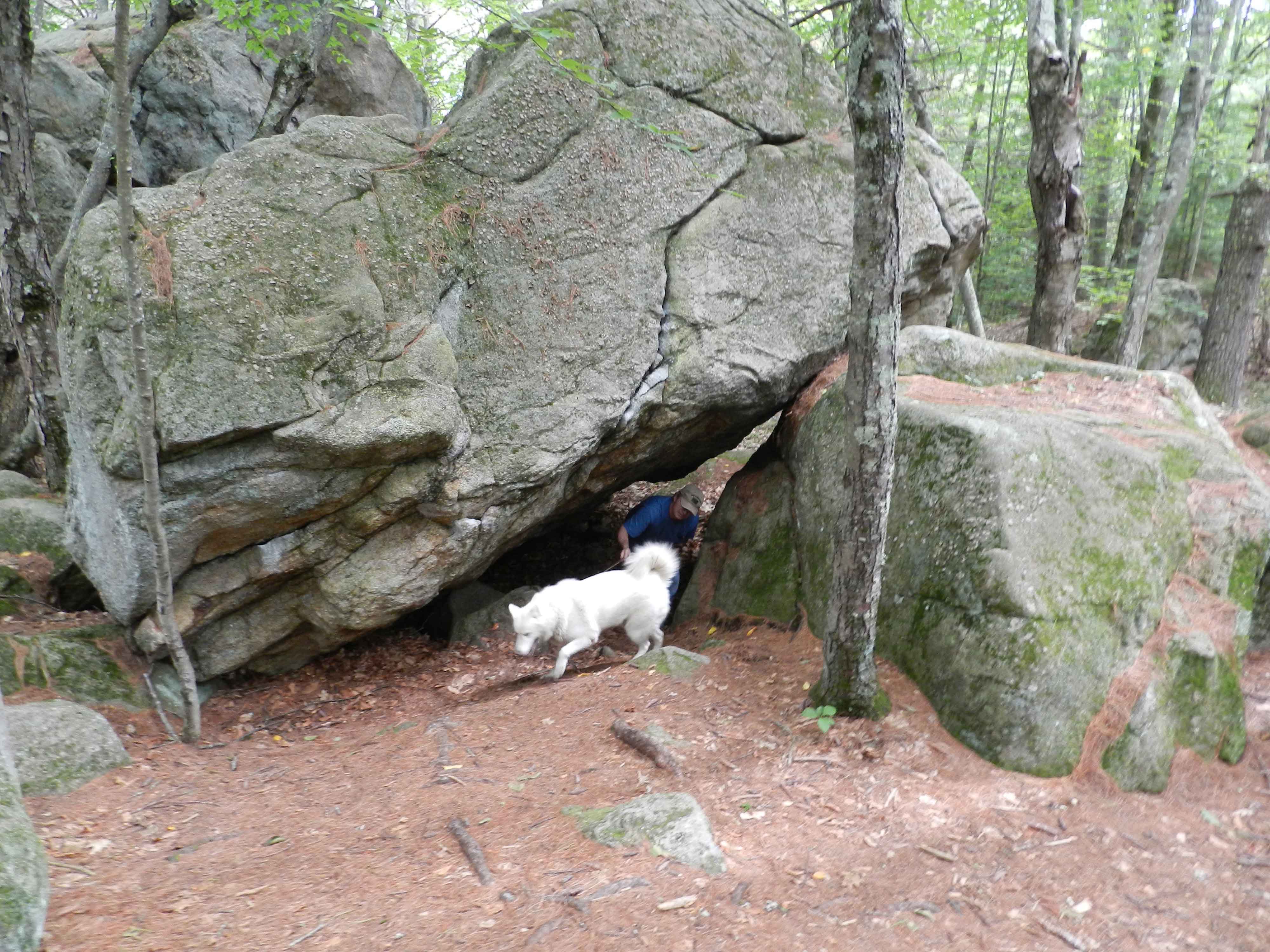
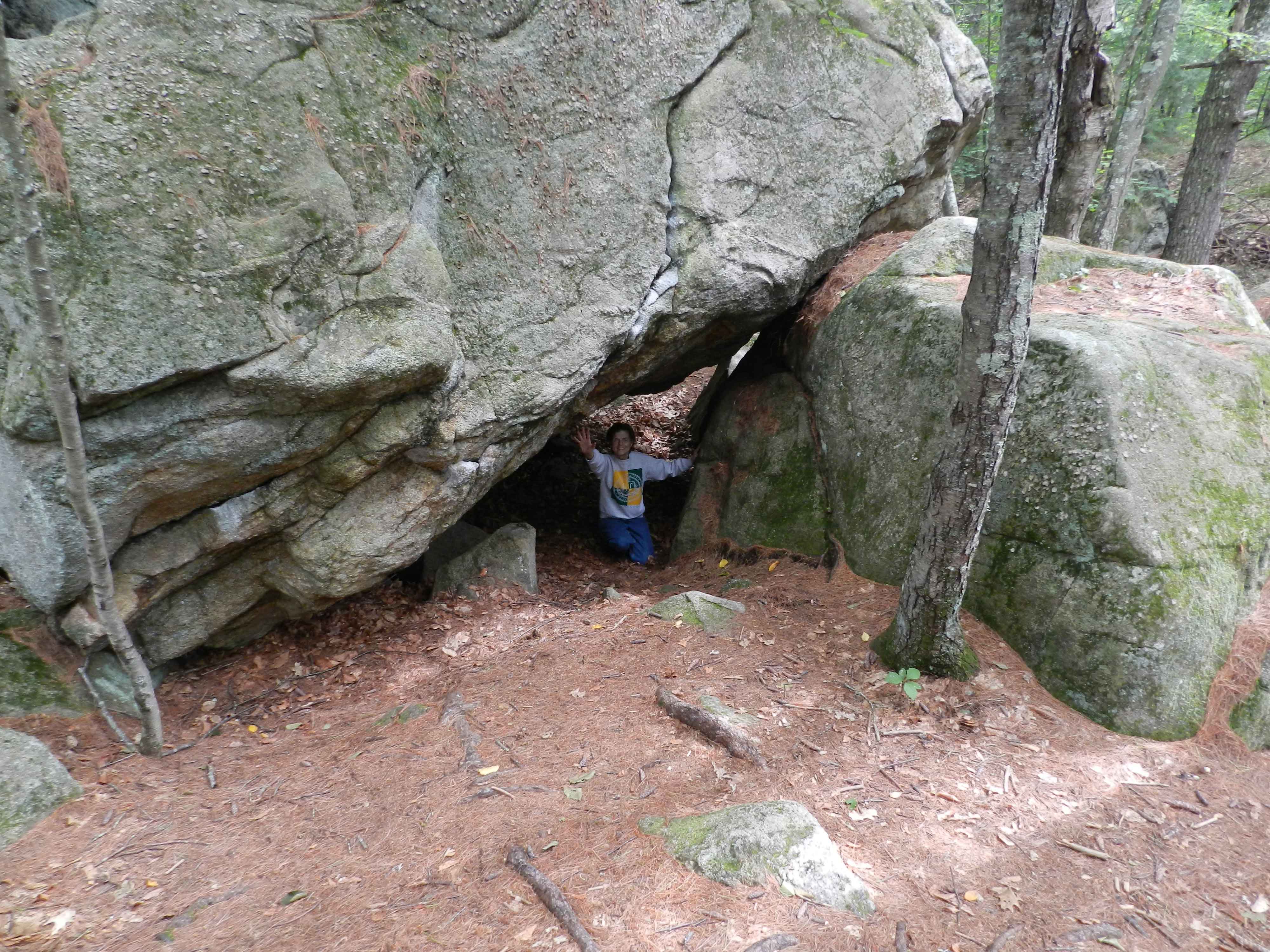
The glacier strikes again! This so-called boulder field was created 18,000 years ago when a mile-high glacier slowly moved through the area, picked up boulders from a nearby mountain and deposited them here. (Source: https://blog.nhstateparks.org/tucked-away-in-pawtuckaway)
Author Biography
Elizabeth Gauffreau writes fiction and poetry with a strong connection to family and place. Her work has been widely published in literary magazines, as well as several themed anthologies. Her short story “Henrietta’s Saving Grace” was awarded the 2022 Ben Nyberg prize for fiction by Choeofpleirn Press.
She has published a novel, Telling Sonny, and a collection of photopoetry, Grief Songs: Poems of Love & Remembrance. She is currently working on a novel, The Weight of Snow and Regret, based on the closing of the last poor farm in Vermont in 1968.
Liz’s professional background is in nontraditional higher education, including academic advising, classroom and online teaching, curriculum development, and program administration. She received the Granite State College Distinguished Faculty Award for Excellence in Teaching in 2018. Liz lives in Nottingham, New Hampshire with her husband. Find her online at https://lizgauffreau.com.
Reading this collection was like forest bathing, the photos of Liz’s favorite outdoor places filled with green mountains, blue lakes, red and yellow leaves, gray rocks, white trees, and pink-tinted and fiery sunsets. And yet the photo and haiku that stirred my soul the most was that of the snow-covered pond with a border of dark trees in the background.
the pond in winter windswept snow, crystalline sky frigid air, silence
I spent the first 21 years of my life in upstate New York, among farms just northeast of Albany. Although I often say that fall was my favorite season, sometimes I miss winter more, especially the silence of winter.
Simple Pleasures is a wonderful pairing of photographs and poetry. You’ll want to keep this book by your bedside or writing desk for when you want to enjoy a simple pleasure or to be inspired.
At this time, I still don’t know if the year-long program with Summer Brennan on Substack will resume. A few weeks ago, one of our group reported that he had (finally) talked with Summer’s agent and was told that she was fine but dealing with a family tragedy. The relief that she was fine was palpable … even in an online group. But we are still in limbo, only being told that she planned to “update” us later, in the next session which starts September 1. And while that is tomorrow, my sixth sense tells me we will still be in limbo. And so the anxiety continues, especially among those who feel they should get a refund for the missed sessions. Lesson learned: Substack is not at all helpful in that regard. Firstly, the platform prefers that you work that out with the writer. Secondly, if the writer is incommunicado and you’ve paid for a full year (as I did), then there needs to be at least six months of inactivity in order for a refund to be considered. Not that I was planning to ask for a refund. Like I said, lesson learned.
Friendship
A friend mentioned in passing the other day how she was planning to go to Maui with a few girlfriends. It made me feel sad. I thought about when I last had a group of girlfriends. It was the early 80s and I remember four of us (including the above-mentioned friend) getting together at someone’s house. The four of us worked at the same engineering firm in California. I don’t remember where we were and why we were together but I do remember we had fun and it was a rare occurrence for me to enjoy being with more than one or two people at a time. In fact, most of my friendship have been duos or trios. When I was working on my master’s in English at Florida State University in the 90s, three of us became attached, to the point where one professor said, “When I see one of you, the other two aren’t far behind.” The trio is no more. One of us moved and married and had children. The other realized she really didn’t like me after all.
The commonplace book is an ancient tradition for copying out quotations. Brilliant thinkers throughout history have kept commonplace books including John Milton, Lewis Carroll, Virginia Woolf, and Octavia Butler.
I used to copy quotations all the time when I was a student. It was the most fun part of keeping a journal, and I still consider those journals the most insightful about my life during those times than the seemingly endless and always boring rants of being unlucky in love or under-appreciated at work.
As a book reviewer, writing down quotes goes a long way to helping me write the reviews. Sure, if I’m reading on my Kindle, I can “highlight” and review those highlights. But it’s not the same as picking up my notebook and pen and jotting the quote down.
I have a few blank notebooks lying about (of course). I doubt that I will actively participate in Jillian’s club (see link above). I’m already far behind in reading and connecting online.
Healthcare
I’ll spare you the rant I shared with a friend earlier today about the compartmentalization of our healthcare system. To wit: regarding a swollen foot, I was referred to my primary doctor who referred me to a vascular clinic who referred me to a vein specialist who I have yet to see. At this point, three doctors with none of them having anything definitive to say about my foot. If the vein specialist refers me to another specialist, I might give up on healthcare altogether.
(I am fine. Really. My right foot tends to swell but I’m doing all the right things and pretty soon I’ll have a bunch of compression socks to wear … when it gets cooler.)
My sister Shirley would have turned 78 today, August 2. I don’t know when the feature photo was taken but it was sometime in the 1960s. Even though the photo is decades old, it’s how I remember her. In my memory, no matter how much I change, she doesn’t.
I miss her. She knew how to party.
Having a lot of fun at our brother’s wedding reception (the first one).













 Marie at 1 Write Way