I’ve been a bit “out of it” lately due to world events and general procrastination. I keep meaning to get back into the swing of things so when I (finally) sat down to catch up with my online community, I came across this Lens-Artist Challenge is hosted by Leya. She encourages us to share what makes us smile. For some, smiles these days might be hard to come by so this is a particularly timely challenge.
What makes me smile? Here’s a few:
Nature
Whether it’s an Eastern Carpenter Bee getting up close and personal with Kay’s Pink Roses (photo featured above) …
Or the tell-tale sign of a raccoon visiting our campsite at night …
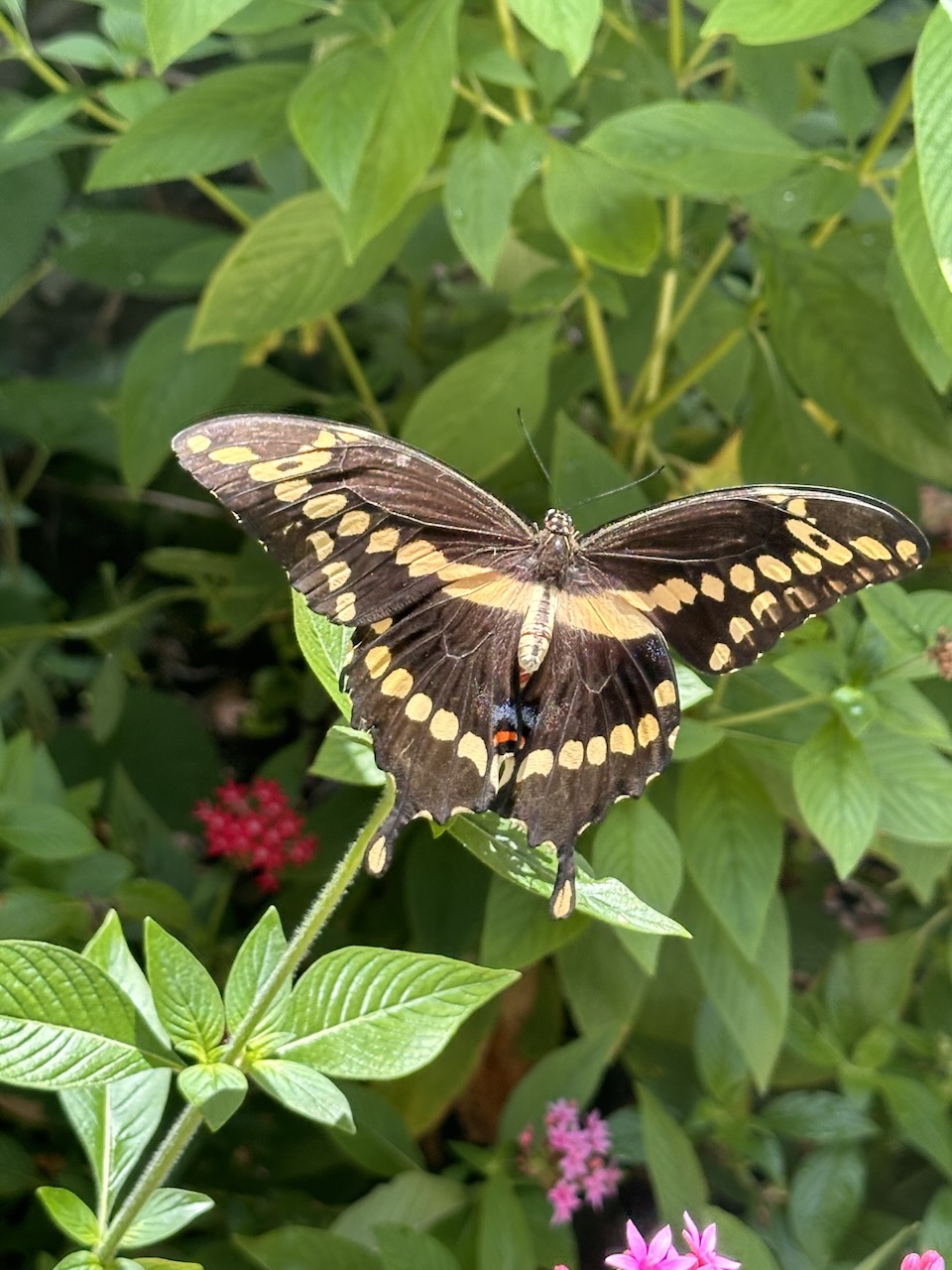
Or a swallowtail butterfly feasting on penta blooms …
Or a praying mantis praying that it is blending in …
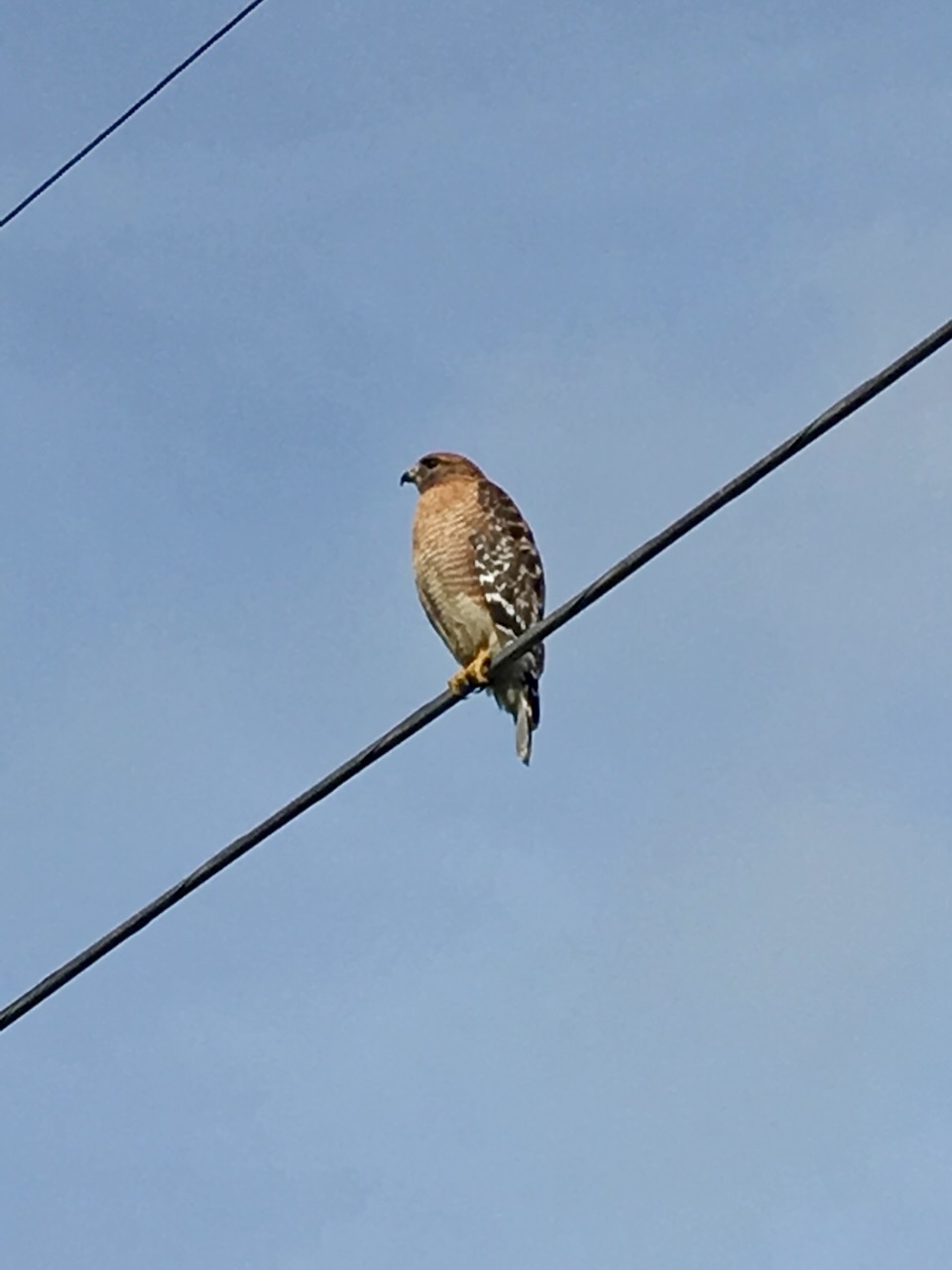
Or an red-tailed hawk just hanging out in the ‘hood …
Or a momma gator and her baby.
Sometimes Art makes me smile …
Sonic Blooms, Seattle, Washington, 2014
From the exhibit: Created by Seattle-based artist Dan Corson in a collaboration between Pacific Science Center and Seattle City Light, these sun loving, harmonic blooms use regionally manufactured, custom solar panels to generate their own power. Each flower top contains 48 solar cells that produce 4.6 Wp (watts at peak production) for a total of 1,104 Wp for all 5 flowers.
The electricity generated will make the flowers dance with light through the evening and sing through the day, 365 days of the year. Sonic Bloom combines art and science to help educate about solar energy in the Pacific Northwest and inspire people to consider how they can incorporate renewable energy into their lives.
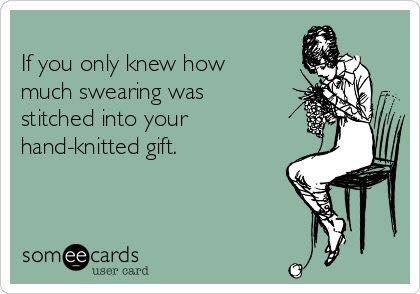
Especially funny signs or photos …
A bigger smile from me when they refer to knitting …
What makes me smile the most? Cats, always the cats …
Junior (RIP) and Maxine (RIP) staking out their territory on my husband. Wendy and Raji zonked out in the sun.
I hope you got some smiles out of my selection! Let me know what makes you smile.
If you want to participate in this Lens-Artists challenge, remember to tag with Lens-Artists and link to Ann-Christine’s original post.
Next week, Sofia will lead us from her beautiful site Photographias – be sure to visit on Saturday 30!
To all of you who celebrate Thanksgiving, I hope you have a wonderful time with family and friends. Despite current world events, we still have much to be grateful for. I know I am grateful for each one of you.
It is my honor to be part of Elizabeth (Liz) Gauffreau’s blog tour for her latest poetry collection, Simple Pleasures: Haiku from the Place Just Right. Liz is a wonderful poet, storyteller, book reviewer, and blogging friend. If you don’t already subscribe to her blog at lizgauffreau.com, please do so now! We’ll wait.
Okay, now that you’re back, let’s continue with the tour!
Today Liz shares photos of ruins in Pawtuckaway State Park as well as a bit of the area’s fascinating history.
Without further adieu, here’s Liz!
Thank you, Marie, for hosting me on my blog tour for Simple Pleasures: Haiku from the Place Just Right! For today’s tour stop, I’m sharing photos from a set of ruins in Pawtuckaway State Park, which is a hop, skip, and a jump from our house in Nottingham. These ruins provide the larger context for one of the poems in Simple Pleasures.
The Pawtuckaway region was originally inhabited by indigenous peoples, the Pennacook, a division of the Algonquin Natives. The Pennacook were hunter gathers, who referred to Pawtuckaway as the land of “sticks and stones” because it wouldn’t support crops. When European settlers moved in, they thought they knew better. They cleared the land of trees; built houses, barns, and stone walls; and planted crops. However, the farms were not profitable because—wait for it—the land wouldn’t support crops. The early settlers’ descendants finally abandoned their farms at the end of the 19th century and joined the westward expansion. (Source: https://blog.nhstateparks.org/tucked-away-in-pawtuckaway/)
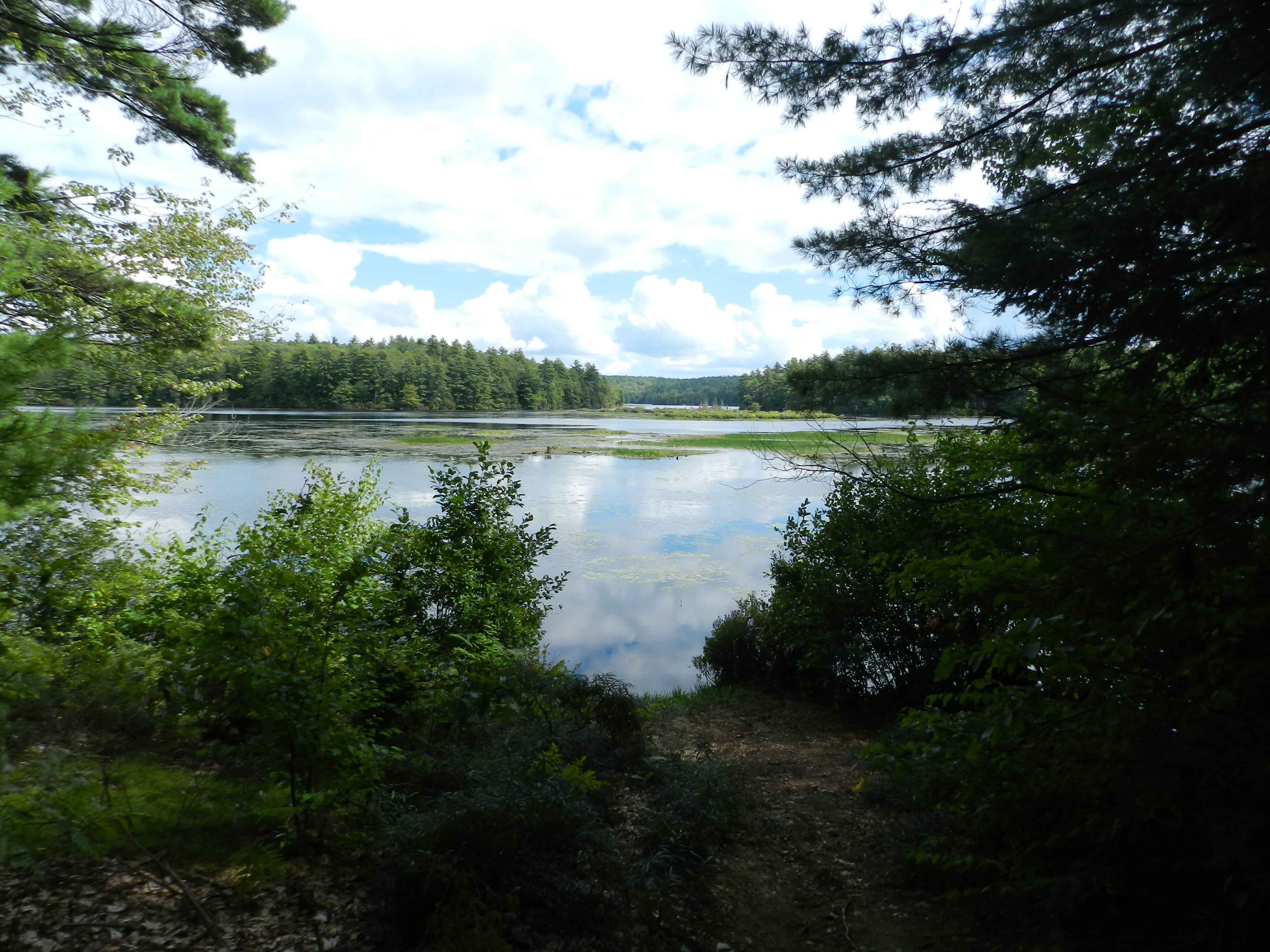
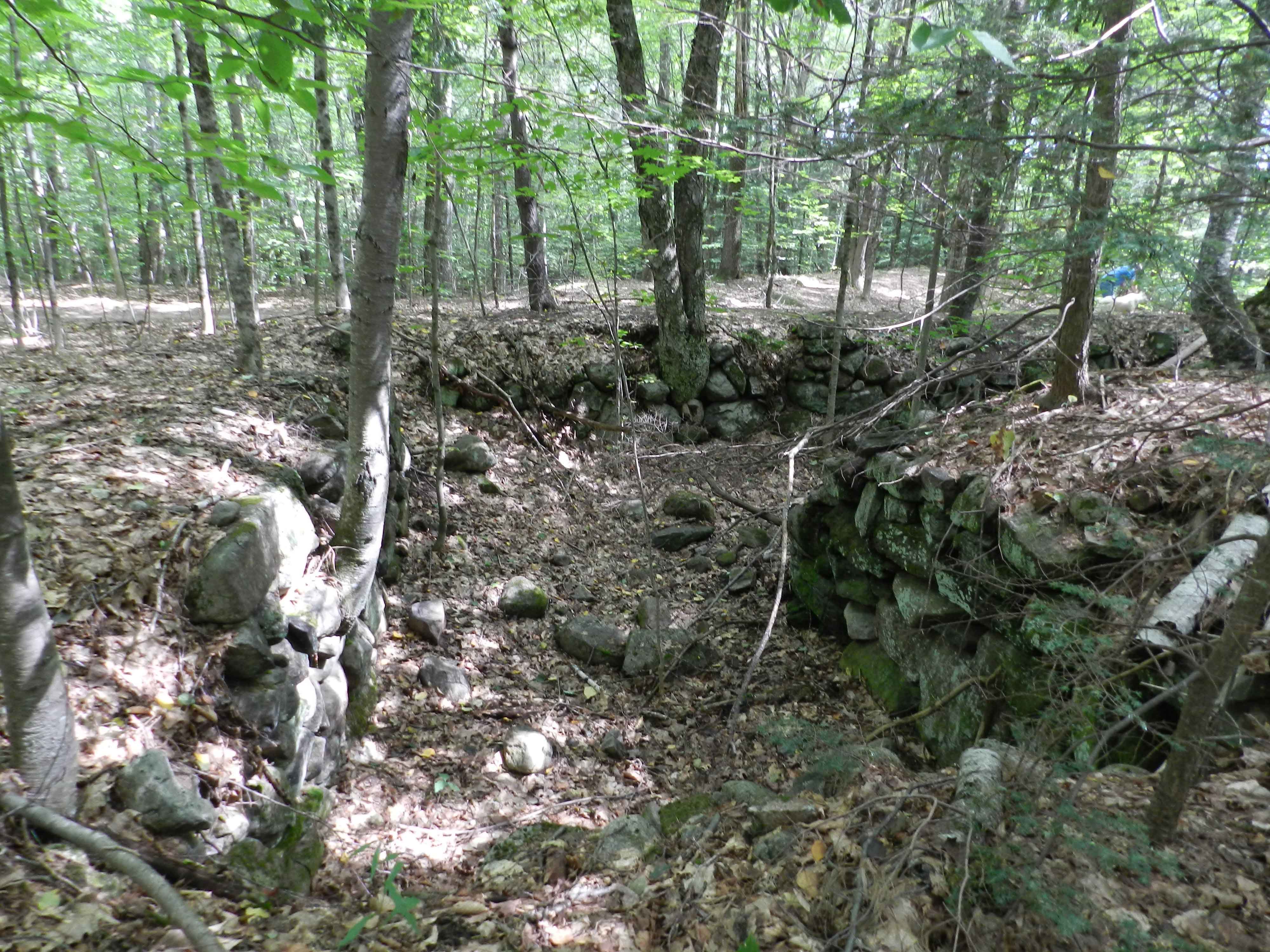
Walking along the trail that goes around Pawtuckaway Lake, we come upon the last signs of those abandoned farms: derelict stone walls and cellar holes.
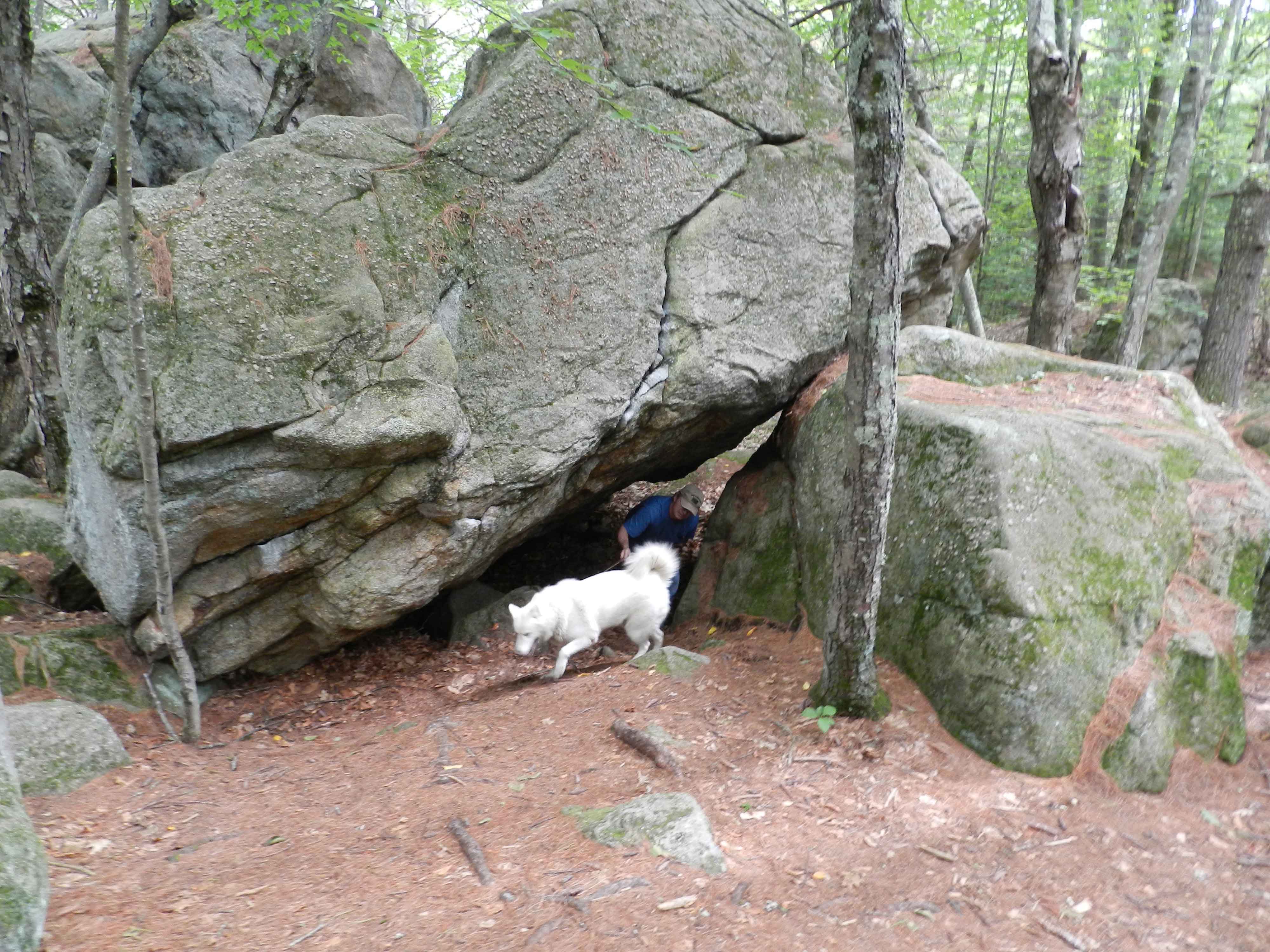
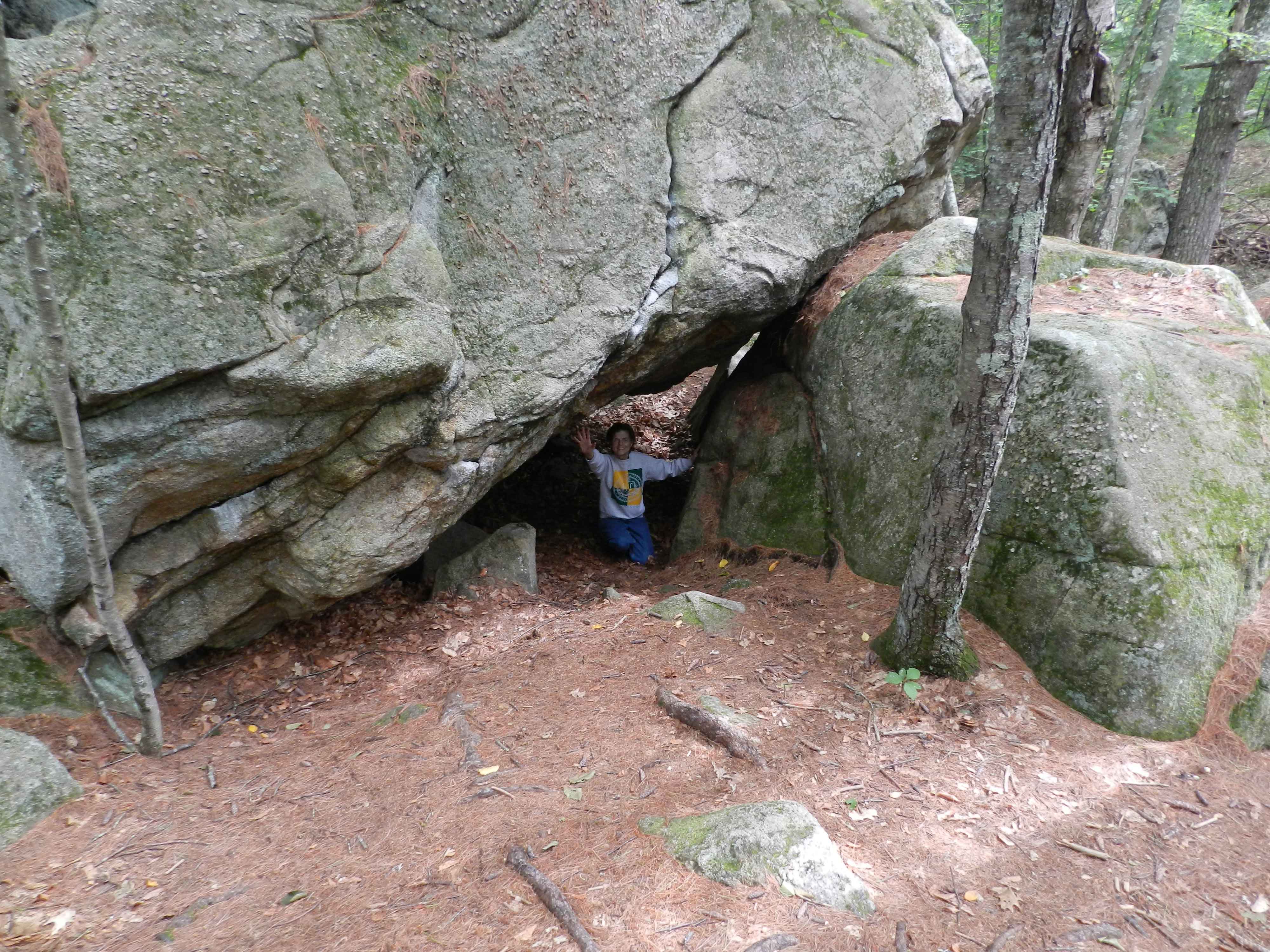
The glacier strikes again! This so-called boulder field was created 18,000 years ago when a mile-high glacier slowly moved through the area, picked up boulders from a nearby mountain and deposited them here. (Source: https://blog.nhstateparks.org/tucked-away-in-pawtuckaway)
Author Biography
Elizabeth Gauffreau writes fiction and poetry with a strong connection to family and place. Her work has been widely published in literary magazines, as well as several themed anthologies. Her short story “Henrietta’s Saving Grace” was awarded the 2022 Ben Nyberg prize for fiction by Choeofpleirn Press.
She has published a novel, Telling Sonny, and a collection of photopoetry, Grief Songs: Poems of Love & Remembrance. She is currently working on a novel, The Weight of Snow and Regret, based on the closing of the last poor farm in Vermont in 1968.
Liz’s professional background is in nontraditional higher education, including academic advising, classroom and online teaching, curriculum development, and program administration. She received the Granite State College Distinguished Faculty Award for Excellence in Teaching in 2018. Liz lives in Nottingham, New Hampshire with her husband. Find her online at https://lizgauffreau.com.
Reading this collection was like forest bathing, the photos of Liz’s favorite outdoor places filled with green mountains, blue lakes, red and yellow leaves, gray rocks, white trees, and pink-tinted and fiery sunsets. And yet the photo and haiku that stirred my soul the most was that of the snow-covered pond with a border of dark trees in the background.
the pond in winter windswept snow, crystalline sky frigid air, silence
I spent the first 21 years of my life in upstate New York, among farms just northeast of Albany. Although I often say that fall was my favorite season, sometimes I miss winter more, especially the silence of winter.
Simple Pleasures is a wonderful pairing of photographs and poetry. You’ll want to keep this book by your bedside or writing desk for when you want to enjoy a simple pleasure or to be inspired.
This week’s Lens-Artist Challenge is being hosted by Egídio of Through Brazilian Eyes. The challenge is simple but also eye-opening (no pun intended). Egídio asks us to share images that have two rectangles:
By two rectangles, I mean you have two dominant rectangular areas in your image. For many people, this is one of those compositional tools we use without thinking about it. These rectangles give balance, harmony, and unity to a composition.
He offers some wonderful examples and explanations (essentially offering a mini-photography course), and I encourage you to visit his website.
While I knew I’d probably find rectangles galore in my archive, I decided to snap a few new photos just for this challenge.
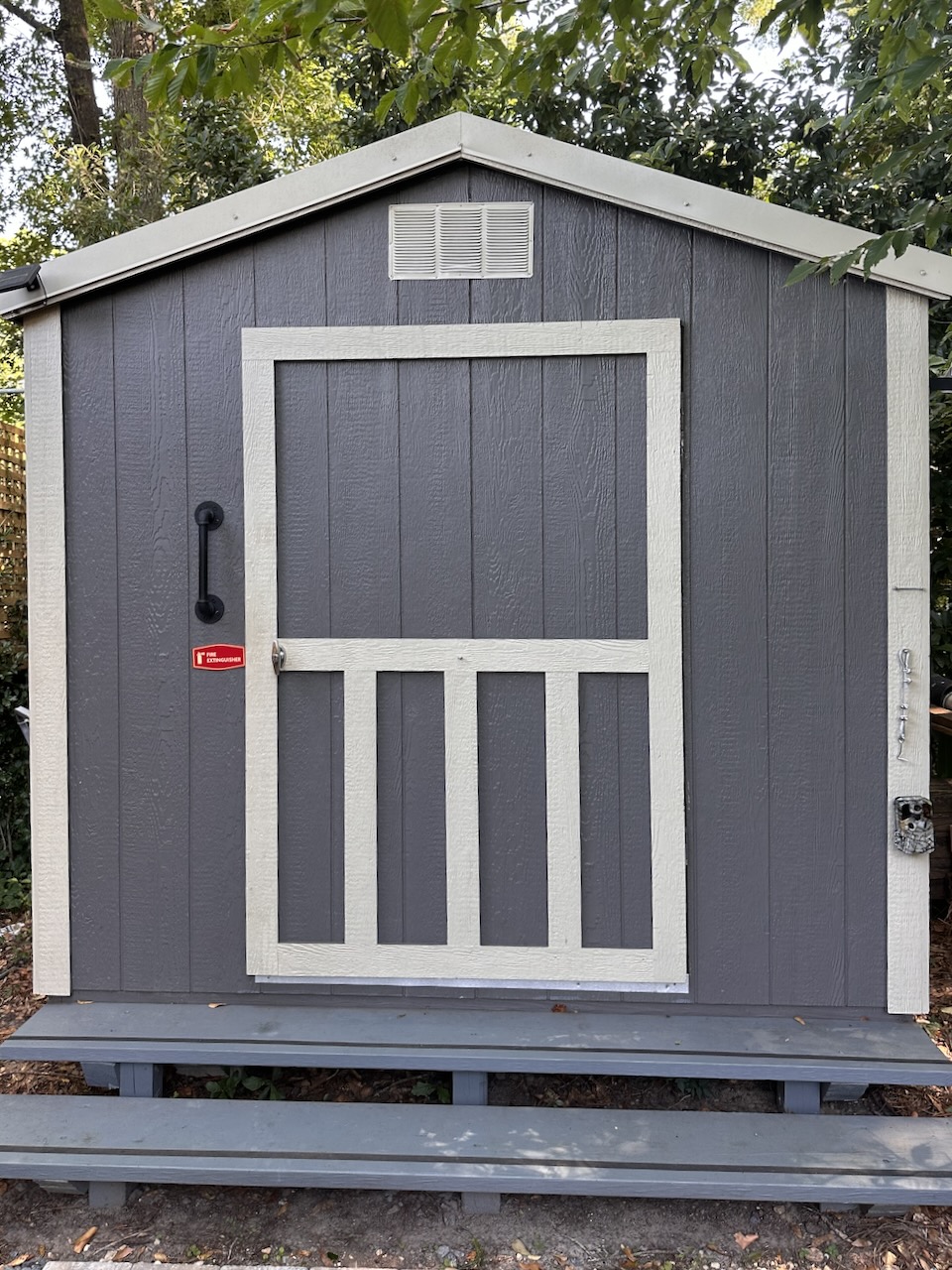
First up, our backyard shed.
Cute, isn’t it? But consider the white trim that superimposes a square and a few rectangles over the rectangles of the gray boards. Consider too the rectangular steps that my husband made so we could keep our balance going in and out of the shed. The lines provide visual balance as well.
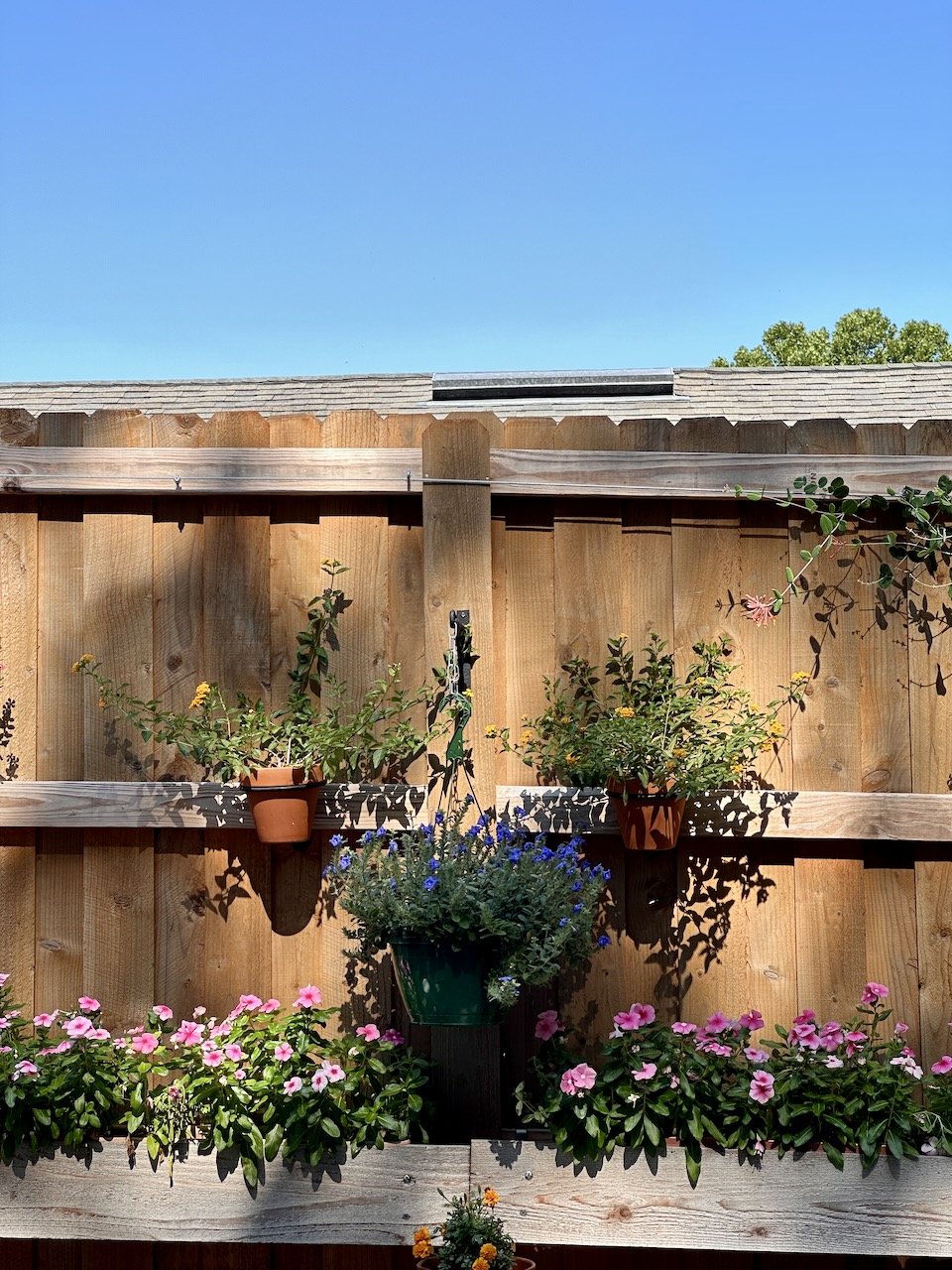
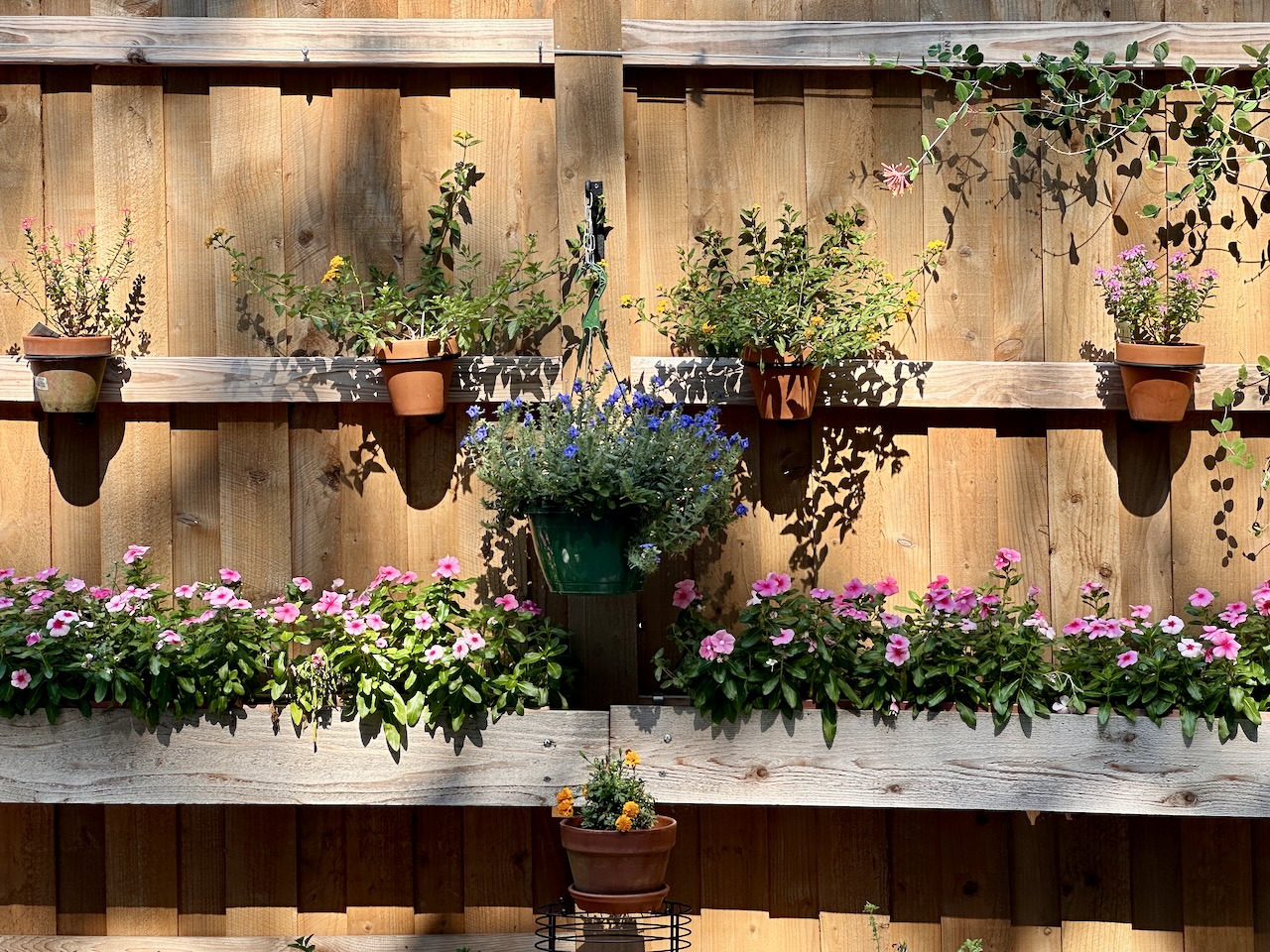
Next, consider two images of our fence, facing inward.
Image #1
Image #2
The first image is broken into thirds: the sky, the upper part of the fence, and the lower part, all of which are rectangles in the image. The second image omits the sky and while I like it because it provides a bit more of the fence, I prefer the first. When I’m taking photos outdoors, it’s rare when I would purposely omit the sky, even if the sky isn’t the subject of my photo.
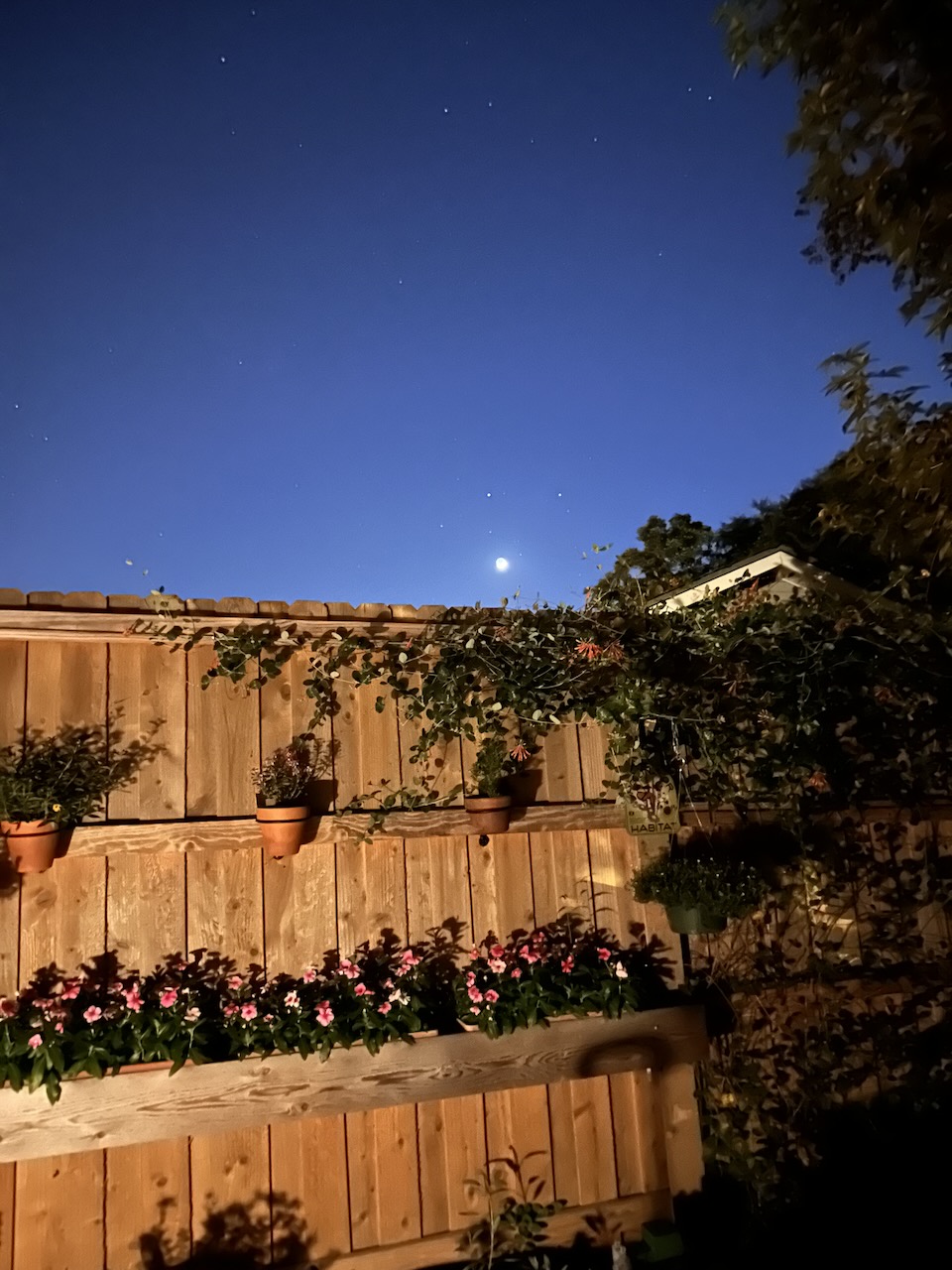
Speaking of sky, the next photo is of the same area of our patio but at night. My subject was supposed to be a crescent moon, which of course, shows up as if it were a full moon. Still, I like the composition.
In his post, Egídio writes about Rabatment, a technique of putting a square inside a rectangle. I think I could argue that that is happening in the above photo, with the darker right-hand side of the fence and foliage providing a kind of frame.
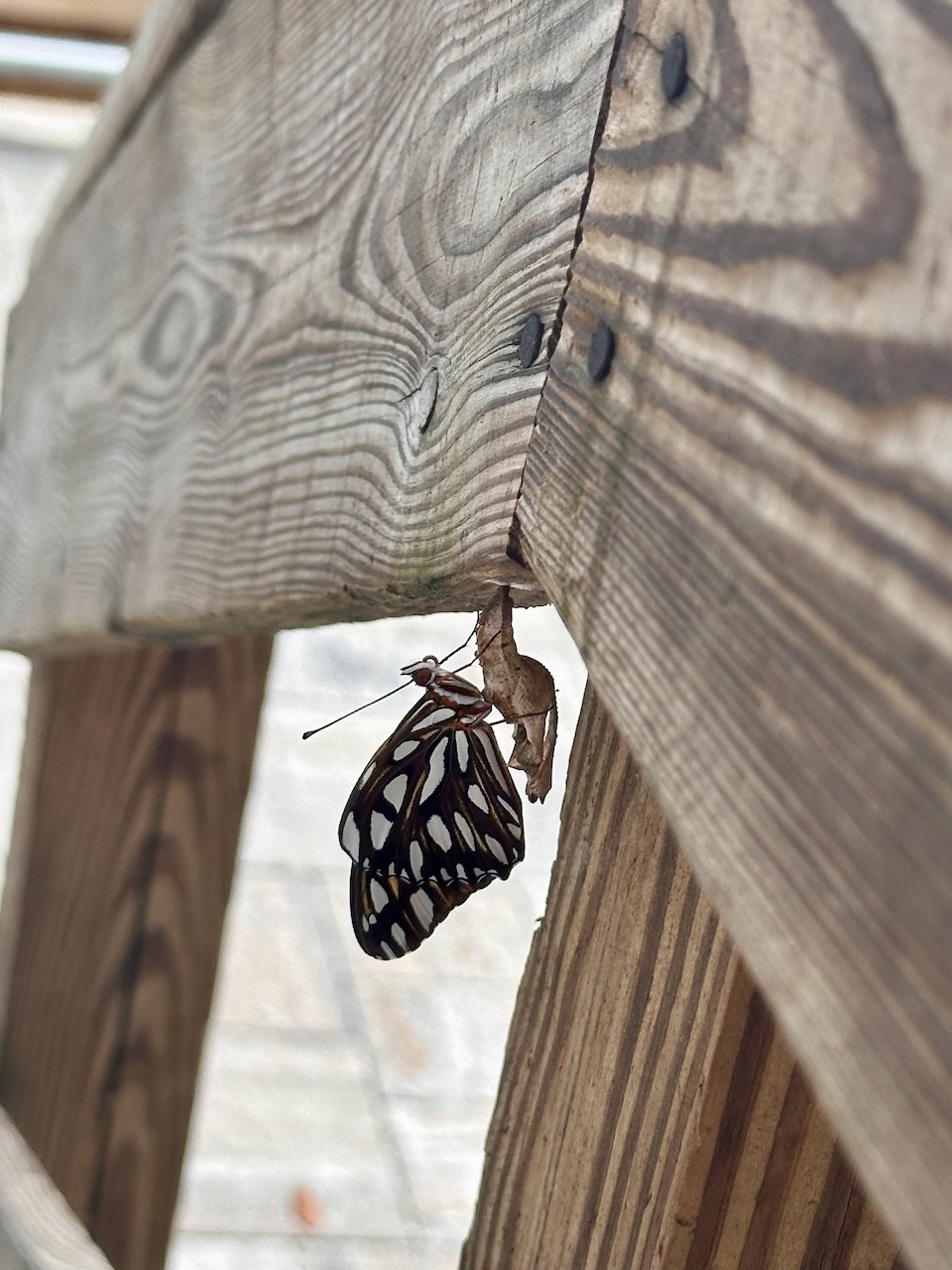
Here’s a quirky image of rectangles as a frame for the subject of my photo: a Gulf Fritillary newly emerged from its chrysalis. This is the underside of the railing on our small side deck that leads out onto our patio. I really had to contort my body to get this photo.
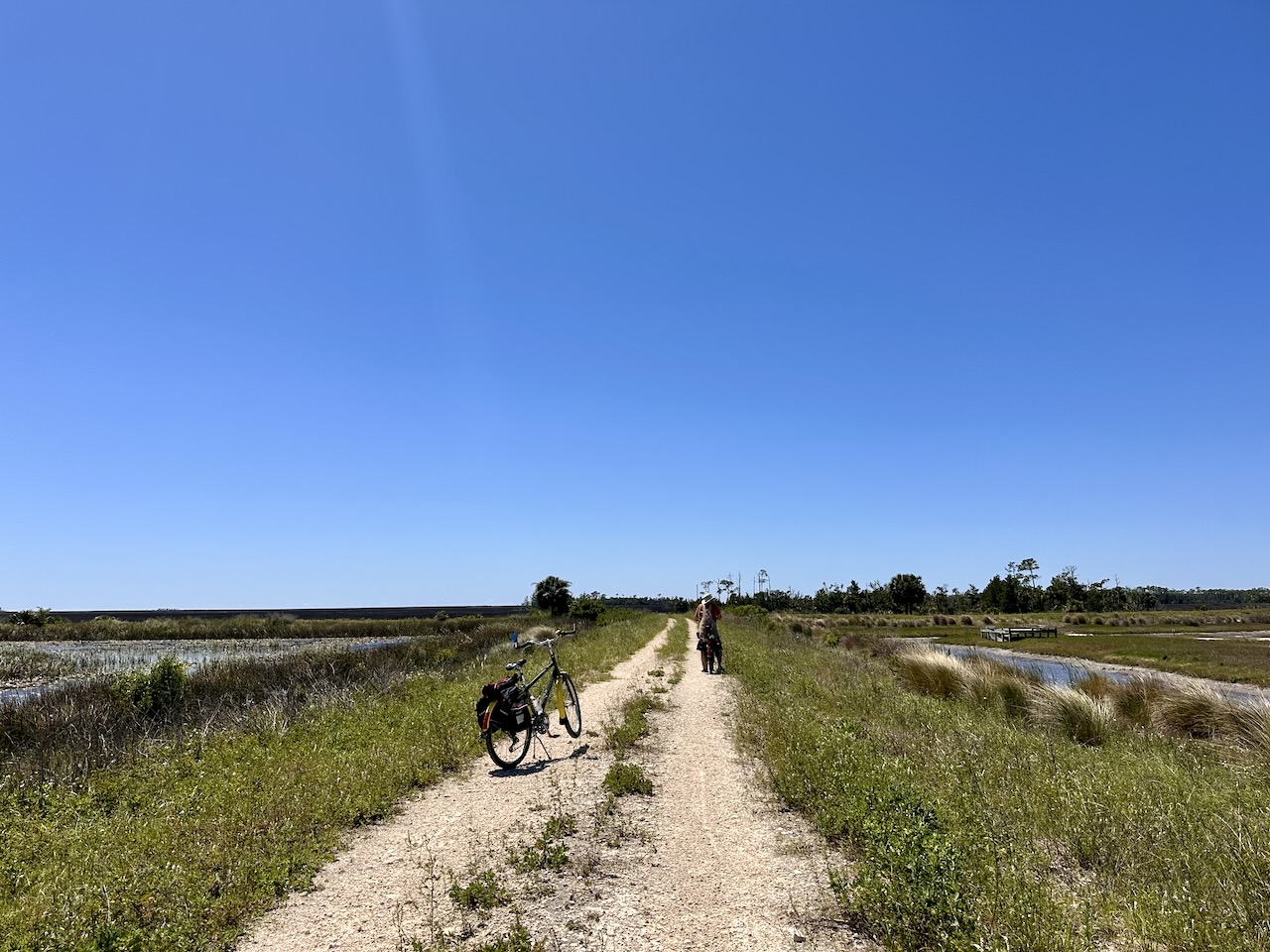
And here’s a classic example of two (or more) rectangles in an image …
… on our favorite bike trail at St. Marks National Wildlife Refuge.
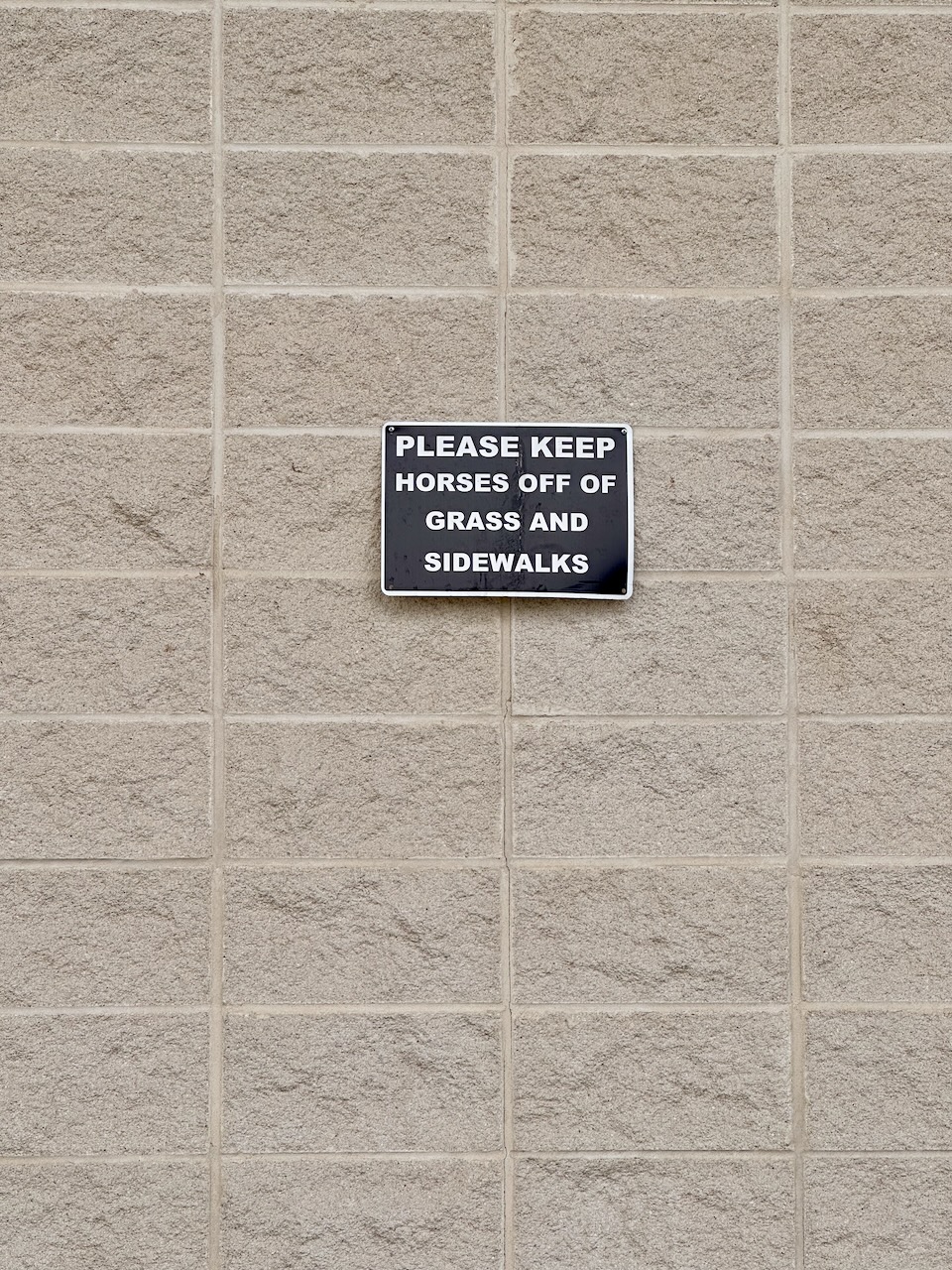
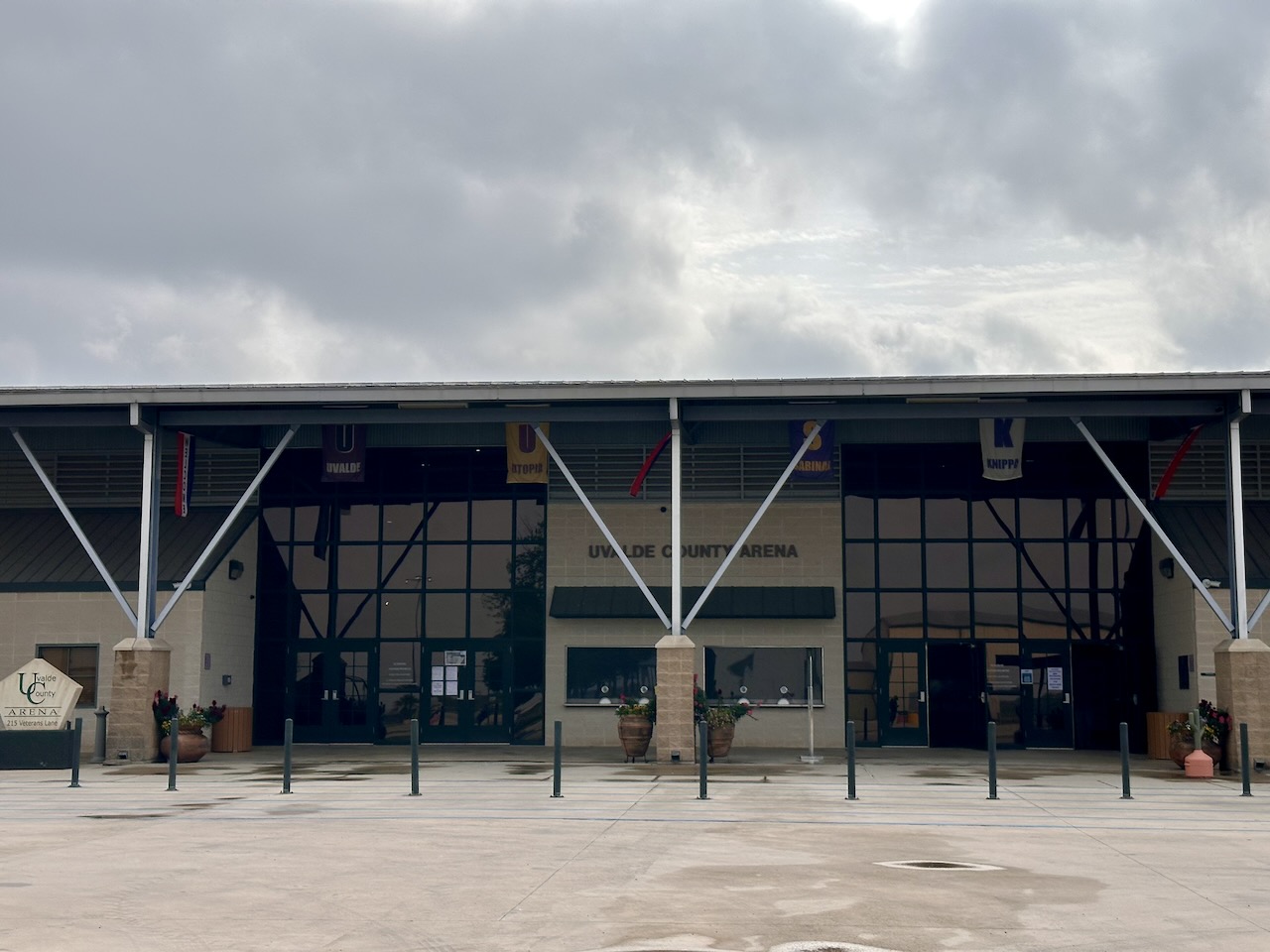
Finally, a bit of fun. In April we went to Uvalde, Texas (via San Antonio) to see the Total Solar Eclipse. Our tour guide had reserved the Uvalde County Arena for our viewing. I wonder if I can get a sign like this for our front yard.
The arena itself offered very nice composition for photography.
Now, really finally, … can you see the rectangles?
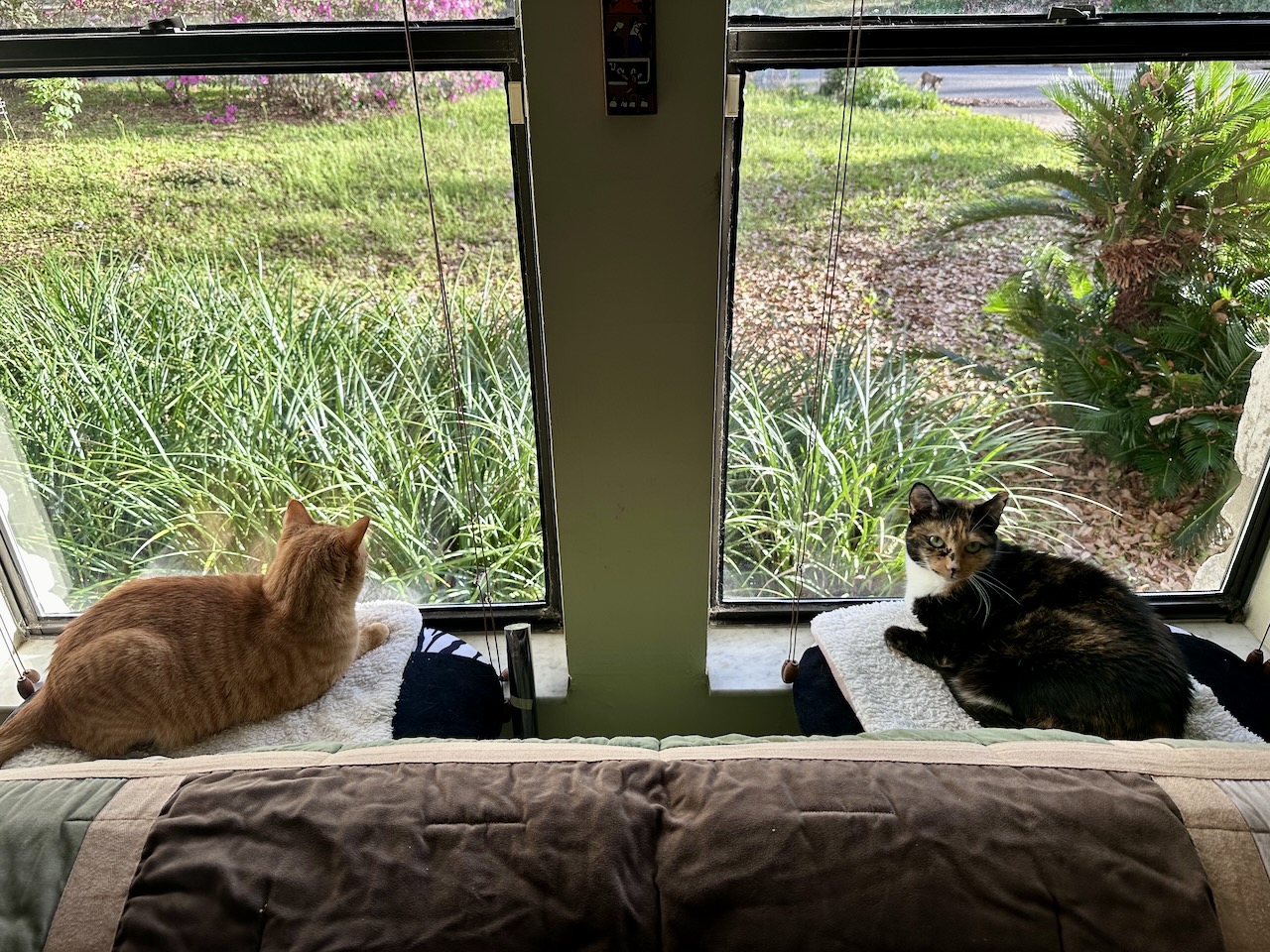
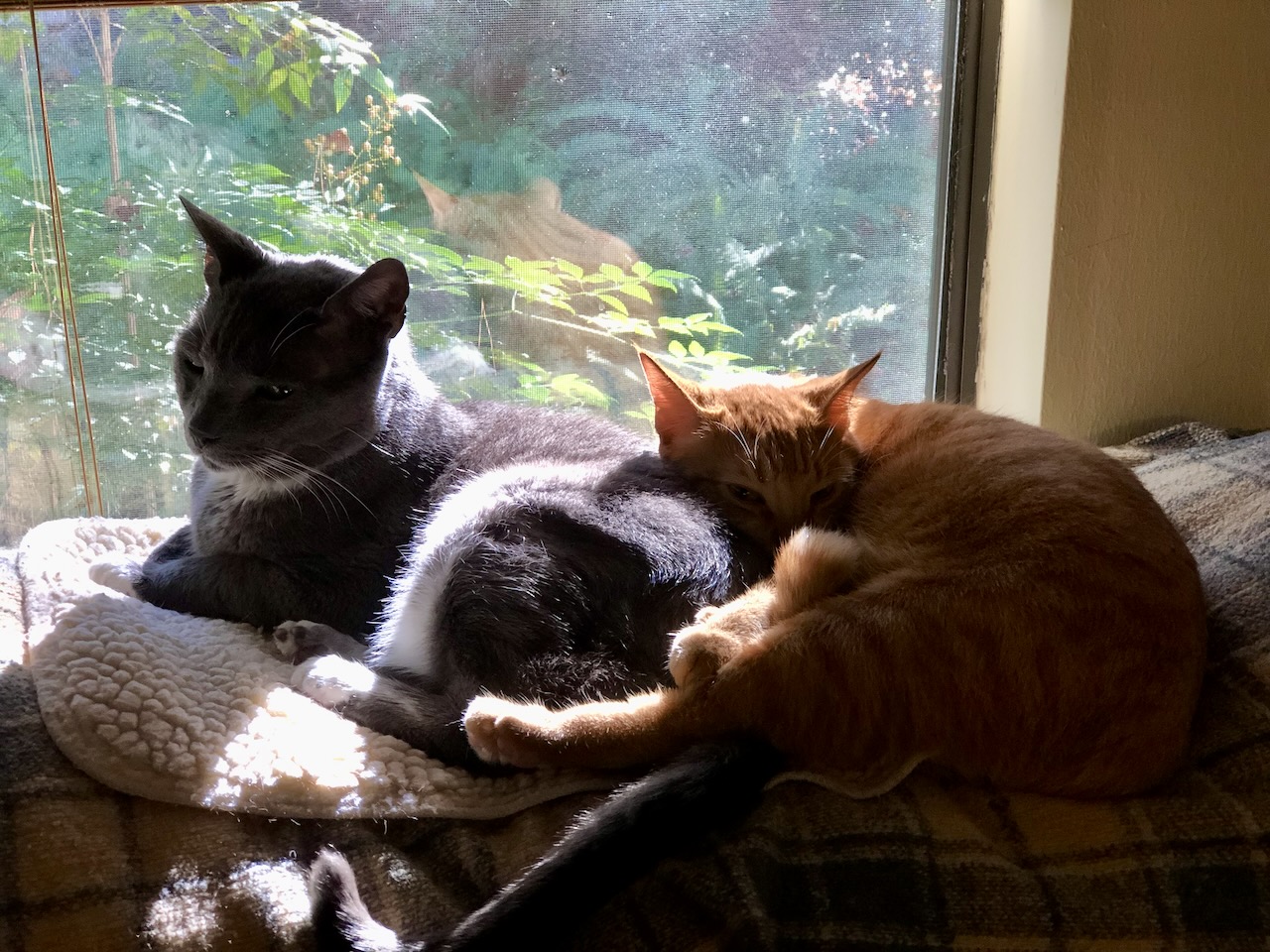
Raji (ginger cat) and Wendy (Tortieco) on their windowsill perches.
If you would like to participate in this week’s challenge (and I hope you do), please note that pingbacks do not work with Egídio’s site. You will need to put your link in the comments on his post. Also, please use the “Lens-Artists” hashtag to it easier for others to find your post.
Last week, Ritva focused on backgrounds and how they affect our composition. That was so much fun and everyone had wonderful examples to share. Next week, Tina will host the next Lens-Artist challenge on Saturday, 12 noon (EDT in the USA). Stay tuned. Please see this page to learn more about the Lens-Artists Challenge and its history.
Lens-Artists team member Donna of Wind Kisses is taking a break from blogging for personal reasons. She will be very much missed but, hopefully be with us again before too long. We wish Donna and her family only the best, as our thoughts are with all of them.
The day is almost over but wait … there’s still time to post a macro!
Featured: a Long-tailed Skipper (Urbanus proteus) on a Butterfly Bush (Buddleja dividii).
Funny story: I bought the Butterfly Bush a few years ago and kept it in a pot on our deck for a long while. Although its blooms were profuse, I never saw any butterflies on it. Then we decided to plant it in our garden area (it was getting way too big for a pot). A year goes by. It blooms. Still no butterflies.
Until yesterday.
This skipper was so focused on feeding that I was able to take several photos.
Photo taken about 10 years ago when Maxine (on the left) and Junior (on the right) were still indoor-outdoor kitties and what is now our garden was filled with skinny pine trees.
This week’s Lens-Artist Challenge is hosted by Ritva who encourages us to consider what is behind the subjects of our photography.
Whether it’s a serene landscape, a bustling city street, or a simple studio backdrop, the background influences the mood and message of the image.
I drifted back several years as I looked for photos that I thought would best meet this week’s challenge. As Ritva skillfully shows, there are seemingly endless ways in which background can enhance or even be the subject of our lens.
The next few images were taken in October 2013 during a visit to my childhood home. The light from the setting sun drew my eye to trees that, at any other time, would simply be background, not a focus of my lens.
In the next photo, the white house (on the right) was my childhood home; the other, a house where I spent an inordinate amount of time watching TV with the grandfatherly man who lived there. Both houses are now gone, demolished because of a flood. You can’t see in this photo, but both houses had “Condemned” and “No Trepassing” signs on them.
While it looks like the foreground in the above photo is a wide expanse of lawn, it is in fact a field. When I was a teenager, I worked summers at a cafeteria. On Sundays I worked 7 am to 3 pm, and when I started my mother’s car on Sunday morning, dozens of bunnies jumped at the sound and hopped around in a panic. It was a great way to start my day.
Sometimes to make a subject stand out, you need to add background, like my husband’s hand. I credit Golden Silk spiders with helping me (mostly) get over my spider phobia. While these spiders are quite large, they are also shy and more likely to skittle away from you than toward you.
I feel like I’m digressing from Ritva’s challenge because I seem to be focused on backgrounds that are the subject of my lens. Case in point: Sunrise over a fishing pier at Safety Harbor, Florida.
No, wait … here’s one where a background of neutral colors helps to make my pink yoga mat pop (never mind the blue urn at the bottom corner trying to steal the show). This was taken in August 2017, at an Airbnb in Santa Fe, New Mexico.
Here’s an example of an almost monochromatic photo. From a distance, I might not have spotted the alligator given how well it was blending in with the water and lily pads.
Finally, this post would not be complete without a photo or two of a dragonfly. My husband has placed several bamboo poles around our house, and the dragonflies love using them as hunting perches.
Besides attracting dragon- and damselflies, the poles have enabled me to photograph these delightful insects at my leisure. Yes, they fly off frequently to snatch a snack, but they just as quickly come back to the pole.
In the following photo, I blurred the background so I would capture more detail of the dragonfly.
Many thanks to Donna of Wind Kisses who challenged us to think about and illustrate our conceptions of “Connections.” The responses to her challenge were wonderful and demonstrated just how connected we are to each other and to nature.
Please check out Ritva’s post for inspiration for this week’s challenge. If you choose to participate, don’t forget to use the “Lens-Artists” tag so you can be found in the Reader.
Next week, Egídio will be our host. Check in with him at Through Brazilian Eyes on Saturday at 12 noon (EDT in the USA). Please see this page to learn more about the Lens-Artists Challenge and its history.
Without further adieu, I give you Raji and his impersonation of a Meerkat.
This week Donna from Wind Kisses challenges us to find connections using photographs.
Let’s photograph connections this week. Are you interested in the intricacy of mosaic art, or how the strings of a marionette bring it to life? How about railroads, rivers and bridges connecting spaces and places? Personally, I can’t have bacon without eggs, or paper without a pen. And it is impossible to ignore interactions of people connecting with each other and the world around them.
I’ve thought long and hard about this challenge, and I might (I said, might) step outside my comfort zone to meet it. Donna’s post is truly inspiring, expanding the idea of connections beyond what I usually consider the word to mean. And that’s a good thing.
Of course, I see connections in Nature, such as how my (finally) blooming Indian Blanket plant follows the rotation of the sun.
Every morning, and sometimes in the afternoon, I rotate the pot wherein this plant currently resides. It sits on my deck, and I see it through my window while I’m sitting at my desk working. The plant keeps me connected to the outside world just by being available to me visually.
Now, this might sound strange, but I feel connected to myself when I work with fiber, whether it be knitting or weaving. When I was about 9 or 10, I taught myself (not very well) to knit, and so knitting is part of who I am. I’ve used my knitting to connect me to others. Weaving came to me later in life at a private college where I was floundering. I was very unhappy at that college until I signed up for a weaving course. Long story short: the class had such an impact on me that I elected to take my tuition money and buy a loom rather than continue at the college.
I wove a few things but not very well and eventually sold my loom to a friend. Fast-forward a few decades and I yearned to weave again so I bought a modest 20-inch rigid heddle loom. My first project:
I wove this scarf with wool and alpaca yarns meant for knitting socks. Needless to say, weaving the scarf went a lot faster than knitting socks would have. Still, I made mistakes, wasted a bunch of yarn, but … I wear it. I love it. And the process itself connected me all the way back–40-some years–to when I first learned to weave.
I try to connect myself to the environment by upcycling and recycling. From a poster on a Facebook group I was in, I got the idea to cut up all our old t-shirts. Some were so worn that I knew they would only end up in a landfill if I gave them to Goodwill. I used a rotary cutter to slice through the shirts, tied the ends together, and then rolled the strips into balls. A weaving project was born.
I wove the above with no real end in mind. I just wanted to practice weaving. At worst, whatever I made could be used as a cat blanket. Then I wove another piece, only this time I untied the strips as I went, making the weaving process more meditative, connecting more closely with the threads and fabric.
This work I do with my hands often connects me to other people. I can’t wear all the scarves, shawls, socks, and potholders that I make. Sometimes I work with a special person in mind.
I knitted this blanket (above) for my mom. She’s no longer here and the blanket is with someone else now, but I still remember her saying that she loved it.
Connections.
I grew up among women. My mom and my two sisters, my aunts. My uncles were around but disinterested in a pouty-faced little kid.
Out of the seven sisters, only one is left, my Aunt Orvetta, the blonde in the middle. My mother sits to my aunt’s right. I look at photos like this and pine for the days when connections could be made with a letter or a phone call or a visit. Now the connections are made through memory.
I am so grateful for how photography, over so many years, has helped me stay connected to my family. So many of them have died, but when I see photos like the one above, I can almost hear their laughter.
Many thanks to Donna for this thoughtful and expansive challenge. If you choose to participate in this week’s challenge, take Donna’s words to heart:
Have you ever thought about how photography connects the world? Nobody sees the world exactly the same way you see it, and our impressions are as unique we are. How you interpret this week’s challenge is up to you.
Please include the Lens-Artists tag and/or link in the comments so we can find you.
Also, thanks to John for last week’s challenge, AI. What fun that was! Participating in John’s challenge helped me feel a bit less intimidated by AI, and I really enjoyed the contributions and conversations around it.
Ritva will host next week’s challenge starting Saturday 12:00 EST. Visit her site and get ready to be inspired.
Interested in knowing more about the Lens-Artists challenge? Click here for more information.
In this week’s Lens-Artists Challenge, John of Journeys with JohnBo asks us to consider the role of Artificial Intelligence (AI) in photography, if it has any role. Specifically:
The question for today is to what extent AI makes the work something other than photography and at what point should it be identified as such.
Initially I thought I’d pass on this challenge. I already have a disdain for AI in how grifters have been using it to flood markets such as Amazon with AI-generated “garbage ebooks.” (See the Constance Grady’s article on this subject here.)
But after reading a few responses to John’s challenges, I saw that AI could be fun, simply fun, to use. And if people are honest about their use of AI, particularly in photography and writing, then at least we can see how it might function as a tool.
John’s challenge also stimulated discussion about what kind of post-editing photographers might use. I have not read every response to the challenge, but it seems that most of the photographers are like me: for example, I might crop a photo for a better close-up of my subject, or I might brighten the colors if the image seems murky. What I want to do in post-editing is try to help the viewer see what I saw with my naked eye, as close to Nature as possible. I don’t discuss post-editing, but if I was to do more, like, for example, take two photos and superimpose them, then of course, I would acknowledge that.
A photo of Raji superimposed on a photo taken at the St. Marks National Wildlife Refuge.
Did you know that WordPress has an AI Assistant? If you use Block Editor (which generally I don’t), about halfway down the right-hand sidebar under “Post,” you’ll see AI Assistant and an option to create an AI Featured Image. (Many thanks to Donna of Wind Kisses for alerting me to this feature.) I created the below image using the words “orange cat on beach” and saved it to my photos for upload.
AI-generated image of orange cat on beach.
Looking at some AI-generated images shared by the Lens-Artists team, I started to think about book cover designs. When I needed a cover for my short story “Love Me Tender,” I went to Canva which I had used to create cards. The hardest part about self-publishing my story was finding a book cover I liked. Many of the images offered by Canva are free and require no attribution, but Canva requires a subscription if you want to edit an image.
So what about AI? Thinking about my novel Clemency, I decided to see what AI could provide me. The central character in Clemency is a young woman who has been convicted of killing her live-in boyfriend. The setting for much of the novel is a small coastal town that has seen better days. The opening scenes include the young woman appearing bloodied and carrying a knife.
With that info, what kind of cover could AI generate? I provided the text: “young woman in shorts and a bloody t-shirt standing on a beach at night.” (Note: all the following images are AI-generated unless otherwise noted.)
Ah … no. This woman doesn’t look like she’s in any kind of danger or distress. Maybe I need fewer words. How about “young woman, bloody t-shirt standing on a beach at night.”
Oh, come on! Either the shirt is drenched in blood or AI thinks I mean blood-red. Determined to make AI work for me, I continued with various prompts until I got to these two.
I’d be tempted to go with the first one because that’s obviously blood on the woman’s shirt, but I don’t want her facing the camera. In my mind, that is not what the main character looks like. Besides, there’s something incongruous about an bloody shirt on an otherwise unharmed woman. While the second image doesn’t show the kind of bloody shirt I want, I can see blood on the woman’s arm. She also looks vulnerable.
For novels, I usually prefer book cover designs that are drawings or paintings, not photographs. Let’s see if AI can help me with that. So I asked for an “illustration of a young woman on a beach at night.” Just keeping it simple.
Eye roll. I’m about ready to give up. Never mind the two or three moons, but the woman has three arms. I could lose readers with this one.
One last try: “illustration of the back of a young woman wearing a bloody shirt holding a steak knife on a beach at night.”
I give up.
I have other alternatives, one of which would be to take photographs of a beach near me and then run the best photograph through filters until I get the image I want. If I’m lucky, maybe there’ll be a young woman at the beach wearing a bloody shirt and holding a steak knife.
Many thanks to John for this fascinating challenge. I encourage you all to give the WordPress AI Assistant a try if you haven’t already. Just be honest and have fun.
If you decide to play, please be sure to link back to John’s original post and include Lens-Artists in your tags so you can be found. If you’d like to participate in the challenge responses each week but aren’t sure how to get started, please check here. A big thank-you to Sofia for the lovely challenge to go Floral last week. Y’all know I love any opportunity to show off my flowers.
This week’s Lens-Artists Photo Challenge is hosted by Dawn of The Day After. Dawn invites us to share our photos of fences. She shares a lovely variety of fences in her post so please pay her a visit.
I hesitated to join in this week’s challenge because I don’t have a lot of photos with fences in them. I’m almost always trying to keep fences out of my photos. That will change. After seeing what others are contributing to the challenge, I’ve realized that I need to look at fences more closely.
That said, generally I don’t like fences, especially ones like this:
No Trespassing sign affixed to fence gate.
The gate closes off private land from Elinor Klapp-Phipps Park. Maybe I shouldn’t complain. The park was developed in cooperation with the city, the water management district, and the property owner (Phipps) and has over 600 acres for recreation. I guess I can’t begrudge the Phipps family for keeping part of their land.
This next photo sparks some good memories for me. Taken during one of our trips back to San Francisco, we had walked up Strawberry Hill in Golden Gate Park. The walk was one that we often took when we lived in San Francisco back in the late 80s. I love how the fence was built twining fallen branches around posts.
“Natural” fence at Strawberry Hill in Golden Gate Park (San Francisco).
Chain-linked fences are popular in my neighborhood. They’re easy to put up, inexpensive, but pretty boring except when a young Red-Shouldered Hawk decides to take a break on one.
Young Red-Shouldered Hawk perched on a chain-linked fence.
Some fences are built to let people know where they can and cannot walk. The photo below shows one of our favorite resting places at another park in Tallahassee. Beyond the fence is a lake and where’s a lake (or any body of water), there’s likely to be alligators. Best to stay on the right side of the fence.
My husband sitting at one of our favorite resting places at a park in Tallahassee. The fence serves to keep people away from the alligators that might be hanging out in the lake.
I do like this wrought-iron fence, another good place for a hawk to perch. The fence has seen better days, but it still serves a purpose, for the hawk anyway.
Yet another hawk perched on a fence, this one a wrought-iron fence that has seen better days.
Finally, our fence. Starting late last year, we had a string of contractors tearing down and building up our property on the west side of our house. We had 15 trees taken down, hardscaping for a patio and walkway put down, a privacy fence with a barn-like gate put up, and a bunch of plants put in.
The metal contraption is for our gate, which slides like a barn door. Seems like a bit of overkill but we’re used to it now.View from our little side porch off the garage.Our fence is 8 feet tall, our neighbor’s roof just visible. Everyone, including our neighbors, is happy with this fence.A view toward the garden.
By the way, my husband built that green bench in the foreground. It’s long and wide enough for him to lie down and do his exercises.
Thanks to Dawn for joining as host this week. Please be sure to link your responses to her fun post here. If you choose to join in, remember to use the Lens-Artists Tag so your post appears in the WP reader.
A couple of months ago I signed up for SmokeLong Fitness Community Workshop. It’s all flash, all the time. I’ve since learned that I can write to prompts quite happily if I’m given an example of a response. My creative battery is apparently sparked by other people’s creativity. We’re given relatively small word counts (for example, less than 500 words), challenging us to make every word count. The word counts also make it manageable to read and comment on my group’s drafts.
I participated in September and October and am taking November and December off to work on my so-called novel. I do miss the community. Although we were put into different writing groups at the beginning of each month, each group quickly created a safe, supportive environment.
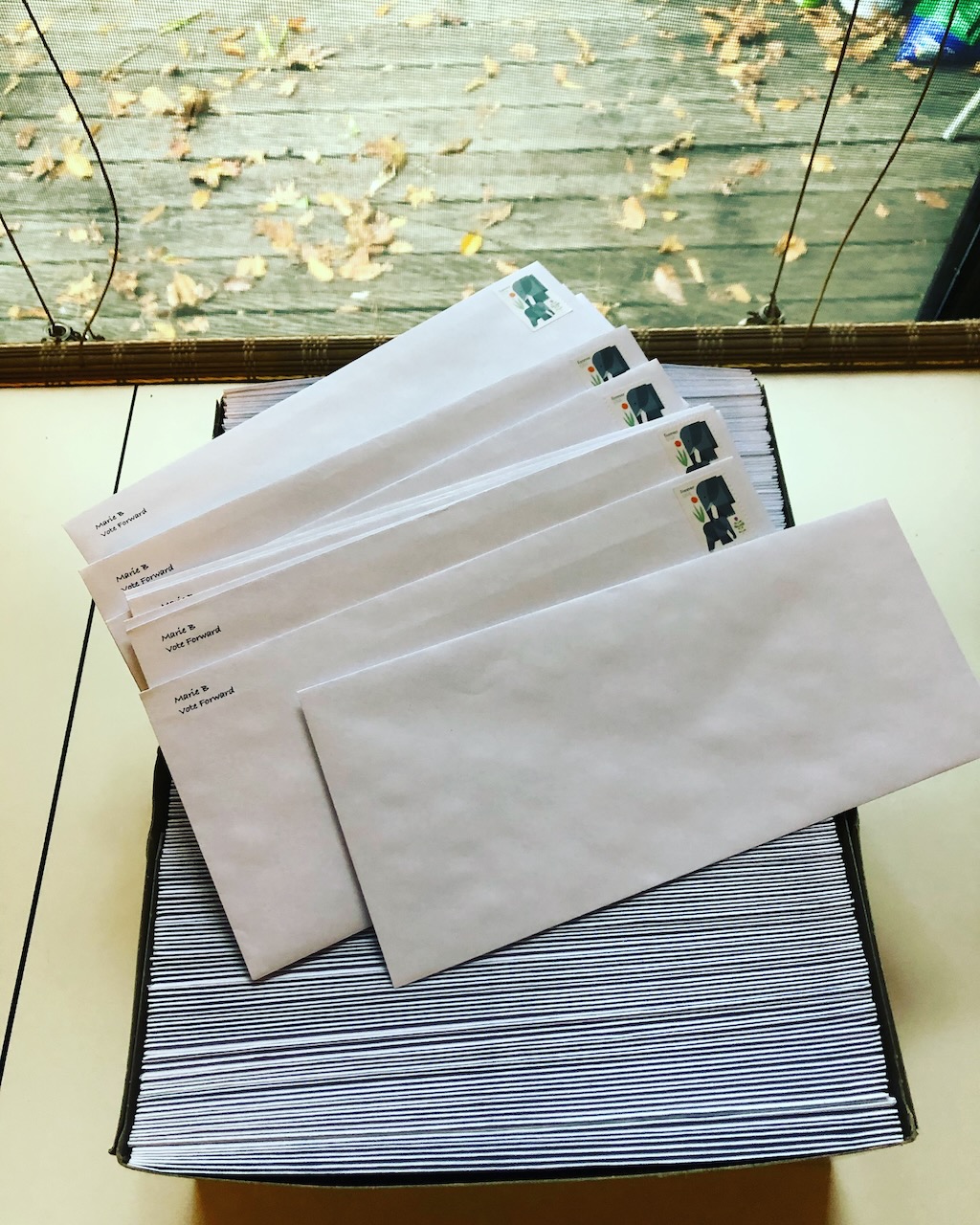
The other big thing I’ve done was write letters for Vote Forward. The organization provides the letter template and voter names and addresses. In turn, I provide a handwritten message encouraging the letter recipient to vote as well as envelopes, stamps, and the printer to print all the letters. (If you cannot afford to buy your own materials, Vote Forward has letter kits you can request.)
Based on their research, Vote Forward found that voters who receive these handwritten, personalized, and NONPARTISAN messages are more likely to vote. Yeah, I cannot encourage anyone to vote a certain way. Just. To. Vote. I managed to send out 250 letters on October 29 to voters in Florida and Pennsylvania.
My nicely packed box of letters encouraging people to vote.
Currently, Vote Forward has a call out for letters to Georgia. Guess I’ll have to participate in that too.
When not writing, I’ve been playing with photography. Although my husband knows I’m saving for an iPhone 14 (for its mega-megapixel camera), he’s given loaned me his last acquisition: a Lumix GX85. It’s smaller than the Canon T3i that I bought years ago and is fitted with a macro lens. The key is learning how to use it. In fact, he handed it over to me because he got impatient with trying to figure out how to use it. I have a steep learning curve with this one, but I’ve started playing around.
Below is a photo of an orb-weaver that has built a home between a corner of our house and a Sabal palm. This was taken with my iPhone 8 Plus, using the wide-angle lens, and is about the closest macro shot I can get with good detail.
An orb-weaver fixing up his/her web.
Now here is the same spider with the Lumix:
Spin little orb-weaver, spin it, spin it.
Obviously closer, but still not as detailed as I’d like.
But I’m working on it. The next two photos were also taken with the Lumix. I edited them slightly.
Macro of one of many Georgia Asters blooms.
Camilla from a neighbor’s tree (or bush … it’s pretty big so … tree).
Finally, here are a couple of photos I took of the Blood Moon with my iPhone and my husband’s big-ass binoculars.
First shot of Blood Moon on Election Day.
The Total Lunar Eclipse, or Blood Moon rising on Election Day.
I’m really not a morning person, but given that we could see the moon from our driveway, I got up with my husband at about 4:30 AM to watch the eclipse and take photos.
This brings me to the other “thing” that’s been going on with me: my chronic neck pain. It was pretty bad a few weeks ago, enough to send me to the chiropractor for treatment and guidance. During the next two-and-a-half weeks I applied a heating pad to my neck for 20 minutes several times a day and did stretching exercises. I also tried an assortment of anti-inflammatory drugs and CBD salve with mixed results. Trial and error. Finally, we got me to a point where my pain has lessened and my range of motion has improved, but I’m not 100%. In all likelihood, I will never be 100%. This isn’t “woe is me.” Now that the worst is over, I can always say it could be worse.
What I need to do–besides taking NSAIDs intermittently and applying heat and stretching regularly–is avoid activities that aggravate my arthritis. Activities like looking through my husband’s big-ass binoculars at the Blood Moon or working too long at my computer. I have to remind myself to take a lot of breaks … something I’m not really good at.
And, last but not least, I’m still grieving. Some days I’m okay. Maybe I can say most days I’m okay but as I type this, I feel the tears start to well up. Writing helps somewhat and since my last blog post, I’ve written two more essays about my sister for my publication on Medium:

















 Marie at 1 Write Way