I’m popping out of my self-imposed bubble long enough to share this essay by Anita Gill in BREVITY. So much of this short essay resonated with me and my perpetual struggle with my inner critic, and, of course, it prompted a comment from me. Please read the essay (and my comment below) and let me know: How do you handle your inner critic?
By Anita Gill On a chilly winter day in Oregon, Laura Hendrie, an award-winning fiction writer, gave a craft talk to a room full of graduate students on the topic of crafting the beginning lines of a story. She looked around the room and asked, “What is it about an opening that pulls me in […]
“And this would apply to fiction as well. Even when I’m purposely making things up, my inner critic argues against my authority to do so. The thing about memories–and why the inner critic can often win the battle against writing down memories–is that they are subjective. Your memory of a particular event may differ from every other person who witnessed that event. I’ve often gotten blank looks from family members when I recall an experience that I know we share, but they no longer remember … or choose not to remember. When I write down memories, my inner critic often takes on the voice of my mother or brother or sister, arguing against my version of events and whether I have the “right” to tell it as I remember it. If I go public, I risk being called a liar or of hanging out the family’s dirty laundry. So I write fiction, but my inner critic still knows what I’m up to. This essay is validating and makes it clear that the only way to silence my inner critic is to simply keep writing until my words drown her out.”
Usually I don’t review a book I haven’t yet finished. I definitely don’t review books that I don’t plan to finish (for whatever reason). I’m making an exception here.
This weekend I started reading Kevin Brennan’s memoir-in-vignettes, In No Particular Order. Readers of this blog already know I’m a Brennan groupie fan and I’ve pretty much snatched up everything he has written. Most of the vignettes are actually from his blog, previously published so-to-speak, so I’ve already read most of them; however, reading them as part of a collection is a different experience. Even though I remember the few I’ve read so far, having these writings in context adds a depth that one usually doesn’t get from the untethered blog post.
Before I go on to explain why I’m writing a review now, when I’ve only read a quarter of the vignettes, I do want to note that while this collection could be read in a weekend, you could also take your time with it. Which is what I plan on doing. Each vignette is only a couple of pages long. So, for example, if you have a few minutes to kill before your next meeting (and you really, really don’t want to check your email again), you have time to read one of Kevin’s vignettes in its entirety. You can read one of these vignettes in less time than it takes to smoke a cigarette (if you’re so inclined) or boil an egg or preheat the oven. So you can read In No Particular Order as fast or as slow as you like.
Now, why am I writing about this book when I haven’t even finished it?
First,
“Everybody has at least one book in them. The book that is their own life.”
As Brennan notes in his preface, “most people’s lives don’t add up to a narrative that would interest many readers […]”; and yet, he’s managed to reflect on various experiences in his own life that, while not necessarily out of the ordinary of many others’ experiences, are still unique experiences because they happened to him, not them. In reflection he adds layers to the experience that assist the reader in understanding how even the experiences of a teen-ager shape the mature man or woman we later become. He ends his preface with the quote above and my first thought was, “Yes!”
Second,
“When you indulge in a personal nostalgia trip you have to be ready for some revelations that might shock or disturb … Understandings that you might be remembering people inaccurately, or that you weren’t as meaningful to them as they were to you.”
Throughout my life I’ve kept a journal of one sort or another. Some of the very earliest ones I either destroyed on purpose (watching it burn in the trash barrel at the far edge of our backyard) or simply lost (oh, to have that record of my first few months in California!). Reading (or trying to remember) old journals allow me to engage in nostalgia. They bring to mind people I haven’t had contact with in 40 or more years; experiences that make me pinch myself in wonder that I’m still alive. For the most part, that “personal nostalgia trip” is a precursor to an episode or two of depression. Nostalgia turns to self-berating for all the stupid decisions I’ve ever made, all the bad behavior I engaged in.
Third,
I’m taking this collection slow because of my own propensity to wallow in the past. Brennan’s writing, his reflections and remembrances, are short enough to be a jumping off point for me, if that makes sense. With a novel, I’ll get sucked into the plot and characters and their world and maybe even forget about my own world for a while. With a memoir, especially one of vignettes, I tend to reflect on my own experiences in-between. I don’t just read the vignettes; I consider them for lessons on how to look back, how to integrate (or let go of) experiences that are not fond memories. I have a tendency to dwell on the negative in my life, although …
“[w]hatever the case, here I sit now, happy as a panda in the bamboo grove, having made a series of decisions that led to a personal kind of heaven.”
Kevin could have written that for me. Despite all the negative experiences I’ve had, I’ve wound up (through no calculated intelligence of my own) in an enviable situation: happily married, a home to call my own, and a new horizon awaiting my husband and me.
So if you’re still on the fence about whether you should plunk down 99 cents for Kevin Brennan’s memoir-in-vignettes, well, all I can say is, I’ve certainly gotten a lot more out of In No Particular Order than the 99 cents I put down, and I’m not even finished.
Guess what? In No Particular Order is now live on Amazon! Here’s the blurb: It’s true that life is linear, but the living of it is all over the map. In this memoir-in-vignettes, novelist Kevin Brennan (Parts Unknown, Yesterday Road) examines his life the way memories occur in the wild: in no particular order. Whether […]
Yesterday would have been my father’s 96th birthday.
I think he’s rather handsome.
He died in his sleep in November 1992. The kind of death anyone would want. At least at the end, someone (God?) cut him some slack. You see, he hadn’t had an easy life. Born in poverty. Never finished high school. Classified 4-F. And he couldn’t hold a job. That, in a weird sort of way, was my good fortune, or so one of my sisters told me once a long time ago.
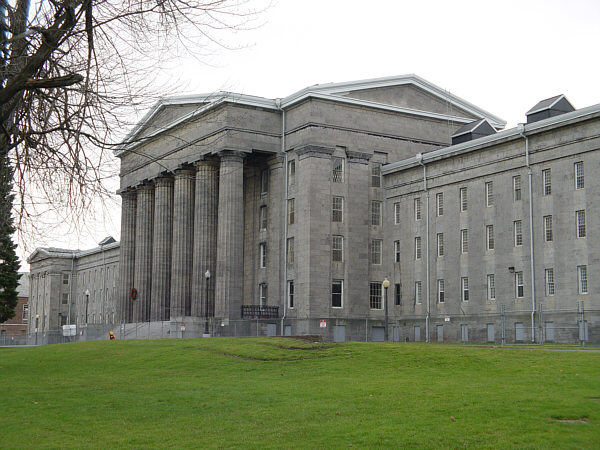
You see, I’m the youngest of four. My sisters are 13 and 11 years older than me, my brother 3 years older. The middle sister remembers our father as working during most of her childhood, not there to take her to matinees like he did for me. Not there to draw pictures for her on demand like he did for me. But she forgot that those were the earliest years of my childhood. By the time I was around 10, he was starting to spend less time at home and more time at Utica State Hospital, formerly known as the New York State Lunatic Asylum.
Not a fun place to visit your father.
I do agree with my sister that I had some fun times with my dad. He and I both took perverse pleasure in Grade-B horror films. You know, the ones produced by Hammer Film and that usually only showed during theater matinees or at 2 pm on the TV. And, yes, I have a memory of finding him on our neighbor’s porch (because we didn’t have a porch), sitting out the hot summer afternoon, sweat glistening on his dark hairy arms. But when I handed him a piece of paper and pencil and demanded, “Draw me a man,” he compiled. Even gave the man a corncob pipe to smoke.
I think my parents were happy once. Before it all got too much.
Happy Days
My mother told me that Dad had had his first nervous breakdown when he was only 17 and she didn’t know about it until later. But, she went on, she would have married him anyway. He was 23 when they married. She was 19. Perhaps as far as anyone knew, he was okay. They had met at a dance. My mother was one of seven sisters and five brothers growing up on a farm run by a father who was “not progressive.” (My mom’s words, not mine.) She might have felt a desperate need to leave. These are all fragments of memory. And they are all I have.
My father loved to play the piano, although I don’t remember him having much of a repertoire. I gave my mother a recital once. She was in the kitchen washing dishes while I banged away happily. I can imagine her standing at the kitchen sink, praying for mercy. I don’t remember when exactly, but it seemed that soon after, the piano disappeared.
I loved banging on this piano.
By the time I was a teenager, my dad was sometimes living at home, sometimes not. By then I had witnessed two of his nervous breakdowns. Once when I was about 9 or 10 and I heard, rather than saw, him fall apart over the Vietnam War and the loss of “our boys” and heard, rather than saw, my mother rubbing circles on his back, trying to soothe him. The second time when I was about 14 and he had just come home from the Village Tavern. He collapsed on the cot in the dining room, crying and banging on the wall, his back to me. I couldn’t make out what he was crying about. Something about not being able to take it, I think. I called my sister and stayed until she showed up. I was terrified the whole time. I was never afraid that he would hurt me. He had never laid a hand on me, and somehow I knew he never would. I was afraid of his pain, the utter anguish that poured through his tears.
I can’t tell you what was wrong with him. No one seems to really know. My mom and my middle sister have said that he was diagnosed as schizophrenic. But he didn’t hurt anyone. He wasn’t suicidal as far as I could tell. He just cried a lot and blamed himself for things that he couldn’t control. Like the Vietnam War. He had it in his head that the war started when he quit the creamery and so there was a connection. He felt responsible. I once accused him of thinking he must be God. When he laughed, slightly chagrined, I thought maybe he was really okay.
He had a fixation on Oral Roberts, a man I came to loathe for the spell he cast over my dad. He sent money to Oral Roberts and in return got a small plastic plaque that read “Something good is going to happen to you.” Nothing good happened to or for my dad. And he blamed himself because, you know, if Oral Roberts said “something good was going to happen to you” and nothing did, you had only yourself to blame.
We went on that way until I was 18 and my mother no longer received Social Security checks for me. And then she wanted to remarry. She felt she could finally go ahead and start living her own life. Whatever had been between her and my dad was no longer there. It just wasn’t sustainable through all the pain and struggle. By this time, my dad was well enough to live “independently,” but not at home. He lived in a “halfway house,” with other men who had had it rough, so to speak. I don’t think, I don’t remember if I ever visited him there.
So my mom and dad divorced, my mom remarried, and my dad start visiting my middle sister when he could. And then I moved to California. He became very ill at one point. Blood clot in his abdomen and we all thought that was it for him. And no one thought that was fair. My mother said, “He doesn’t deserve that.” He had never hurt anybody so why should he suffer?
But he recovered and my sister was able to move him to a facility where he could get round-the-clock care. It was essentially a hospital. It smelled like a hospital. He had a hospital room to live in. Nurses abounded. But it was also a five-minute drive from where my sister worked. On one visit home, I was treated to this.
I think the piano was the one thing, the one constant in my father’s life that gave him pleasure. You couldn’t count on people, especially your youngest daughter who avoided you whenever possible and rarely brought friends home when you were there. Then again, that middle daughter more than compensated.
On a visit from California. I don’t think I was ready to see him like this.
I am grateful that for the most part he seemed happy during his last few years. He was whittled down by God knows what kind of medications he was on and off, by the shock treatments he received in Utica. He had Parkinson’s as if having mental health problems wasn’t enough. Yet, his needs and desires were few. Give him a piano and he’d bang away, play the same song over and over, but be happy. Smile at him and he’d smile back. Send him cards with kittens on them and he’d carried them around in the little bag attached to his wheelchair.
He didn’t ask for much, and I gave him very little in return. I spent most of my youth and early adulthood fearing that I would turn out like him. I cry easily. Especially when I was a teenager, I did a fair amount of acting out. If my family had known half of what I did, they might have sent me to Utica too. It’s taken me a long time to understand that my father’s mental illness was not genetic, that it was more environmental than anything else. Maybe.
My father wasn’t always sick. I just have few memories of when he wasn’t.
This post is my way (pitiful though it is) of asking my dad for forgiveness. I wasn’t a good daughter. I let my sister and my mother do all the heavy lifting. I want to go back to that night, so many years ago, when I was staying up late because I wanted to watch some stupid horror movie. I heard Dad come down the stairs and I sighed. I didn’t want him there, with me. I wanted to be alone. But he came into the living room, “What ya watching,” and sat down. As the movie grew in suspense and we both jumped when a door was suddenly pulled open, we laughed and looked at each other. I think I said something like, “I’m glad you’re here.” Code for “this movie is too scary to watch alone.” He laughed again and we went back to watching the movie.
Many thanks to Luanne Castle at Writer Site for tagging me to participate in this special blog tour. It comes at a good time for me because I’ve been wrestling working on my WIP, Clemency, A Novel. Before you read my post (or after if you prefer), please do read Luanne’s post on her WIP: http://writersite.org/2015/02/12/read-all-about-it-here-the-work-in-progress-blog-tour-stop/ Luanne is working on a memoir, “excavating” her memory to “create a new story”:
My book is the story of an old family secret that infects the present and creates a dysfunctional father-daughter relationship–and the quest for answers that allows the father and daughter to learn and forgive.
Now, doesn’t whet your appetite for more from Luanne? Indeed, it does mine.
But before I lose sight of my own purpose in participating, let me proceed with the rules and my contribution to the tour.
The work-in-progress blog tour rules (which we all know are made to be bent or broken):
Link back to the post of the person who nominated you.
Write a little about and give the first sentence of the first three chapters of your current work-in-progress.
Nominate some other writers to do the same.
Brief description of my novel:
Clemency is a story about Misty Daniels, a young girl (~18) in prison for allegedly killing her live-in boyfriend after he beat her up, causing her to miscarry. Enter Sarah Mansfield, a newly minted attorney who believes in Misty’s innocence and wants to secure her freedom. But not everyone believes that Misty is innocent. Not even Misty. And there are some people in Misty’s poor small town that want to see her stay in prison. And they will do anything to make sure that happens. Even if means someone has to die.
Only in her mid-twenties and alone in an unfamiliar southern city, Sarah finds her life on the line and with few people she can trust. Her boss and mentor, Lucas Danforth, seems to know more than he lets on and brushes off Sarah’s concern for her and Misty’s safety. Michael Daniels, Misty’s half-brother and a former Marine, is more interested in hindering Sarah’s investigations than helping her. And the people of Oyster Point, led by Sheriff Cooley, harbor more than a general mistrust of strangers. They are all hiding something, and Sarah suspects that what they are hiding is the key to Misty’s freedom.
Status of my novel:
Still in that primordial stage that is particularly gross and sticky.
Excerpts from the first three chapers:
Prologue
Misty Daniels cradled her small round belly as she collapsed onto the sticky linoleum floor. She huddled against the kitchen wall, her damp brown hair covering her tear-streaked face. Her mouth was frozen in a silent scream of pain, her eyes shut tight against the blood that dripped down from the cut on her forehead.
Chapter 1
This wasn’t quite what she had expected. The room was dusty with boxes of documents lining the short space of walls against the sloped ceiling. The desk reminded her of the big clunker her father had for the thirty years that he taught English. At the thought of her father, Sarah pulled a framed photo out of her gray Timbuktu messenger bag. She stroked the simple wood frame that bordered the last picture taken of her parents and her, at her graduation from the small private college where her father had taught.
Chapter 2
Sarah sat at the concrete beach table, watching Lucas through tortoise-shell Wayfarer sunglasses that she had found while hiking around Juniper Springs. Lucas read the note again, his lips curled in a slight smile. Someone had typed on the small piece of paper: “Let Misty rot in prison. Or you will go to hell.” Sarah had immediately called Lucas after opening the envelope, and he had gallantly rushed over to Tully House.
Now, time to announce the other participants in this tour. I am so relieved happy that these wonderful writers have agreed to participate.
S.K. NICHOLSS’s debut, Red Clay and Roses, chronicles the trials and tribulations of a group of characters grappling with inequality in the Jim Crow South. It is set in 1950s-60s Georgia, and explores civil rights, interracial relations, and women’s issues. An avid regional crime fiction reader, Nicholls’ next project is a series of crime novels with colorful characters who take you on a fast-paced adventures through Florida. You can find Nicholls on her blog where she also posts awesome photos of Florida, discusses writing and books, and shares updates on her many writing projects.
The enigmatic HELENA HANN-BASQUIAT dabbles in whatever she can get her hands into just to say that she has.
She’s written cookbooks, ten volumes of horrible poetry that she then bound herself in leather she tanned poorly from cows she raised herself and then slaughtered because she was bored with farming.
She has an entire portfolio of macaroni art that she’s never shown anyone, because she doesn’t think that the general populace or, “the great unwashed masses” as she calls them, would understand the statement she was trying to make with them.
Some people attribute the invention of the Ampersand to her, but she has never made that claim herself.
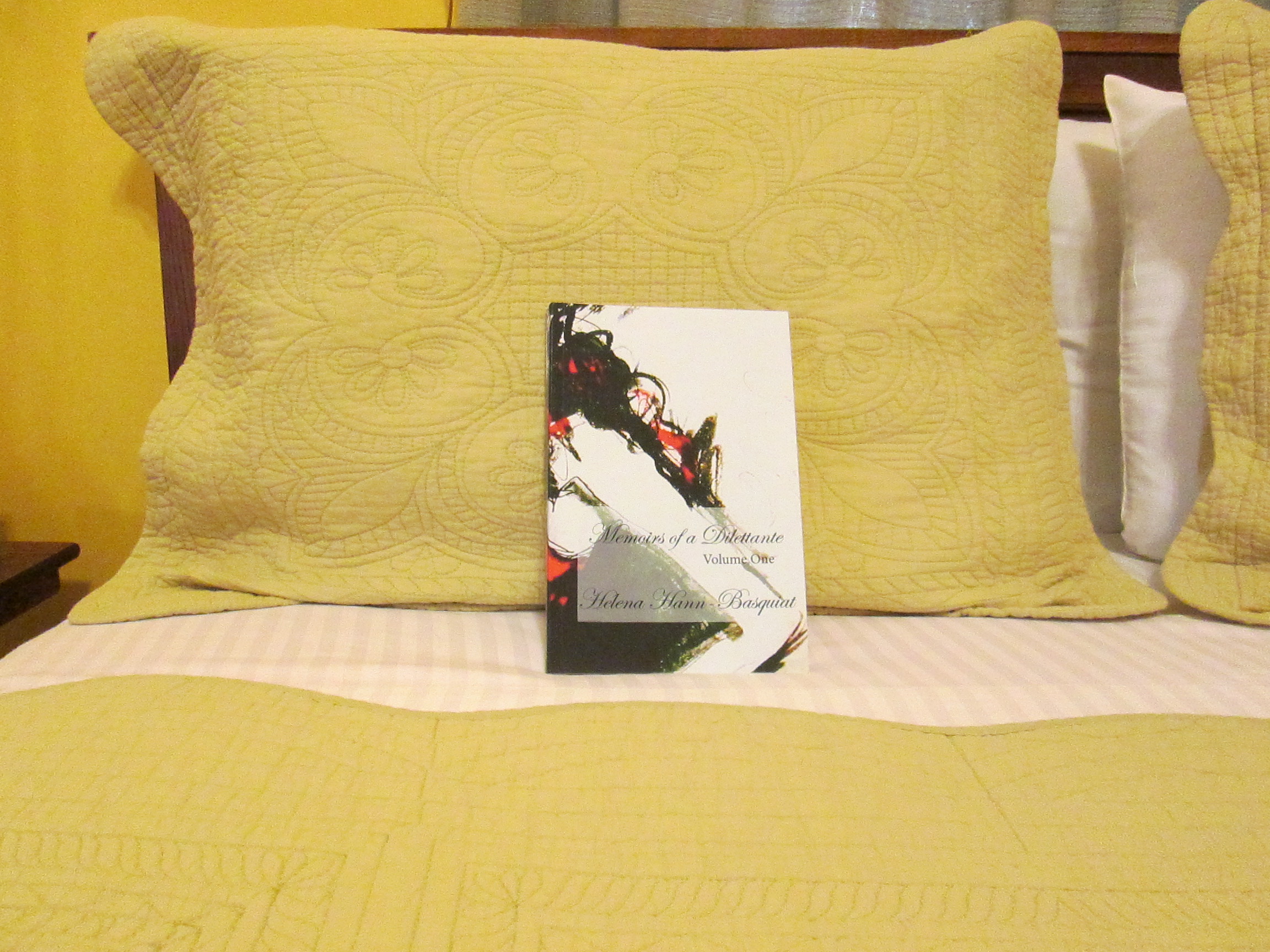
Earlier this year, she published Memoirs of a Dilettante Volume One, and is about to release Volume Two, along with a Shakespearean style tragi-comedy, entitled Penelope, Countess of Arcadia.
Helena writes strange, dark fiction under the name Jessica B. Bell – VISCERA, a collection of strange tales, will be published by Sirens Call Publications later this year. Find more of her writing at http://www.helenahb.com or and http://www.whoisjessica.com
Connect with her via Twitter @HHBasquiat
BECOME A FAN at PUBSLUSH and pre-order Memoirs of a Dilettante Volume Two and Penelope, Countess of Arcadia!
KATIE SULLIVAN: Writer, mom, real-food foodie, reckless gardener and wannabe spy, Katie Sullivan is descended of pirates and revolutionaries, and a lover of all things Irish. Born in the States, she is a dual US/Irish citizen, and studied history and politics at University College, Dublin – although, at the time, she seriously considered switching to law, if only so she could attend lectures at the castle on campus. Today, she lives in the American Midwest with her son, two cats and a pesky character in her head named D (but you can call him Dubh).
Katie’s first book, Changelings: Into the Mist, a young adult historical fantasy, is available in print and digital from Amazon. She can also be found writing with said character weekly at her blog, The D/A Dialogues.
Changelings: Into the Mist is now available!This historical fantasy, filled with pirates, magic and kings, is not to be missed. “It’s a love letter to Ireland.” ~ Helena Hann-Basquiat, Memoirs of a Dilettante.
“Those who can laugh without cause have either found the true meaning of happiness or have gone stark raving mad” ~ Norm Papernick
J. S. COLLYER is a Science Fiction writer from Lancaster, England. Her first novel Zero was released by Dagda Publishing Aug 2014 and was listed in Northern Soul’s Magazine Best Reads of 2014. The sequel, Haven, is due out Oct 2015.
My favorite dilettante has a new volume of “memoirs” coming soon. Who cares if her stories are fact or fiction? They are always decisively entertaining.
Memoirs of a Dilettante Volume Two is the second collection of reminiscences, following Helena Hann-Basquiat, a self-proclaimed dilettante who will try anything just to say that she has, and her twenty-something niece, who she has dubbed the Countess Penelope of Arcadia.
Speaking of Arcadia, this volume delves into Helena’s childhood, as she revisits what she calls the Arcadia of the mind — that place that keeps us trapped and holds us back from our potential. Some of her most personal stories are included here, interspersed with hilarious stories of misadventure. It’s not a novel, really, and it’s not a memoir, by the strictest definition. But most of what follows, as they say, is true. Sort of. Almost. From a certain point of view.
Discover Helena’s tales for the first time or all over again, with new notes and annotations for the culturally impaired — or for those who just need to know what the hell was going through her mind at the time!
Helena is going to be running a crowdfunding/pre-order campaign at Pubslush, a community focused solely on indie writers, and has set up a profile there to launch Memoirs of a Dilettante Volume Two.
If you just can’t get enough Helena, or you want updates on further goings on, release dates and miscellaneous mayhem, follow Helena on Twitter @hhbasquiat
What you need to know (aka Helena’s biography):
The enigmatic Helena Hann-Basquiat dabbles in whatever she can get her hands into just to say that she has.
She’s written cookbooks, ten volumes of horrible poetry that she then bound in leather she tanned poorly from cows she raised herself and then slaughtered because she was bored with farming.
She has an entire portfolio of macaroni art that she’s never shown anyone, because she doesn’t think that the general populous or, “the great unwashed masses” as she calls them, would understand the statement she was trying to make with them.
Some people attribute the invention of the Ampersand to her, but she has never made that claim herself.
In 2014, she published Memoirs of a Dilettante Volume One, several e-books which now make up Volume Two, as well as a multimedia collaborative piece of meta-fictional horror entitled JESSICA.
Memoirs of a Dilettante Volume One is available HERE in e-book for Kindle or HERE in paperback.
Helena writes strange, dark fiction under the name Jessica B. Bell.
The following “memoir” was published online elsewhere, only the website has since disappeared. Thus, I resurrect my creative attempt at remembrance here. (more…)
Mary picked up the soft cover book from her pillow where it had been resting since Lucy left it there. She opened the book so she could see the front and back cover, the red, black, and white colors making her eyes dance. Red was her favorite color. Black used to be the color of her hair. And it had been long and wavy, much as she imagined Helena’s hair to be. An index card floated down from the book and onto Mary’s lap. It was a note from Lucy: “Just call me Penny dammit!” Mary laughed at the inside joke. Both she and Lucy were regular readers of Helena’s blog and knew the story behind “Penny dammit.” (more…)
A little birdie (well, actually, a big birdie) told me that today is Helena Hann-Basquiat’s birthday! And what better way to celebrate her birthday than by heading over to Amazon and picking up one or all of her recent publications:
Memoirs of a Dilettante Volume One, available in both ebook and paperback. I highly recommend the paperback. The printed format is candy for the eyes. If you are a fan of Helena’s blog (and how can you not be), then you will love having the adventures of Penny dammit, Countess of Arcadia and Helena all in one beautifully designed place.
Three Cigarettes, available as an ebook and only 99 cents. By the way, I’ve read and reviewed Three Cigarettes and found it to be both thrilling and chilling. Although Three Cigarettes was written by Jessica B. Bell, Helena was the editor. More importantly, she is Jessica’s keeper and we do want to keep Jessica around.
Best Medicine, available as an ebook and only 99 cents. Again, this one was written by Jessica but edited by Helena. I don’t need to repeat myself here, do I? I haven’t yet read Best Medicine but I do have a copy so a review will be forthcoming. And I know I won’t be disappointed.
For even more fun, see that widget on my sidebar, the one that says “Honorary Dilettante Contest”? Click on that, dear Readers, and prepare to participate in a truly fun contest. I’m participating and you can see what I mean here.
I consider myself quite adept at procrastination. I even belong to a procrastinating writer’s club (my rationalization knows no bounds). But when I heard that THE Helena Hann-Basquiat, my favorite dilettante, was publishing Volume 1 of her Memoirs of a Dilettante and that if I supported her Kickstarter project, I could get a specially SIGNED hard copy of said memoir, well, Dear Reader, I dropped EVERYTHING and immediately went to https://www.kickstarter.com/projects/jimsquires/memoirs-of-a-dilletante-volume-one and signed up!
But YOU, you only have until Saturday, March 22nd, at 3 pm EST, to secure your own special-just-for-you signed copy of Memoirs of a Dilettante Volume 1. So go there NOW (https://www.kickstarter.com/projects/jimsquires/memoirs-of-a-dilletante-volume-one). If you not familiar with Helena’s stories of hilarious escapades with her niece Penny, the Countess of Arcadia, then by all means visit her blog and see what I mean. (And, of course, the rest of us will wonder just what rock you’ve been living under.) After you’ve drunk in Helena’s always entertaining, often enlightening prose, kick your *ss in gear and head over to https://www.kickstarter.com/projects/jimsquires/memoirs-of-a-dilletante-volume-one. It’s so easy to sign up and order, you won’t even miss those few minutes that you would have otherwise procrastinated away :)