John W. Howell’s new novel, My GRL, is a pleasantly different kind of thriller. The hero, John D. Cannon, lacks a few of the standard hero qualities that you might expect in a thriller novel. He doesn’t seek out danger. In fact, at one point, danger has to literally run him off the road and onto the beach to get his attention. Cannon is somewhat naive as well, especially when it comes to women. He takes them at face value, trusting them in spite of all the red flags they wave in his face. [Ahem, Mr. Cannon, when a woman tells you she had great fun infiltrating another company while pretending to be someone else, in effect, SPYING, you might want to put your trust in her on hold for a bit.] Cannon is also one of the most polite, respectful, and well-adjusted heroes I’ve ever met, and he’s a lawyer to boot! He also has a wry sense of humor which carried through the novel quite well. (Some of my favorite lines: “I get dressed and wait for the wheelchair which is the requisite mode of transport out of a hospital. (If you are still alive that is, if not, then it is a gurney.”; “I think he believes I have a good memory and no brains.”) (more…)
Here is the 36th installment of Ten Top Lists of What Not to Do by Marie Ann Bailey of 1WriteWay at http://1writeway.com and John W. Howell of Fiction Favorites at http://johnwhowell.com. These lists are simu-published on our blogs each Monday. We hope you enjoy.
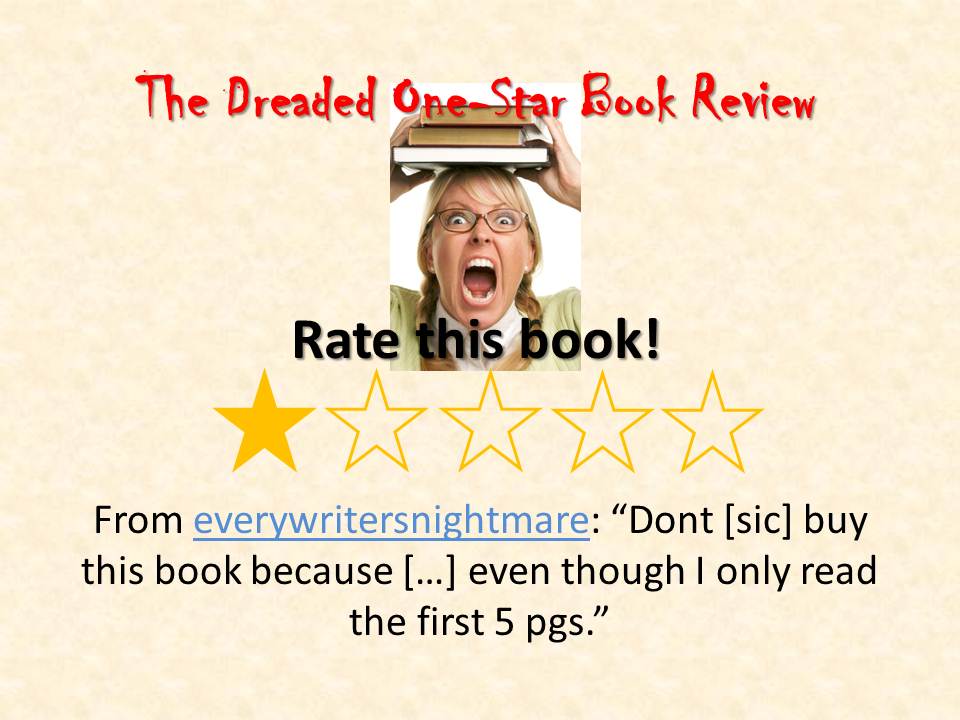
10. If your book gets a negative review, do not read the review, especially if the rating is one star. At best, the reviewer will admit the review is based on having read only a couple of pages of your book and you can chide yourself for even bothering to read one word of the review. At worst, you will read the review so many times you can quote it by heart, begin to believe it, and eventually get one star tattooed on your back to atone for imagined errors in your career choice.
9. If your book gets a negative review, do not respond to the review in any way. If you do, at best, the reviewer will ignore your comments and let others decide if you just have a case of sour grapes. At worst, the reviewer will take great delight in responding to your comments, goading you into an outraged frenzy whereupon the website will block you from seeing any more reviews.
8. If your book gets a negative review, do not search for and then comment on other books that the reviewer has reviewed. Even if you have read those books, at best, you will be taking precious time away from your writing just to get even with the reviewer. At worst, the reviewer will realize it is you and seek a court injunction on the grounds that you are unstable as evidenced by you spending so much more time reviewing other books rather than writing one.
7. If your book gets a negative review, do not ask your family or friends to target the reviewer with their own commentaries. If you do, at best, the reviewer will just ignore them and eventually they will lose interest. At worst, they will all end up in an unsightly battle of words and then they will all get banned from the website and your family and friends will turn on you like a wounded Leopard.
6. If your book gets a negative review, do not assume a false identity and write reviews of your book to counter the negative review. If you do, at best, no one will know it’s you and eventually you will just feel as if you are a loser. (You think?). At worst, someone will uncover your identity and both you and your book will be pulled from the websites, leaving your readers to think you’ve been arrested or kidnapped..
5. If your book gets a negative review, do not start a campaign against negative reviews, using the negative review as an example. At best, the campaign will quickly fizzle out as so many do without the reviewer ever knowing about it. At worst, the reviewer will see your campaign and accuse you of libel, slapping you with a lawsuit so expensive you will be doomed to write PR copy for the Russians full time for the rest of your life in order to pay it off.
4. If your book gets a negative review, do not think that you should suddenly switch genres just because one reviewer doesn’t “get” your book. If you do, at best, you might discover writing erotica causes you to take too many breaks during the day so you can try out scenes with your significant other and so your productivity suffers. At worst, you might discover that while you may now enjoy writing erotica, you can’t get your children’s literature agent or any publisher’s interest in your new book.
3. If your book gets a negative review, do not take the reviewer’s advice to quit writing and take up dishwashing as an occupation. At best, the long hours at the sink will only cause your imagination to go into high gear and you’ll be back to writing within a few days. At worst, your brain will turn to mush from the boring drudgery and by the time you can retire from said occupation, you will have forgotten how you got stuck as a dishwasher in the first place.
2. If your book gets a negative review, do not think one bad review trumps all your positive reviews. If you do, at best, your faithful readers will not mind you’ve suddenly changed narrative styles because you are talented in any style you choose. At worst, you will find yourself writing only for the one reviewer who really doesn’t care about you or your books anyway, and your readers will have to organize an intervention to keep you from reading any more negative reviews.
1. If your book gets a negative review, do not stop writing. If you do, at best, you will suddenly have more time on your hands than you know what to do with. At worst, you will disappoint your readers and they will accuse you of emulating J.D. Salinger, which of course you cannot afford to do until you actually become J.D. Salinger.
Here is the 34th installment of Ten Top Lists of What Not to Do by Marie Ann Bailey of 1WriteWay at http://1writeway.com and John W. Howell of Fiction Favorites at http://johnwhowell.com. These lists are simu-published on our blogs each Monday. We hope you enjoy.
10. When writing a book review, do not provide a five-page synopsis of the book before you even start your review. If you do, at best, readers will just skip the synopsis and your efforts will be wasted. At worst, readers will confuse the synopsis for your own work, tweet and blog about the review, causing it to go viral and guaranteeing a negative reaction by the author. (more…)
About a month ago, I pledged to The Writer’s Rebel Creed 2014, developed by Sheri A. Larsen, in collaboration with followers of her blog. (If you want to “pledge,” all you need to do is sign up on her blog by clicking here.)
Now, the Creed is not terribly hard to follow, at least at first blush. But by my estimations, I’m not doing so good. Of course, with my rebellious nature, I’m all too frequently breaking my own promises to myself. Maybe I should have developed my own creed: pledging to not write at all, to have no belief in my abilities, and to be chicken-sh*t in writing something new.
Now, if I can be allowed to consider commenting on other blogs as writing, then I have been writing regularly. Yea!
Oops, I think I hear some people calling “Foul!” Okay, so I need to improve in that area.
The thing is, I’m still sitting on a fence about my novel writing. I wrote my first novel in 2007 and the next four in 2012 and 2013. All of them were written during NaNoWriMo events and all are first or second drafts. I’ve started reading the first draft of one novel, and then got derailed about halfway through. It’s not bad (it’s a first draft, for crying out loud), but the whole concept of novel writing intimidates me. I have to create a world, one that is believable even if fictional. It’s a daunting task and I still wonder whether I’m up to it.
Which leads to my wavering belief in my abilities. Which, in truth, is just another day in the life of moi. Every so often, a fellow blogger/writer pumps my head full of self-esteem (with a good measure of hot air) as Helena Hann-Basquiat did in her post here, but eventually I fall back to earth (and on my ass) and consider my abilities to be figments of my imagination (yes, I know, it’s circular thinking).
But then I write something NEW, something that takes even me off-guard, and all because of a discussion of mashed potatoes on Jill Weatherholt’s blog.
As far as trusting in the beauty of revisions, well, I’ve already mentioned that I’m merely halfway through just reading the first draft of one of my novels. Enough said there.
For now and the foreseeable future, I’m eschewing bettering my marketing skills since I have nothing to market. I’m not even really trying to “grow a base” as much as just hang with the awesome community that has grown around me.
Finally, giving back to my community? Supporting other writers? I see those two items so closely related that I won’t try to address them separately. I’ll just say that supporting other writers is perhaps the most fun thing I do on my blog. It’s actually the one constant thing (aside from my Mondays with John) that gives meaning to my blog.
Now, I’m not feeling sorry for myself. I’m not trying to milk sympathy or garner more boosts to my ego than I’ve already been given (although if you really want to compliment, go for it!). I’m just feeling very matter-of-fact, very grounded actually. I think it’s a good thing that I question my novel writing. And it’s a good thing that I’m acknowledging that I haven’t spent as much time writing as I initially intended. The stories are there; they’re just floating around in my head. When I’m ready, and only then, I’ll pick up that half-read novel or jot down some of those ideas.
In the meantime, I have some writers to support, a community to give back to, and some blogs to comment on. Who knows? Maybe I’ll get inspired by a discussion on why avocado is so often an ingredient in sushi rolls.
So, what about you? How are you doing with your writing/blogging/marketing commitments? Do you get disappointed when your favorite sushi roll has avocado in it?
Here is the 33rd installment of Ten Top Lists of What Not to Do by Marie Ann Bailey of 1WriteWay at http://1writeway.com and John W. Howell of Fiction Favorites at http://johnwhowell.com. These lists are simu-published on our blogs each Monday. We hope you enjoy.
10. While doing your taxes, do not allow the cat to sit on your keyboard. If you do, at best you may miss a couple of deductions. At worst, your kitty may just add a few zeroes to your tax bill.
9. While doing your taxes, do not have a hot drink sitting on some of your worksheets. If you do, at best you could tip it over and ruin the papers. At worst, you could tip it into your lap and jeopardize your love life till you heal.
8. While doing your taxes, do not allow your dog to play with the computer cord. If you do, at best you may run out of battery. At worst, you may need to run out to the vet to help Fido overcome his electro-shock treatment
7. While doing your taxes, do not allow the family to play video games on your computer between sessions. If you do, at best some memory may disappear. At worst, the IRS may get a Madden football game instead of your 1040.
6. While doing your taxes, do not leave your computer without saving your file. If you do, at best you might have to remember all your half-truths all over again. At worst, you may be unable to reconstruct your perfect return and end up owing more that you had planned.
5. While doing your taxes, do not think the IRS is okay with rough guesses or estimates of the numbers. If you do, at best you will never hear from the IRS. At worst, you will have to explain your numbers during an audit to a disbelieving agent with a cattle prod.
4. While doing your taxes, do not forget to sign your return even if you don’t believe it to be true. If you do, at best the return will bounce back. At worst, the lack of signature will trigger a visit from NSA who will want to know all about you.
3. While doing your taxes, do not try to get away without attaching a check if you owe money. If you do, at best the government will send you a nasty note. At worst, you will find out how little a sense of humor the IRS really has.
2. While doing your taxes, do not drink alcohol even if you think it will help. If you do, at best you might be shocked by the amount you deducted. At worst, you may be shocked to find you have already mailed the return on which you took too many deductions.
1. While doing your taxes, do not be discouraged enough to decide not to file. If you do, at best you will never sleep again. At worst, you may get your living expenses paid, but will have a roommate who wants to go steady.
“My GRLby John W. Howell is fast-paced thriller that shows how your life can be turned upside down in the blink of an eye. . . It is a well-written story that kept me glued, page after page.” Readers’ Favorite Five Stars – Reviewed by Faridah Nassozi. See the entire review HERE
Click cover to visit Amazon
Blurb:
John J. Cannon successful San Francisco lawyer takes a well-deserved leave of absence from the firm and buys a boat he names My GRL. He is unaware that his newly purchased boat had already been targeted by a terrorist group. John’s first inkling of a problem is when he wakes up in the hospital where he learns he was found unconscious next to the dead body of the attractive young woman who sold him the boat in the first place. John now stands between the terrorists and the success of their mission.
Author Bio:
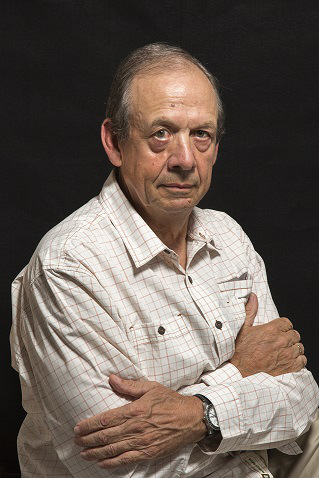
Photo by Tim Burdick
John W. Howell’s main interests are reading and writing. He turned to writing as a full time occupation after an extensive career in business. John writes thriller fiction novels and short stories. He also has a three times weekly blog at Fiction Favorites .
John lives on Mustang Island in the Gulf of Mexico off the coast of south Texas with his wife and their spoiled rescue pets.
Since a lot of us share in the fantasy of becoming a world famous author, here is the Thirteenth installment of Ten Top Lists of What Not to Do by John W. Howell of Fiction Favorites at http://johnwhowell.com and Marie Ann Bailey of 1WriteWay at http://1writeway.com. These lists are simu-published on our blogs each Monday. We hope you enjoy.
10. If you are writing the great American novel, do not begin your manuscript with the words, “It was a dark and stormy night.” These words have already been copyrighted by Snoopy and you could find yourself in a nasty lawsuit.
9. If you are writing the great American novel, do not let your spouse read a word of it. Your spouse will want to protect you from yourself and make suggestions that could lead to annulment proceedings by both of you.
8. If you are writing the great American novel, do not use your friends, neighbors or family members as easily identified characters. People tend to be a little touchy when they think you have exposed them for what they really are.
7. If you are writing the great American novel, do not include sex scenes that at some later time you will need to explain “how you knew that” to your spouse. Even worse would be the question, “why haven’t we done that?”
6. If you are writing the great American novel, do not tell anyone you are doing it until it is all done. If you talk too much, the people you tell will give you a number of stories that they are sure you can use. Even worse, you will have to listen to all the stories about how they are also going to write a book as if it is as easy as saying.
5. If you are writing the great American novel, do not start replacing frustrated moments with food and drink. The frustration will continue but you might be in a position to need new clothes beyond your tattered trusted terry cloth robe for that book launch party. It could also be that you will need to seek help for your addictions.
4. If you are writing the great American novel, do not assume everyone in the world is causing you to come down with a case of writer’s block. The interruptions are a way for normal people to test whether or not you are still of sound mind and body. The writer’s block is all you.
3. If you are writing the great American novel, do not try and get your family to understand why you would rather remain behind to tap on your keyboard than to go to the movies, theater, restaurant, bar or sporting event. Simply pretend to have come down with a bout of the flu and let it go. You may have to create some unusual sounds, but as world famous author you can do it.
2. If you are writing the great American novel, do not suspend normal hygiene routines. The wild eyed, disheveled, evil smelling iconic view of an author is long past. If you are clean and look healthy, you will avert unusual questions not to mention a threat of intervention from loved ones.
1. If you are writing the great American novel, do not let anyone tell you that you are wasting your time. The fact that you just might be doing so is nobody else’s business but yours. You will eventually reach your goal (or not), but at least it was you who had the faith to get there.
Welcome to an interview with John W. Howell, author of a new novel (working title: My GRL) soon to be published by Martin Sisters Publishing. John is also an editor at The Community Storyboard, a student of the haiku, a short story writer when he is not writing haikus or working on his next novel, and is my “partner in crime” in producing a weekly Top Ten List of Things Not To Do at both his blog, Fiction Favorites, and my own, 1WriteWay. John worked for 40-plus years in the private sector world before taking up writing full-time and is currently undergoing “margarita therapy” in an effort to overcome the unpleasant memories he has from that long, painful experience.
M: John, thank you so much for agreeing to be interviewed. Of course, I wanted to return the favor since you had interviewed me not too long ago. And I do need to return this margarita glass that I inadvertently took with me when we last met. All that aside, I am very interested in your writing, how it all came about and where you want your writing career to go from here.
J: Marie, it’s a pleasure to be here. Thanks for returning the margarita glass. It was getting embarrassing to have to serve the odd margarita in a mason jar. Aren’t you going to offer me anything?
M: Oh, of course, my manners. I’m no good at mixing drinks so …
J: I’ll have some hot tea. I have a long drive back.
M: A pot of hot tea coming up. Be careful where you sit. There may be a cat on the chair.
J: Thanks for the warning. Since I have two cats as well and know they don’t like to be disturbed. Perhaps if you could just find me a chair without a cat in it.
M: Here you go. OK, let’s get started. So, elsewhere you’ve said that you worked for over 40 years in the business sector. If it’s not too painful, could you talk a bit about what you did, what your occupation was?
J: Yes, Marie (takes sip of tea). I actually had three separate careers. The first was in consumer marketing and sales where I worked for over twenty-two years. In that time I started as a section sales person and finished as President of a consumer healthcare division. The second career was as a consultant in consumer marketing. I worked as an independent consultant for about five years and then for my third career started when I was hired by one of my clients. The client was a major telecommunications company and I started as a cube dweller and worked for about fifteen years and finished as a director. I retired and began writing full time in 2012.
M: That’s really interesting! Has any of this experience influence or play a part in your writing?
J: I have a reoccurring character named Frank who embodies all the arrogance I witnessed by upper management when I was working. You know the attitude, believing everyone else is less than equal and not quite as smart. I am slowly torturing Frank by giving him a life that he loves mixed with a life of a homeless person. I do this in various stages of his dreams. So whenever Frank goes to sleep he wakes up under a different situation and the beauty is he remembers the previous dream and is in agony. I love it.
M: And you wrote a short story about Frank that received an Honorable Mention from Writer’s Digest in their Popular Fiction Contest. Our readers can enjoy “Cold Night Out” on the Community Storyboard. Congratulations on that award. So now you are retired from the business world. What prompted you to take up writing? Had you done any writing while you were employed before?
J: I actually did a fair amount of contract writing on my last job. I became very interested in the creative process which I then infused into the contracts I was creating. I was able to have living documents that two parties could embrace. It was this experience that got me to the keyboard so to speak. I finished my first book while still working. I printed it off and it is now holding the laundry room door open which seems the best purpose for a 122,000 word piece of trash.
M: I think a lot of us may feel the same way about our first novels. You’ve said that Kurt Vonnegut is a writer you look up to and that Catch-22 by Joseph Heller is the book that got you interested in reading. Do you have any other literary influences?
J: In college I studied comparative literature and part of the curriculum was a concentration on the classics. I guess if I were to pick another influence it would have to be Stephen Crain who wrote The Red Badge of Courage. It was not only a compelling story but also reflects the inner experience of its protagonist. This inner experience or feeling I continually bring out in my characters. One of the reasons I like to write in the first person is that my protagonist has the responsibility of interpreting the scenes around him and then explaining those scenes to the reader. This makes a story not so much as an external circumstance driving the protagonist but an inner conflict that is causing the behavior.
M: And it makes for a compelling story, much like “Cold Night Out” where the reader only knows as much as Frank knows. Let’s talk about Haikus. When did you start writing Haikus? You know, you are quite the master. For our readers, many of John’s haikus are featured on The Community Storyboard.
J: Oh, Marie, you are so nice to say Master, but I am a humble student. I was challenged by a fellow blogger who you know as Kirsten to bring some of my poetry out of the closet (so to speak). I had a great fear of being laughed out of the blogosphere with some of them. I started studying the various forms and somehow fell into Haiku since it comes close to my natural writing style. I practiced and read a lot about Haiku and so I guess I learned with a hands on method. Here is one for you:
Marie is the best, Truly cares for all near her . . . Secret of her smile.
M: (blushing) John, that is lovely and so sweet of you. Thank you. Here, have some tea (clears throat and sniffs). Now, I understand that My GRL is will be published by Martin Sisters Publishing. How did that come about? How has your experience with Martin Sisters been so far?
J: I finished the book and then went through the query process to find an agent. After about two months of no response, I went on line and looked up publishers who would take a chance on first time authors. Martin Sisters Publishing and a number of others came up and since they did not require an agent, I sent a query. They liked my query and asked for that I sign a contract which I was very happy to do. They are very thoughtful and have great respect for writers. I have really enjoyed the experience
M: As you know, many of our fellow writers are self-publishing these days. What are your thoughts on self-publishing? Did you consider self-publishing at all?
J: I was actually going to go the self-publishing route before contracting with Martin Sisters Publishing. I think self-publishing is the way to go if you have some aversion to relinquishing some control over your book. I was very faint of heart when I knew some rights like cover design were now in the hands of the publisher. Martin Sisters also has an option on the next book which I just finished so I am not sure I will be in the self-publish mode for a while. I would like to try it though.
M: Oh, you just finished your second novel? How exciting! Is this a sequel to the first?
J: Yes, it seems the story was too big to fit in one book so I ended the first with some question as to the justice system’s ability to bring the true perpetrator to trial. The second starts off with the protagonist being hailed as a hero and scheduled to appear at the White House for an award. All the while the person behind the original terrorist plot has another in mind and he wants to get his hands on the hero. Many more bullets fly in the next book.
M: Sounds like fun (big smile). So, what is a typical writing day for you? Do you set yourself goals like word or page counts? What needs to happen for you to say that you’ve had a productive and satisfying writing day?
J: My day starts with normal chores like walking dogs etc. By noon I am ready to write. I set a goal for one thousand words for the day on my WIP. Of course with blogs and e-mails I write more than that totally. A successful day to me is moving the story along and working out a twist or plot problem successfully. (Oh and getting all the 150 E-mails put somewhere.)
M: Hmmm, you get a lot of emails, too. Ah, you know, publishing whether it’s self-publishing or traditional publishing is very competitive. Writers who are coming out with their first novels or short stories may feel overwhelmed or intimidated by the marketplace. Do you have any advice for writers who aspire to be published authors?
J: Anyone who wants to be published needs to understand that the work is hard and the result needs to be a personal goal not driven by some other person. Given that understanding, the writer needs to write every day. It really doesn’t matter how much but every day is a must.
M: Well, John, that’s great advice. I agree that writing everyday, even if it’s just an email in response to 150 emails, is worth doing. I want to thank you again for taking the time for this interview. I know I am one of many others who are eagerly awaiting the publication of your first novel. I assume you will announce it on your blog, which again is Fiction Favorites. Would you like some more tea before you head back?
J: Marie, it was my pleasure to be interviewed by you. You have a lovely new kitchen and I must say your cats are well-behaved. Yes, I would love some more tea.
Well, that’s it, folks! My first interview with Haiku student (master), novelist, blogger, and all-around great guy, John W. Howell. Be sure to follow his blog Fiction Favorites. And please stay tuned for more interviews by 1WriteWay.
Here is the tenth installment of Ten Top Lists of What Not To Do by John W. Howell of Fiction Favorites at http://johnwhowell.com and Marie Ann Bailey of 1WriteWay at http://1writeway.com. These lists are simu-published on our blogs each Monday. We hope you enjoy.
Here is the tenth installment of Ten Top Lists of What Not To Do by John W. Howell of Fiction Favorites at http://johnwhowell.com and Marie Ann Bailey of 1WriteWay at http://1writeway.com. These lists are simu-published on our blogs each Monday. We hope you enjoy.
10. When traveling through the countryside of an underdeveloped country, do not forget to bring flip-flops or some such protection for your feet if you choose to stay at quaint inns. Often you will find yourself in a long line of other travelers and locals waiting to use the single shower in the multi-story building. Besides standing in other people’s wet dirt, you may also encounter microscopic critters that tend to linger along the tiled floors and are happy to ride your feet back to your country of origin.
9. When traveling through the countryside of an underdeveloped country, do not forget to practice squats several times a day to build up your quadriceps and to prepare you for the inevitable pit toilet located in the back yard of the local inn. Do not assume that you will always have the advantage of something to hang onto while you try to find that happy balance of getting your bum directly over the pit without getting it directly into the pit.
8. When traveling through the countryside of an underdeveloped country, do not forget to carry at least two rolls of toilet paper on you. One roll for the inevitable pit toilets that never have toilet paper anyway and the other roll for when you do manage to find a private toilet where you can spend the next several hours wishing you hadn’t drank that tap water even though you were outrageously thirsty at the time and nothing else was available.
7. When traveling through the countryside of an underdeveloped country, do not drink tap water (see #4). You may drink anything that comes in a bottle which means you may be drinking a lot of beer, which leads us to the next item on the list.
6. When traveling through the countryside of an underdeveloped country, do not allow yourself to be over-served even if you are feeling only mildly inebriated at the time and you are dining on a full-course meal. Chances are some amoebas are lingering on your plate (which was probably washed with tap water) or within the food and you may eventually find yourself in the predicament of trying to balance your bum over a pit toilet while simultaneously trying not to throw up on your flip-flops.
5. When traveling through the countryside of an underdeveloped country, do not expect that everyone will speak English and you will not have a need to know the local language. For example, learn to ask “Where is the bathroom?” If you’ve read this far into the list, then you know why you need to know this.
4. When traveling through the countryside of an underdeveloped country, do not take a room in a hotel or inn that is directly across from a church. After a few days of church bell ringing to announce the time (6 AM, noon, 6 PM), funerals and weddings (often on the same day), you may wind up with a loss of hearing to rival Quasimodo.
3. When traveling through the countryside of an underdeveloped country, do not forget to also practice squats several times a day to prepare you for the strenuous hikes that you may encounter, especially on rainy days when the landscape becomes wet and muddy. You do not want a team of local boys to have to push on your bum to get you up the steep hill that was supposedly a shortcut to the inn in which you’re staying.
2. When traveling through the countryside of an underdeveloped country, avoid spending the evening with a U.S. ex-pat who grows and smokes his own marijuana. While it may seem safe at first, you run the risk of your host being a paranoid sonofabitch who may at any moment start ranting about the U.S. government and the CIA and the FBI and their collusion with the Peace Corps and you will suddenly be wishing that you could slip away during those few all-too-brief moments when your host is not staring at you with wide bloodshot eyes while sharpening his machete.
1. When traveling through the countryside of an underdeveloped country, beware of clear liquids served by young children at a roadside stand, especially at night. Chances are they are not selling lemonade, but instead are selling “firewater.” The upside is the firewater may kill all the amoebas that have taken up residence in your stomach. The downside is you may become too quickly inebriated to appreciate it.




 Marie at 1 Write Way
