If you like interesting things about Christmas and literature, then follow Interesting Literature as they provide an Advent Calendar of Literature, starting today!
We’ve been running this blog now for two years. When we posted our first literary blog post, on 1 December 2012, we set out to publish a short post every day, or almost every day. To mark the second birthday of InterestingLiterature, we would like to present ‘The Advent Calendar of Literature’. Every day for the next 24 days, leading up to, and including, Christmas Eve, we’re going to publish a short post about some interesting fact relating to literature and Christmas. That’s 24 facts, or one for every month that this blog has been going. These are our favourite festive facts that we’ve uncovered over the last couple of years.
But not only that: each fact will be linked, so that tomorrow’s Christmas literature fact will pick up on today’s, and the one we post on 3 December will follow tomorrow’s, and so on, right to…
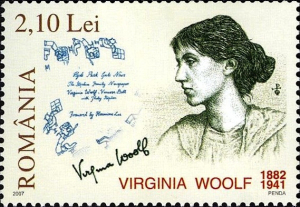
Virginia Woolf has been on my mind a great deal lately, and yet I managed to overlook this post from Interesting Literature. For Woolf aficionados and others who just enjoy a bit of history, literary and otherwise: Read on!
Charleston Farmhouse sits in a valley of the South Downs at the end of a long dirt road, marked private, which carves and winds around ditches of old trees. The house looks out upon farms and grazing, and just a little farther, the town of Lewes, East Sussex.
Being mostly pacifists, the Bloomsbury set conscientiously objected to national service in the First World War, so the house at Charleston was bought in 1916 and there the group stayed, making the farmhouse a sanctuary for the things it believed in: literature, art, discussion, and new ways of doing things. They covered their sanctuary with pictures, portraits of each other, printed patterns on the tables and the ceilings and the chairs.
‘The house seems full of young people in very high spirits, laughing a great deal at their own jokes,’ Vanessa Bell wrote.
I didn’t know there was such a event as World Cat Day, but thanks to Interesting Literature, now I do know and I also know some more facts about writers and cats. Read on and enjoy!
It’s World Cat Day! The purr-fect opportunity (sorry – we couldn’t resist) to share 10 of our favourite writer-related facts about cats.
Ernest Hemingway had over 30 pet cats, with names including Alley Cat, Crazy Christian, Ecstasy, F. Puss, Fats, Furhouse, Skunk, Thruster, and Willy. Many of them had six toes; to this day, such cats are often known as ‘Hemingway cats’.
James Joyce wrote two stories for children, both about cats: ‘The Cat and the Devil’ and ‘The Cats of Copenhagen’. You can see some of the rare illustrations for ‘The Cat and the Devil’ here.
French writer Colette started her working day by picking the fleas off her cat.
One of Daniel Defoe’s early business ventures was the harvesting of musk which he extracted from the anal glands of cats. Perhaps unsurprisingly (and thankfully for the cats involved), this venture failed.
Another interesting post from Interesting Literature: writers’ quotes about life. My favorite is one by T.S. Eliot. It is the way I am trying to live my life now. What is your favorite, dear Reader? Do any of these quotes reflect the way you live your life, or wish you lived your life?
Interesting Literature is at it again with great quotations. Baldacci’s quote resonates the most with me. But I urge my published friends to consider Edna St. Vincent Millay’s quote ;)
In a time long ago, I fancied myself an amateur Woolf scholar. I had volumes of her letters and journals; her novels and essays; any biography I could find; and kept all close to my bed, within arm’s reach. My interest in Woolf started while I was in high school and continued, fairly strong, through my grad degree in English. I still fancy Woolf although it’s been a long time since I’ve (re)read anything by her. I no longer claim to be a Woolf scholar, amateur or otherwise, but like a moth to a brilliant light, I fly to her whenever I see her name.
In this blog post, Interesting Literature not only provides an interesting tribute to Mrs. Dalloway (published on May 14, 1925), but also includes a clip of Virginia Woolf talking about writing. I had never heard her voice before. Her accent is much what you would expect from a well-educated, well-to-do British citizen of that time. Her obvious love of language, her philosophy that words should tell us the truth or create beauty, tugs at my heart given that she left this world too soon and too young.
Virginia Woolf’s Mrs Dalloway was published on this day, 14 May, in 1925. In honour of this, we thought we’d offer a few little facts about this novel, and about Woolf herself.
The action of the book takes place over just one day – a ‘moment of June’ in 1923 – although there are flashbacks to events that occurred in the characters’ lives over the previous five years, in the immediate wake of WWI. The original title of the book was ‘The Hours’, a title that Michael Cunningham would go on to use for the title of his novel about Woolf, which weaves together events from Woolf’s own life and events from Mrs Dalloway. The book was filmed, in 2002, starring Meryl Streep and Nicole Kidman (the latter of whom famously wore a prosthetic nose to portray Woolf).
Mrs Dalloway wasn’t the only novel Woolf wrote the action of…
Today is Tolkien Reading Day, an annual event launched in 2003 by the Tolkien Society. (The date of 25 March was chosen in honour of the fall of Sauron in the Third Age, year 3019, in Tolkien’s fiction.) The reading day promotes the use of Tolkien’s writing in schools and library groups, and is celebrated in numerous countries. To mark the occasion, we’ve put together ten of our favourite quotations from John Ronald Reuel Tolkien. The first quotation, about Beowulf, is especially timely because of the recent announcement that Tolkien’s translation of that epic poem is finally going to be published!
On Beowulf and myth: ‘The significance of a myth is not easily to be pinned on paper by analytical reasoning. It is at its best when it is presented by a poet who feels rather than makes explicit what his theme portends; who presents it incarnate in the world of history and geography, as our poet has done. Its defender…
This week has been quite the emotional roller coaster, with my husband and I having a few teary-eyed discussions about our oldest cat, Luisa. I’m happy to say that right now she is stable and seems to be regaining some of her old spunk and energy.
Luisa nodding off.
Okay, she’s not looking too spunky here, but this is the first morning in a week that she’s felt well enough to walk all the way from the back of the house to the front, climb up on the couch (with a little help from moi), and then take a nap in front of the window. And I have the pleasure of giving her a cocktail of drugs twice a day: her usual methimazole (for hyperthyroidism) and Pepcid (for her tummy; I don’t know that it helps but they say it doesn’t hurt); in addition, an anti-nausea pill once a day; appetite stimulant every three days; a liquid medication for colitis; and a food supplement similar to Activa. Fortunately, Luisa is very good about taking pills and even having a syringe of cold liquid splashed at the back of her throat. We are not assuming that she’s out of danger yet. I mean, she’s at least 20 (my husband argues that she’s closer to 22) and her body is shutting down. We’re just trying to slow the process and make her comfortable. And right now, our efforts are paying off :)
With Luisa as my distraction, I’ve fallen very behind in writing and blogging and commenting. Fortunately, this morning I came across this post from CommuniCATE Resources for Writers: Don’t “Write” Yourself Off: I Don’t Care How Old You Are! Indeed, I needed to read this! One of the (many) struggles I have with my writing is my age: Will I someday be too old to publish a FIRST novel? Is time running out for me? If you ever have any of these thoughts, read Cate’s blog post.
And if you feel that sometimes the world is too full of bad news and bad people, there’s a new blog that you’ll want to visit and perhaps even contribute to: Good People Doing Great Things. This is the brain-child of Margaret Jean Langstaff, a wonderful writer and blogger that you may already know through her blog, The Langstaff Retort. For Good People Doing Great Things, Margaret wants “to hear your stories and experiences, events and acts of spontaneous kindness that you have witnessed or initiated yourself.” She is looking for guest bloggers, columnists, advisors, people who understand the importance of compassion in our humanity, as well as anyone with WP expertise who would be willing volunteer their time to make the new blog visually engaging.
Almost finally, Interesting Literature had two very interesting posts last week: one about 19th century inmates of insane asylums (click here) and another one on great quotations from women writers (click here). My favorite quote of those listed: ‘Lock up your libraries if you like; but there is no gate, no lock, no bolt that you can set upon the freedom of my mind.’ – Virginia Woolf
Now really finally, for Belinda at Busymindthinking.com …
Click Five Fascinating Facts about John Steinbeck to read some fascinating facts about John Steinbeck. Number 5 should be of special interest to my friend Jayde Ashe-Thomas of The Paperbook Collective. She is a fan of author Thom Steinbeck, John Steinbeck’s son (read one of her posts here) and, of course, John Steinbeck himself (he’s her “homeboy“) :)
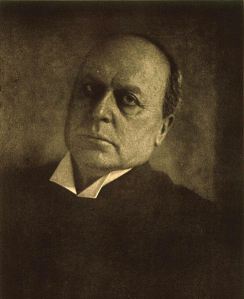
I wonder how many of those who may read my blog will be familiar with, much less a reader of, Henry James, a writer who is perhaps the most opposite to Ernest Hemingway, in his style of writing, that is, if not just his time and nature. In short, I have a lovely Modern Library edition of The Ambassadors that I’ve never been able to complete reading because I start dozing after only a couple of pages, and I wonder if any of this blog’s followers have had that experience with James or not, but if you are interested at all in Henry James then you must, indeed, click through and read these fascinating facts about him.
1. He had no regrets. In a letter to fellow novelist Hugh Walpole, James wrote in 1913: ‘We must know, as much as possible, in our beautiful art . . . what we are talking about – & the only way to know it is to have lived & loved & cursed & floundered & enjoyed & suffered – I don’t think I regret a single “excess” of my responsive youth – I only regret, in my chilled age, certain occasions & possibilities I didn’t embrace.’
2. James’s close and long-standing friendship with Constance Fenimore Woolson, a widely-read writer who like James had also settled in Europe, ended abruptly when Woolson jumped from her bedroom window in Venice in 1894. It fell to James to sort through her belongings and finally dispose of her clothing. Unable to sell or burn her dresses, he eventually…




 Marie at 1 Write Way