I’ve been a bit “out of it” lately due to world events and general procrastination. I keep meaning to get back into the swing of things so when I (finally) sat down to catch up with my online community, I came across this Lens-Artist Challenge is hosted by Leya. She encourages us to share what makes us smile. For some, smiles these days might be hard to come by so this is a particularly timely challenge.
What makes me smile? Here’s a few:
Nature
Whether it’s an Eastern Carpenter Bee getting up close and personal with Kay’s Pink Roses (photo featured above) …
Or the tell-tale sign of a raccoon visiting our campsite at night …
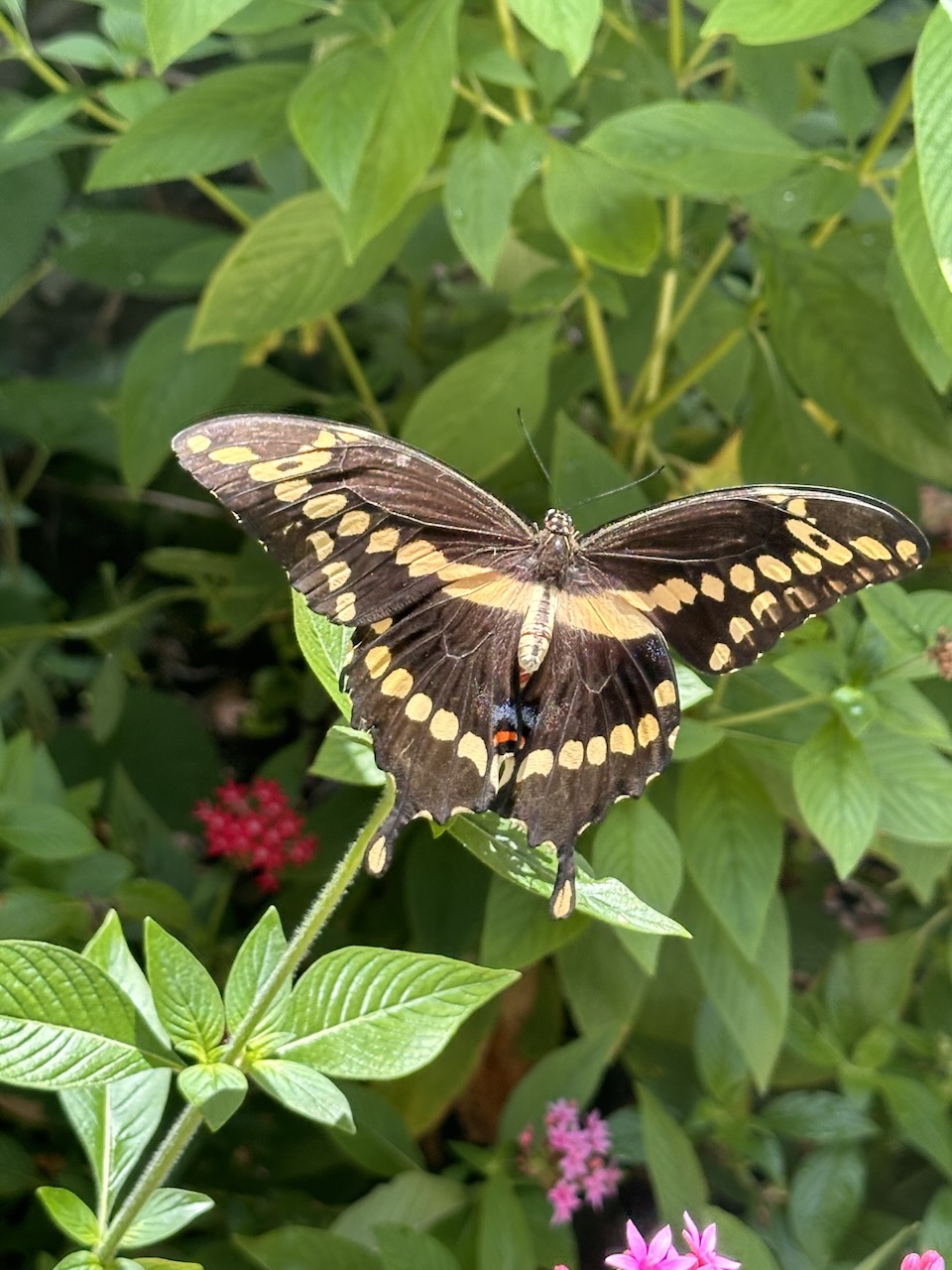
Or a swallowtail butterfly feasting on penta blooms …
Or a praying mantis praying that it is blending in …
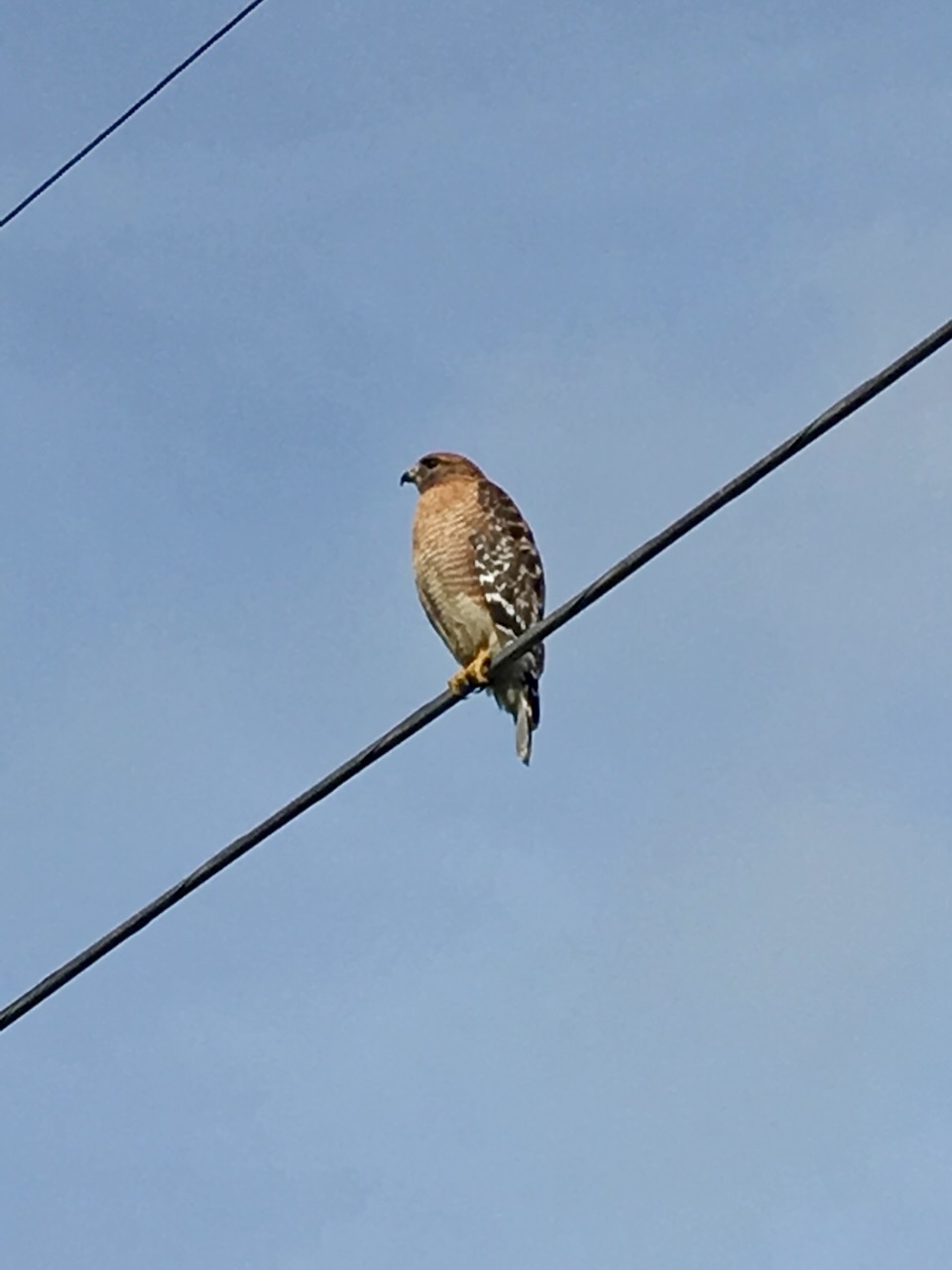
Or an red-tailed hawk just hanging out in the ‘hood …
Or a momma gator and her baby.
Sometimes Art makes me smile …
Sonic Blooms, Seattle, Washington, 2014
From the exhibit: Created by Seattle-based artist Dan Corson in a collaboration between Pacific Science Center and Seattle City Light, these sun loving, harmonic blooms use regionally manufactured, custom solar panels to generate their own power. Each flower top contains 48 solar cells that produce 4.6 Wp (watts at peak production) for a total of 1,104 Wp for all 5 flowers.
The electricity generated will make the flowers dance with light through the evening and sing through the day, 365 days of the year. Sonic Bloom combines art and science to help educate about solar energy in the Pacific Northwest and inspire people to consider how they can incorporate renewable energy into their lives.
Especially funny signs or photos …
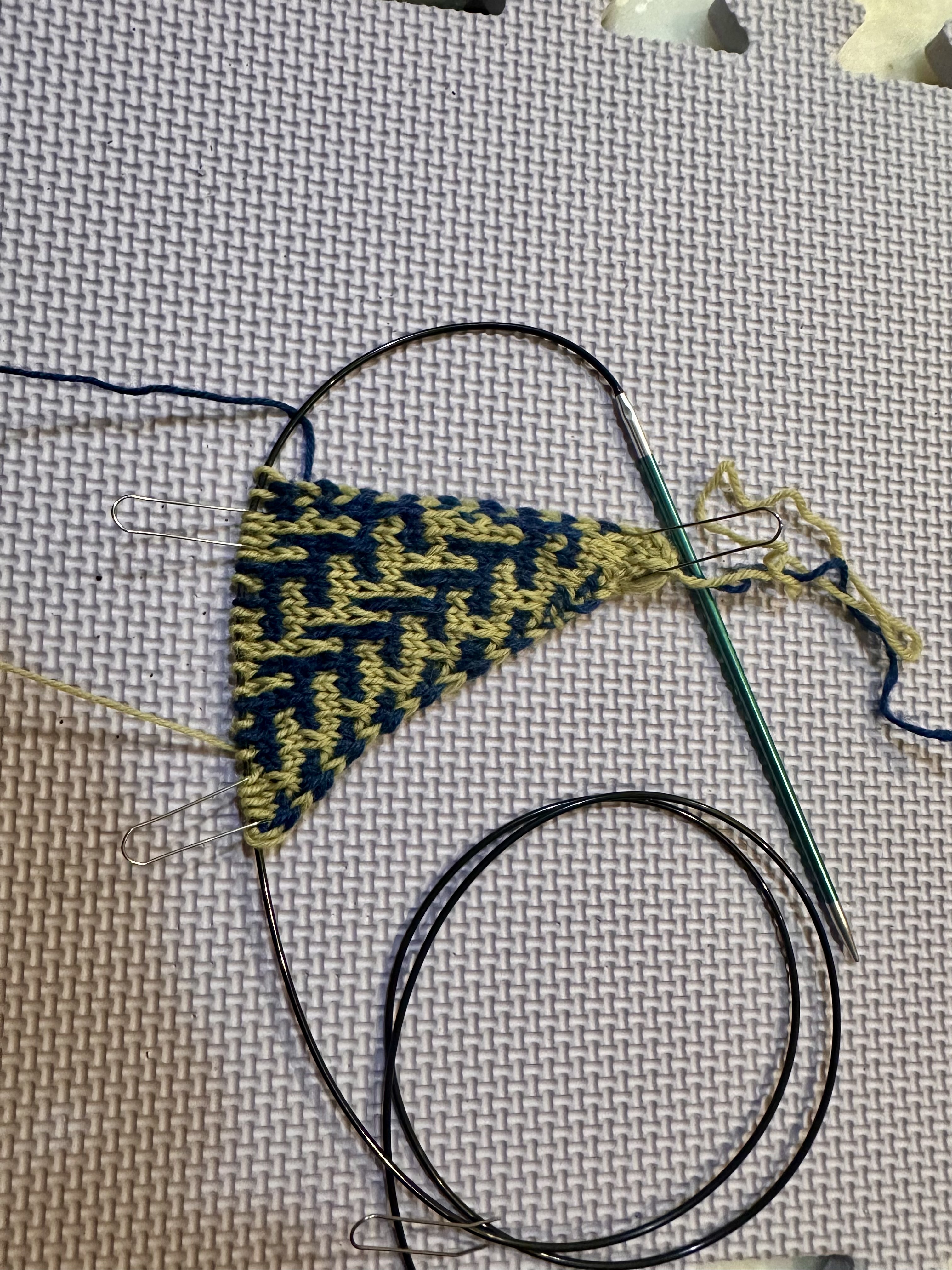
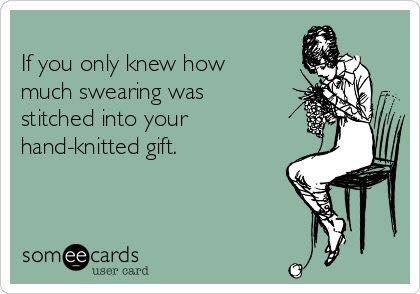
A bigger smile from me when they refer to knitting …
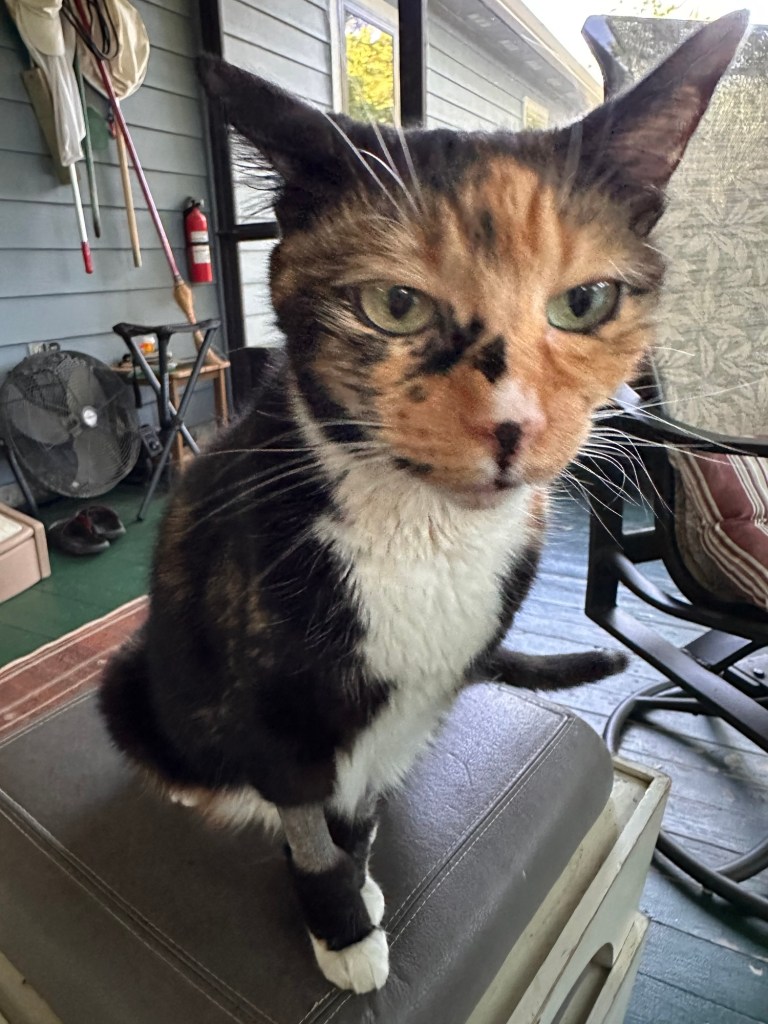
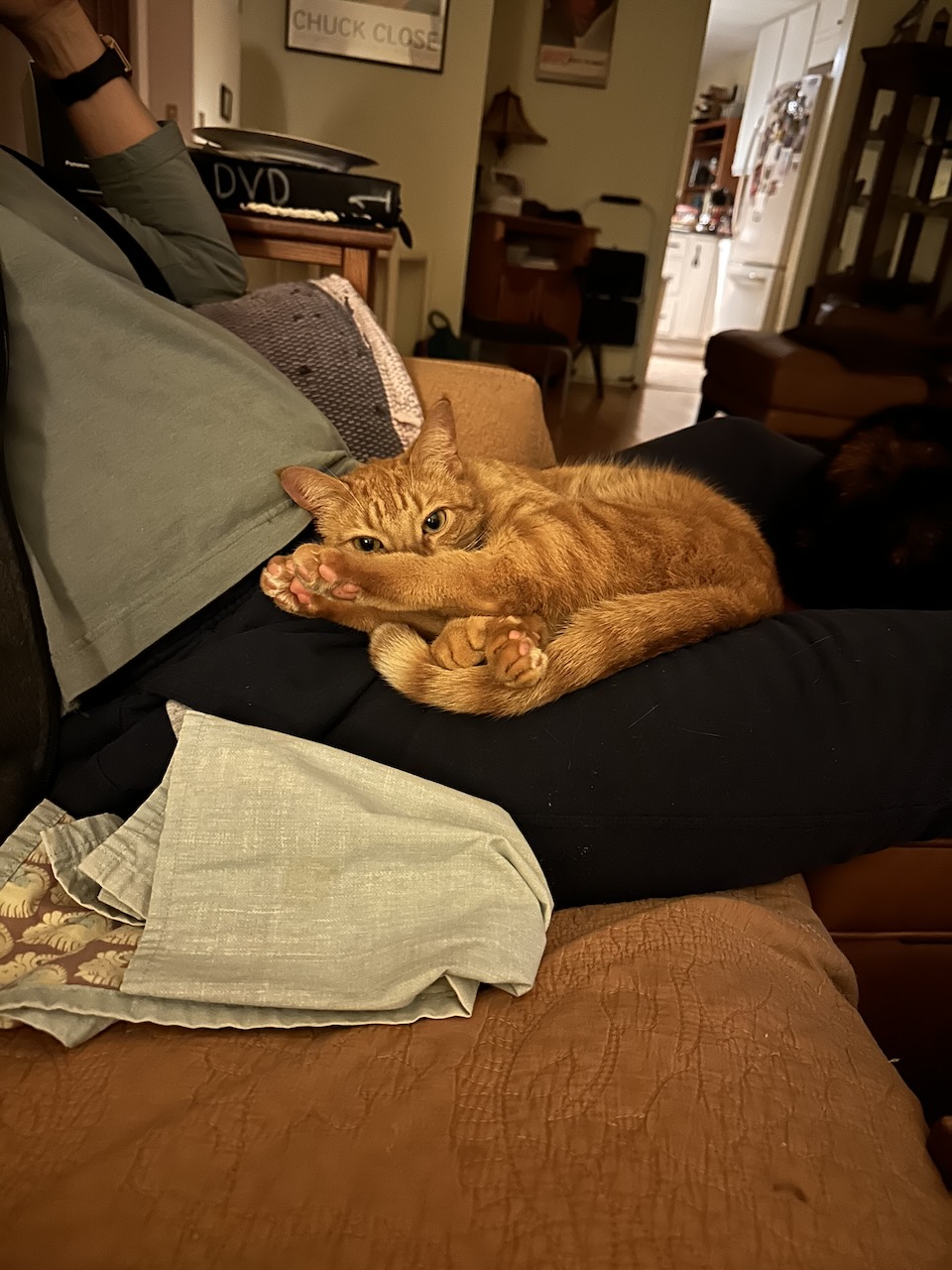
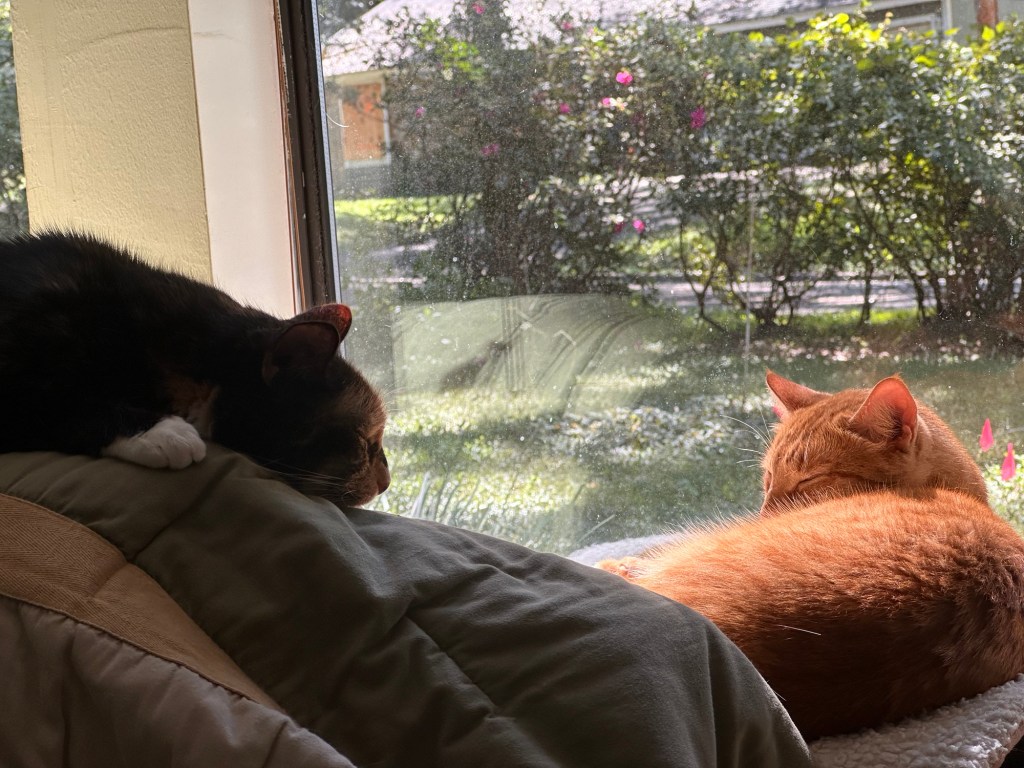
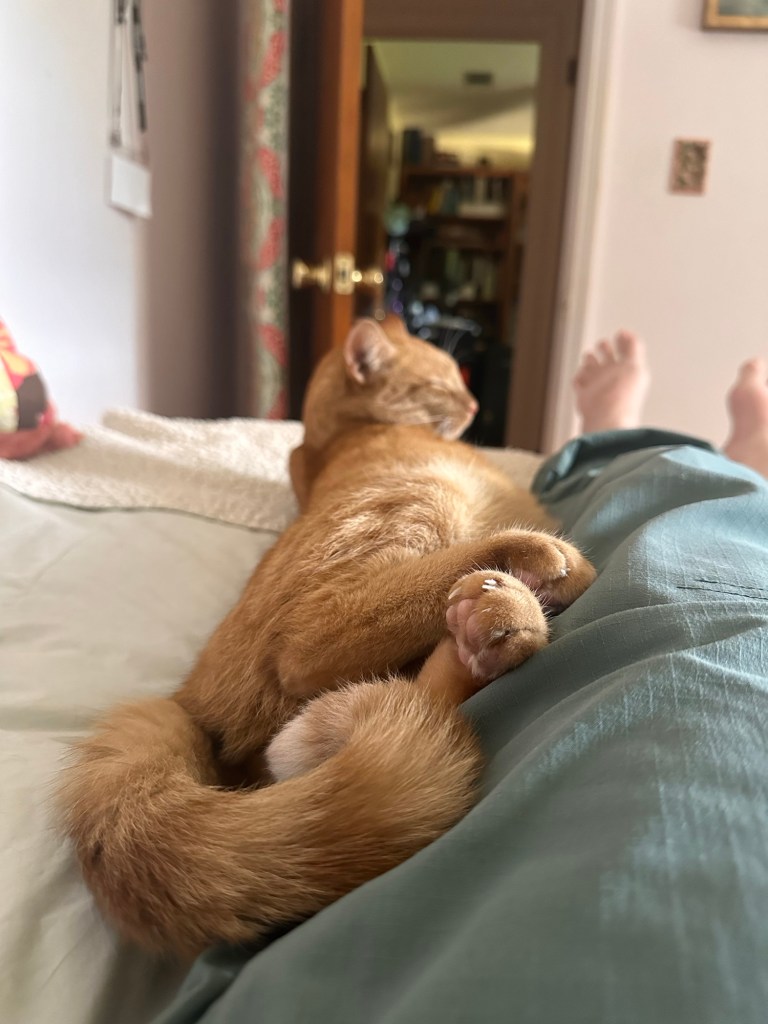
What makes me smile the most? Cats, always the cats …
Junior (RIP) and Maxine (RIP) staking out their territory on my husband. Wendy and Raji zonked out in the sun.
I hope you got some smiles out of my selection! Let me know what makes you smile.
If you want to participate in this Lens-Artists challenge, remember to tag with Lens-Artists and link to Ann-Christine’s original post.
Next week, Sofia will lead us from her beautiful site Photographias – be sure to visit on Saturday 30!
To all of you who celebrate Thanksgiving, I hope you have a wonderful time with family and friends. Despite current world events, we still have much to be grateful for. I know I am grateful for each one of you.
Yesterday, October 7, would have been my sister Charlotte’s 80th birthday. I meant to write a blog post celebrating her birthday. I felt that weird sort of self-consciousness that social media provokes: if I don’t publicly share what I’m doing, did I do it? By not writing a public post on my sister’s birthday, I can’t prove I thought about her that day. Trust me, I did.
Hurricanes
It wasn’t just her birthday that prompted me to think about Charlotte. It was also the hurricanes—one past, another on its way. Charlotte had lived in St. Petersburg, FL, in a mobile home park. If she were still alive, she’d be evacuating right now, trying to get as far away from Hurricane Milton as possible. Maybe.
When she was alive, and hurricanes had the Tampa Bay Area in their sights, I’d worry about Charlotte. I’d call her, ask if she had someplace to go. She’d get impatient with me, arguing that I didn’t need to worry. She’d argue that she didn’t have to evacuate, but then she would wind up staying with friends. I’d feel relieved but also guilty.
We didn’t have the kind of relationship where I’d drive almost 300 miles to pick her up and whisk her away. We didn’t have the kind of relationship where we were willing to risk being stuck with each other.
Health
It wasn’t always like that. Twenty-some years ago I spent a couple of weeks with her while she recovered from heart surgery. We had fun. We watched old movies, ordered pizza, ate Kentucky Fried Chicken. It was like a two-week slumber party.
While she was in hospital, I cleaned her tiny trailer, shampooing the worn carpet, replacing old appliances. And I cried. She was widowed by then, and she didn’t seem to have many friends. At least, not many that she could count on. I didn’t know yet that when she was very drunk, she wasn’t very nice. I cried because I saw how she was living on the edge. I wanted to fix things for her. I paid off her credit card that was several months past due. I told a bartender at the establishment she frequented that she had had heart surgery and should limit how much she drinks. I left her cash so she could pay her bills. I treated her like a child, much like our mother did.
History
Charlotte was almost 13 when I was born. Growing up, she was sometimes my favorite sister, sometimes not. I always saw her as tragic, fragile, fatalistic. Our mother infantilized Charlotte. Really, there’s no other word for it. My sister Shirley didn’t give our mother a chance. She went to nursing school and then married at 19, putting herself on the same playing field as our mother.
Charlotte, well, she was unlucky in love. She first married a guy who dealt in antiques and taught me how to pick the strings of a guitar. He was quiet and patient with me so I liked him.
Until Charlotte acknowledged that, yes, rape does occur in marriage. I was 12, a budding feminist, and I felt a chill when she responded affirmatively to what I had just read in a book. She didn’t look at me, and I had a fleeting image of her in a dark bedroom pleading No.
During that first marriage, Charlotte came down with scarlet fever. I didn’t know until years later that it was our mother who insisted that Charlotte go to the hospital. Her husband, apparently, was content to let her lie in bed. The fever weakened her heart, and she was told that she should never have children. All she ever wanted.
Sisters
A desire for children was something I never shared with either of my sisters. Maybe because I was the youngest. By the time babies entered my life—through my sister Shirley—I had turned inward, wanting to just be left alone. My family was crumbling. I was old enough to see that something was wrong with my dad, but too young to understand what it was. I was afraid of my mother and her cold temper. My brother was a boy.
Occasionally, I’d spent a night or two with Charlotte and her first husband. I guess it was my mother’s way of getting me out of the house. I remember Charlotte going with me to a quarry for clay and then making a mess of her kitchen trying to make little pots. I remember her being patient with me and quiet. And sad.
It’s taken me 67 years to realize that Charlotte and I were not destined to be friends. We were too alike in the wrong ways. Both of us had a wild side, no doubt spurred by our mother’s over-protectiveness. The things I didn’t like about myself, I saw in Charlotte: a tendency to drink too much, to judge, to be mercurial. I saw Charlotte as the woman I might have become if Greg hadn’t entered my life.
We’d been drifting apart when Trump decided to run for president. He made certain we wound up on different continents. Once Charlotte understood that I liked Obama and I didn’t like Trump, I was persona non grata.
And yet, I keep remembering our last phone call. How she called me “dear” in between her gasps for breath. How I wanted to say I love you but didn’t.
Thank you for reading. I’m very behind on reading, and I appreciate your patience as I try (and likely fail) to catch up.
Please keep everyone affected by hurricanes Helene and Milton in your thoughts and prayers. I’ve been reading wonderful things about World Central Kitchen if you want to help by donating: https://wck.org
Woot! Power is back on. Now my electronic life resumes … charging batteries, checking internet service, resetting clocks, plugging in the kettle, turning on the light in my windowless bathroom, sitting now with my iPad typing away.
Now complacency can set in since Helene (for us) turned out to be a minor inconvenience. Maybe it would have been psychologically worse for us if we hadn’t prepared for the worst, but as far as life and limb, we are so near normal now that Helene seems like a bad dream.
Yesterday, the hummingbirds came back in force, and my husband had to scurry to get the feeders back up. The butterflies (mostly long-wing zebras but we did see one Monarch yesterday) are also back and hungry.
While I’m glad to have power again, I’ll miss the dark sky, the relative silence (generators and owls competing for our attention), and the slowing down of life, the opportunity to “make do” and learn what I can live without.
Thanks to everyone for your good wishes!
Please keep in the mind all those who were hit harder by Helene than we were. We were saved by Helene tilting east, but that meant that others were not so lucky. Areas that were hit worse include Taylor County which has suffered through three hurricanes in the last two years.
Liza Larkin is a pathology resident with a schizoid personality disorder that makes interacting with people very difficult. Liza’s mom, who has schizophrenia, lives in an institution. Her father, who provided her stability and unconditional love as she grew up, is dead. Now she relies on her psychiatrist, Dr. Lightfoot, to assist her in dealing with the difficulties of social relationships. Her father taught her well, but challenges to her preferred reclusiveness continually beset her. For these reasons, Liza seems like an unlikely warrior for justice; yet, she has a visceral antipathy toward injustice that compels her to help people she cares. She knowingly puts herself in danger for the sake of others.
In this second book of the series, Liza suspects that a friend’s aunt was murdered despite no evidence to support her suspicion. While sleuthing on her own, she’s challenged to keep a major research grant (and her professional future) from falling through the cracks while her preceptor copes with a family crisis. Liza also runs up against Chopper, a shady character from the previous novel, who threatens to blackmail her. She (and we) really don’t want to know how he got that nickname.
The story is told from Liza’s point-of-view so we only know what she knows, making this novel a thrilling puzzle. I felt I was right there alongside Liza, trying to figure out how her friend’s aunt might have been murdered and why. My only criticism of the novel is that Liza spends a lot of time ruminating, thinking through all the possibilities of whatever problem she’s trying to solve. There were a few moments when I wanted her to stop thinking and start doing, but those ruminations also offer a deep dive into Liza’s brain. She is highly intelligent, capable of incredible focus and memory retention. Yet, like other humans, she has her flaws and vulnerabilities. “Seeing” Liza socially mature and learn to ask for help as well as offer help is a real bonus. Rubin has a gift for character development and for keeping the reader on the edge of her seat. I am looking forward to more novels in this series.
You can find Malignant Assumptions at Amazon (print and Kindle versions) and Bookshop (print versions). Audio versions are available at Audible, Libro.fm, and Spotify.
Thank you for reading! Here’s your prize:
Raji curled up on one of my weird pillow creations.
At this time, I still don’t know if the year-long program with Summer Brennan on Substack will resume. A few weeks ago, one of our group reported that he had (finally) talked with Summer’s agent and was told that she was fine but dealing with a family tragedy. The relief that she was fine was palpable … even in an online group. But we are still in limbo, only being told that she planned to “update” us later, in the next session which starts September 1. And while that is tomorrow, my sixth sense tells me we will still be in limbo. And so the anxiety continues, especially among those who feel they should get a refund for the missed sessions. Lesson learned: Substack is not at all helpful in that regard. Firstly, the platform prefers that you work that out with the writer. Secondly, if the writer is incommunicado and you’ve paid for a full year (as I did), then there needs to be at least six months of inactivity in order for a refund to be considered. Not that I was planning to ask for a refund. Like I said, lesson learned.
Friendship
A friend mentioned in passing the other day how she was planning to go to Maui with a few girlfriends. It made me feel sad. I thought about when I last had a group of girlfriends. It was the early 80s and I remember four of us (including the above-mentioned friend) getting together at someone’s house. The four of us worked at the same engineering firm in California. I don’t remember where we were and why we were together but I do remember we had fun and it was a rare occurrence for me to enjoy being with more than one or two people at a time. In fact, most of my friendship have been duos or trios. When I was working on my master’s in English at Florida State University in the 90s, three of us became attached, to the point where one professor said, “When I see one of you, the other two aren’t far behind.” The trio is no more. One of us moved and married and had children. The other realized she really didn’t like me after all.
The commonplace book is an ancient tradition for copying out quotations. Brilliant thinkers throughout history have kept commonplace books including John Milton, Lewis Carroll, Virginia Woolf, and Octavia Butler.
I used to copy quotations all the time when I was a student. It was the most fun part of keeping a journal, and I still consider those journals the most insightful about my life during those times than the seemingly endless and always boring rants of being unlucky in love or under-appreciated at work.
As a book reviewer, writing down quotes goes a long way to helping me write the reviews. Sure, if I’m reading on my Kindle, I can “highlight” and review those highlights. But it’s not the same as picking up my notebook and pen and jotting the quote down.
I have a few blank notebooks lying about (of course). I doubt that I will actively participate in Jillian’s club (see link above). I’m already far behind in reading and connecting online.
Healthcare
I’ll spare you the rant I shared with a friend earlier today about the compartmentalization of our healthcare system. To wit: regarding a swollen foot, I was referred to my primary doctor who referred me to a vascular clinic who referred me to a vein specialist who I have yet to see. At this point, three doctors with none of them having anything definitive to say about my foot. If the vein specialist refers me to another specialist, I might give up on healthcare altogether.
(I am fine. Really. My right foot tends to swell but I’m doing all the right things and pretty soon I’ll have a bunch of compression socks to wear … when it gets cooler.)
For this week’s challenge, Tina encourages us to “explore the habitats of both human and/or animal “residents.” She includes a quote by the Dalai Lama:
The reality today is that we are all interdependent and have to co-exist on this small planet.”
Sadly, interdependence, biodiversity, climate change are all “dirty” words here in Florida. At least, officially “climate change” can no longer be referenced in any government document. As if climate change won’t exist if the words aren’t spoken or written.
Thankfully, near us is a very special habitat that nurtures biodiversity. A place that I frequently write about.
Some of the following photos are old, of the BCP (Before Cell Phone) Era. They represent various views of the St. Marks National Wildlife Refuge (SMNWR) over the years. As many of you know, SMNWR is a favorite place of ours for bicycling. (It used to be a favorite place for hiking, but our feet, knees, and backs won’t tolerate those long walks any more.)
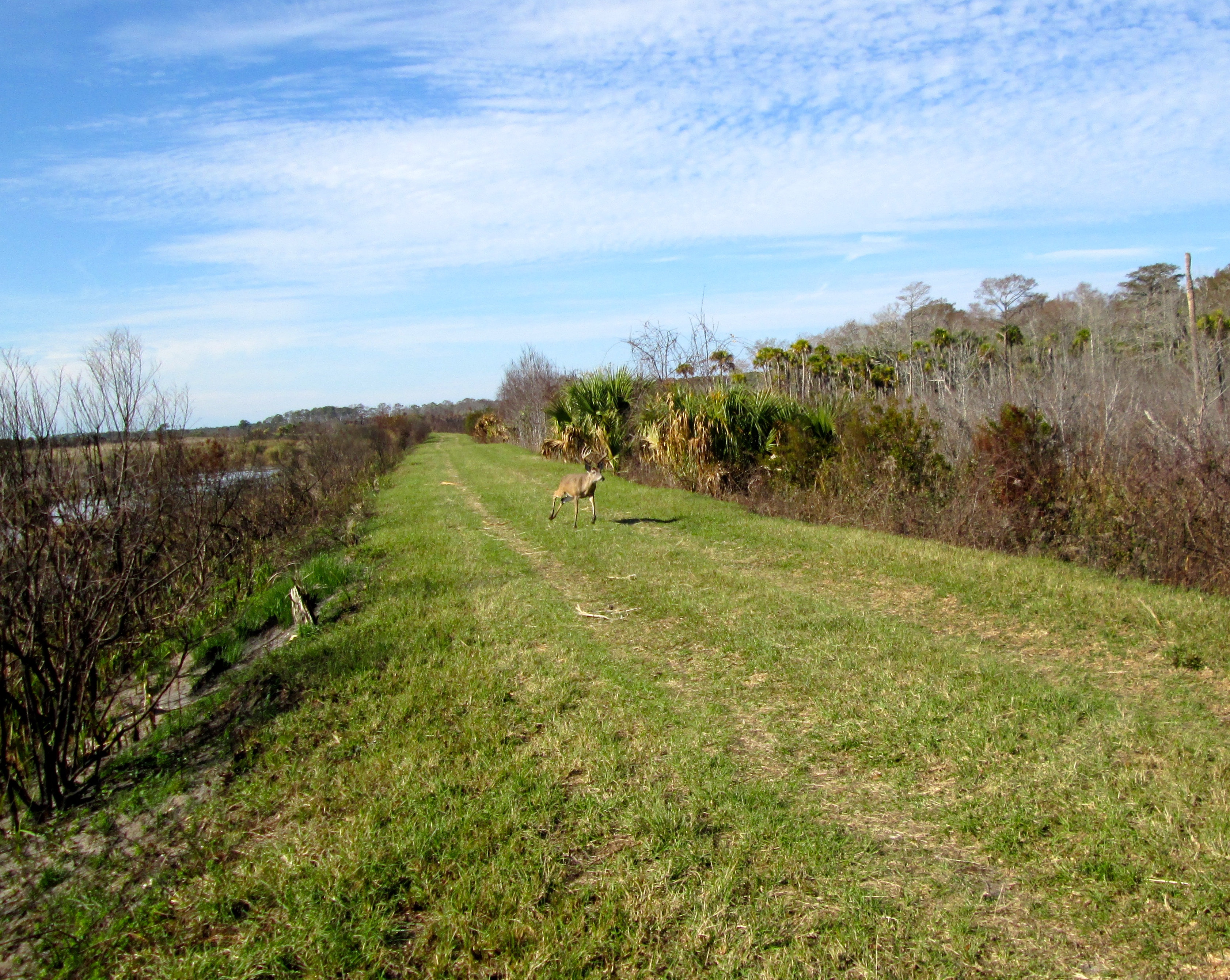
SMNWR provides habitat for deer and a safe haven since the Wildlife Management Area next to the refuge allows hunting during certain times of the year. We see a lot of deer in the refuge when it’s hunting season.
You can’t have a sustainable habitat without allowing some impressive predators to co-exist whether they be snakes, alligators, or bald eagles.
Another favorite habitat is Mashes Sands Beach. It’s what I call a “poor man’s Riveria” as it’s a small beach on an estuary. It harbors a delicate ecosystem. Such as a tiny hermit crab in a tiny shell.
Or many hermit crabs burrowing in the wet sand.
Or an osprey on the hunt.
Then there’s the habitats we create in order to encourage and nurture biodiversity. My husband and I are members of the Xerces Society for Invertebrate Conservation. A modest membership includes a subscription to Wings, a seasonal collection of essays on invertebrate conservation. In the Spring 2024 issue, Scott Black wrote “Planting Habitat as an Act of Hope.” His brief essay did, indeed, give me hope.
Scott wrote about his family’s efforts to transform their lawn into a garden that would provide pollen and nectar for insects. He noted that because of these changes, their “yard has become a magnet for wildlife.” He added:
There is hope, despite what we see in the news. Insects are resilient, and we know that protecting and managing high-quality habitat can quickly produce positive outcomes for insect populations, sometimes within a few years, on a time scale that means we will see the difference.
In our little corner of the world, as my husband and I work to provide a nurturing habitat for bees, butterflies, hummingbirds, and dragonflies, to name a few, in less than two years we are seeing a difference.
An Eastern Carpenter Bee entangles itself in the tiny flowers of an Anise Hyssop.
A Gulf Fritillary feasts on the nectar of a Blue Mystic Spiral.
Another Gulf Fritillary prefers the flowers of a yellow lantana.
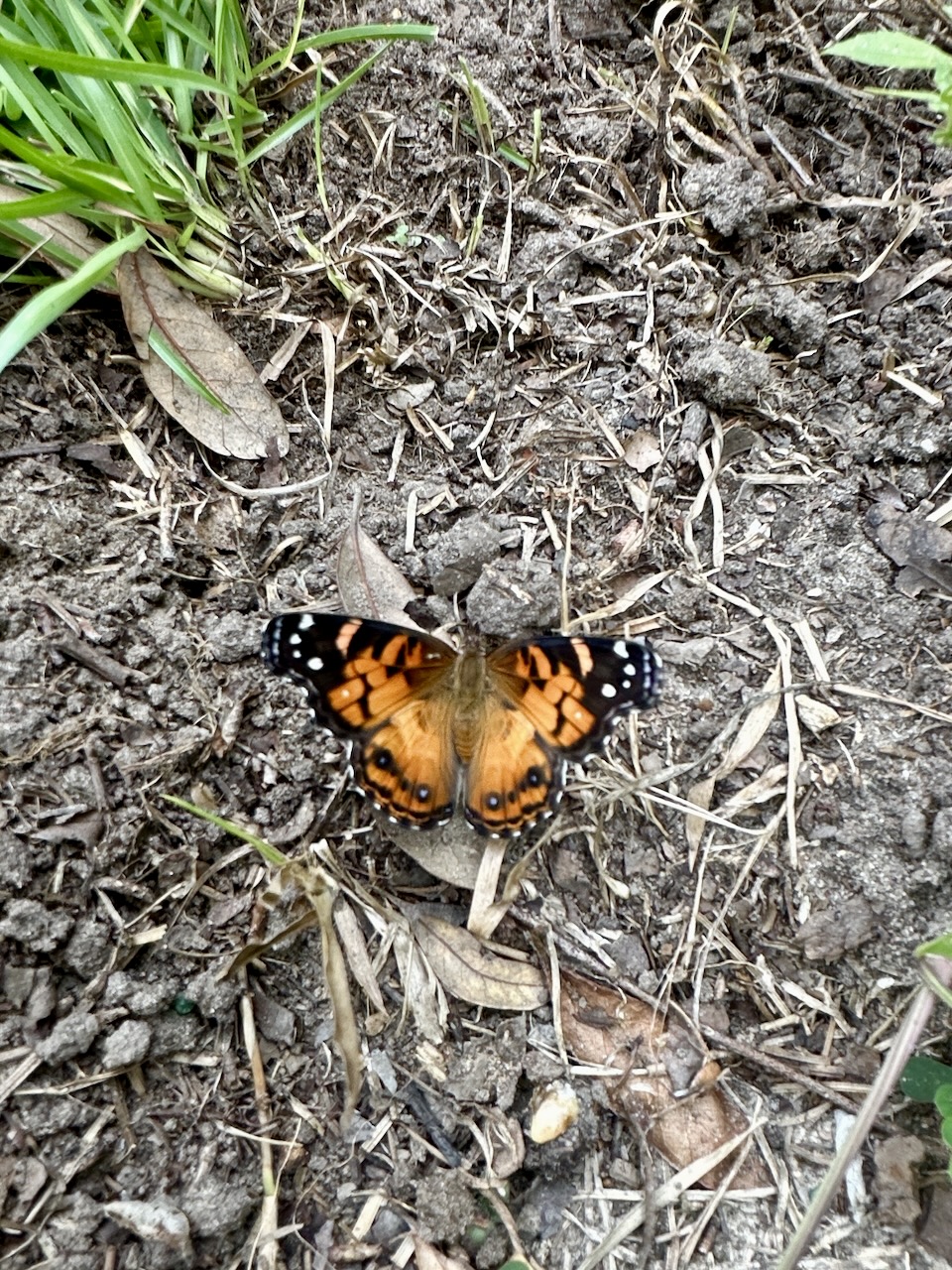
Last month I had the pleasure of an photo op with an American Lady. The butterfly must have just emerged from its chrysalis as it made no attempt to escape my lens.
And while we have several poles placed around our house to accommodate the hunting practices of dragonflies, this one decided he preferred a plant hanger.
Finally, a nurturing habitat is necessary for the domesticated animals in our lives. We are fierce believers in keeping our cats indoors. Over the years, we have had to allow for a few stray cats to live outdoors, although they would always have access to shelter in our garage. This wasn’t because they preferred to be outdoors; it was only ever because our house was already full of cats and we knew (through traumatic experience) that the then-indoor cats would not peacefully coexist with the outdoor cats. Eventually, though, as one cat died, one or two was introduced to the indoors … permanently.
The last cat we brought in from the outdoors was Raji. He was very young when he turned up in our yard almost four years ago. He was a shy, suspicious cat and it took some coaxing and a lot of patience to get him into our garage where we would feed him.
Because he was so young, we didn’t want to let him have free reign outside. We were afraid that he would disappear or get hit by one of the many cars that speed through our neighborhood. But we also needed time. We needed him to accept us before we introduced him to the rest of the household.
So we bought a two-level cat cage and my husband “installed” it on the side deck. We already had a cat-door on the garage door so once the “condo” was installed, Raji could enjoy the outdoors without getting loose.
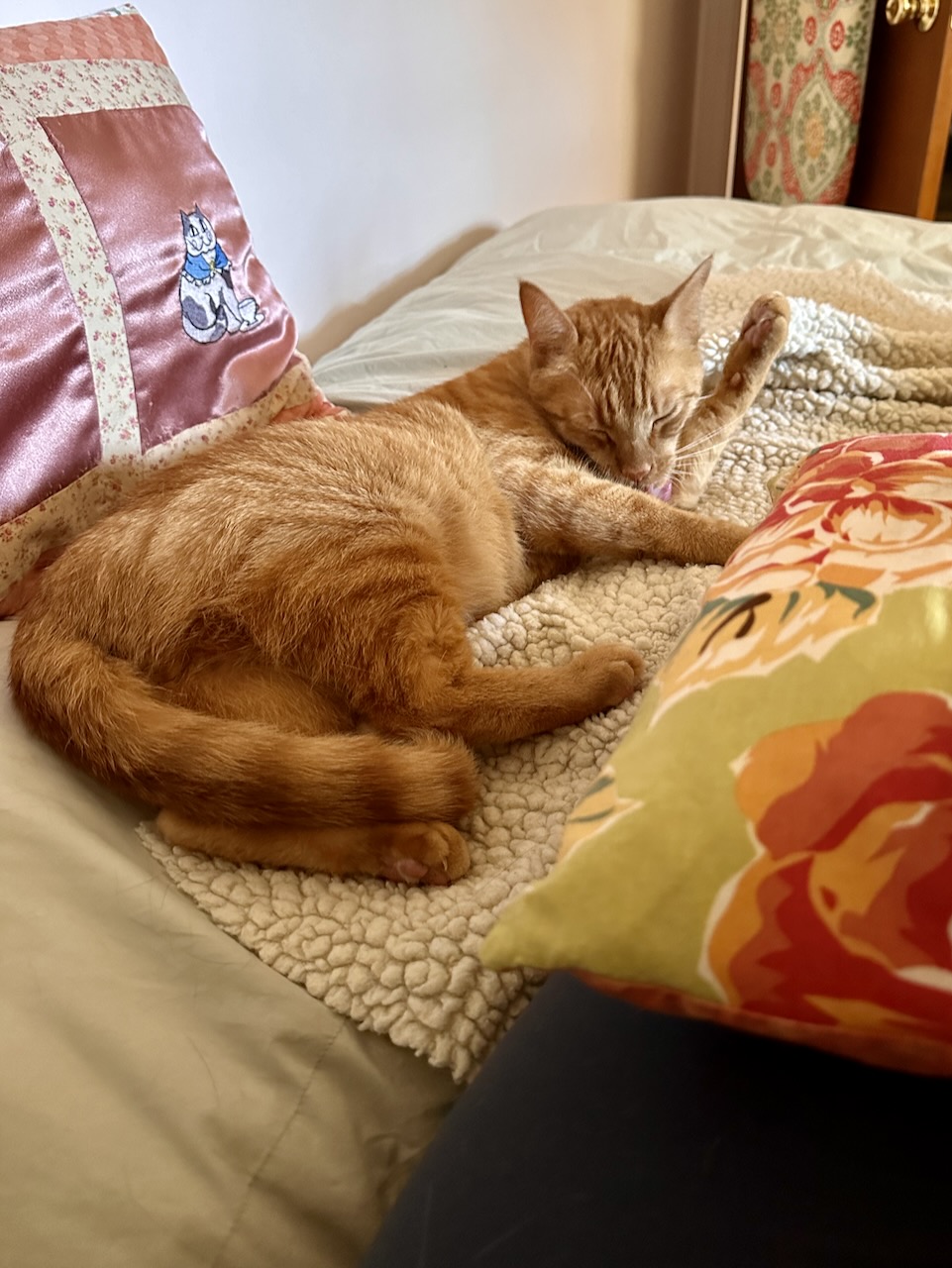
Thankfully, Raji’s habitat is now fully indoors with us and Wendy. Below is Raji in his natural habitat.
Many thanks to Tina for this challenge. I could have kept writing and sharing photos about all kinds of habitats, but, hopefully, the ones in this post will suffice. Habitats are many and varied, some more nurturing than others.
And many thanks to Egídio for last week’s challenge. I am still amazed by how his challenge changed how I see my photos, and how I now compose them.
An important announcement: As in previous years, the Lens-Artists team will be on hiatus for the month of July. There will be no challenge on July 6th, and the rest of the month will be led by several amazing Guest Hosts. They include:
July 13: Leanne of Leanne Cole explores TOURIST ATTRACTIONS
The Lens-Artist team will be back on August 3 when Patti once again leads us on her Pilotfish Blog.
For more information on joining our challenge, click here. Remember, if you’d like to participate in any challenge, always include a link to the original post for the challenge, and include Lens-Artists as a tag so we can find you.
This week’s Lens-Artist Challenge is being hosted by Egídio of Through Brazilian Eyes. The challenge is simple but also eye-opening (no pun intended). Egídio asks us to share images that have two rectangles:
By two rectangles, I mean you have two dominant rectangular areas in your image. For many people, this is one of those compositional tools we use without thinking about it. These rectangles give balance, harmony, and unity to a composition.
He offers some wonderful examples and explanations (essentially offering a mini-photography course), and I encourage you to visit his website.
While I knew I’d probably find rectangles galore in my archive, I decided to snap a few new photos just for this challenge.
First up, our backyard shed.
Cute, isn’t it? But consider the white trim that superimposes a square and a few rectangles over the rectangles of the gray boards. Consider too the rectangular steps that my husband made so we could keep our balance going in and out of the shed. The lines provide visual balance as well.
Next, consider two images of our fence, facing inward.
Image #1
Image #2
The first image is broken into thirds: the sky, the upper part of the fence, and the lower part, all of which are rectangles in the image. The second image omits the sky and while I like it because it provides a bit more of the fence, I prefer the first. When I’m taking photos outdoors, it’s rare when I would purposely omit the sky, even if the sky isn’t the subject of my photo.
Speaking of sky, the next photo is of the same area of our patio but at night. My subject was supposed to be a crescent moon, which of course, shows up as if it were a full moon. Still, I like the composition.
In his post, Egídio writes about Rabatment, a technique of putting a square inside a rectangle. I think I could argue that that is happening in the above photo, with the darker right-hand side of the fence and foliage providing a kind of frame.
Here’s a quirky image of rectangles as a frame for the subject of my photo: a Gulf Fritillary newly emerged from its chrysalis. This is the underside of the railing on our small side deck that leads out onto our patio. I really had to contort my body to get this photo.
And here’s a classic example of two (or more) rectangles in an image …
… on our favorite bike trail at St. Marks National Wildlife Refuge.
Finally, a bit of fun. In April we went to Uvalde, Texas (via San Antonio) to see the Total Solar Eclipse. Our tour guide had reserved the Uvalde County Arena for our viewing. I wonder if I can get a sign like this for our front yard.
The arena itself offered very nice composition for photography.
Now, really finally, … can you see the rectangles?
Raji (ginger cat) and Wendy (Tortieco) on their windowsill perches.
If you would like to participate in this week’s challenge (and I hope you do), please note that pingbacks do not work with Egídio’s site. You will need to put your link in the comments on his post. Also, please use the “Lens-Artists” hashtag to it easier for others to find your post.
Last week, Ritva focused on backgrounds and how they affect our composition. That was so much fun and everyone had wonderful examples to share. Next week, Tina will host the next Lens-Artist challenge on Saturday, 12 noon (EDT in the USA). Stay tuned. Please see this page to learn more about the Lens-Artists Challenge and its history.
Lens-Artists team member Donna of Wind Kisses is taking a break from blogging for personal reasons. She will be very much missed but, hopefully be with us again before too long. We wish Donna and her family only the best, as our thoughts are with all of them.
Photo taken about 10 years ago when Maxine (on the left) and Junior (on the right) were still indoor-outdoor kitties and what is now our garden was filled with skinny pine trees.
This week’s Lens-Artist Challenge is hosted by Ritva who encourages us to consider what is behind the subjects of our photography.
Whether it’s a serene landscape, a bustling city street, or a simple studio backdrop, the background influences the mood and message of the image.
I drifted back several years as I looked for photos that I thought would best meet this week’s challenge. As Ritva skillfully shows, there are seemingly endless ways in which background can enhance or even be the subject of our lens.
The next few images were taken in October 2013 during a visit to my childhood home. The light from the setting sun drew my eye to trees that, at any other time, would simply be background, not a focus of my lens.
In the next photo, the white house (on the right) was my childhood home; the other, a house where I spent an inordinate amount of time watching TV with the grandfatherly man who lived there. Both houses are now gone, demolished because of a flood. You can’t see in this photo, but both houses had “Condemned” and “No Trepassing” signs on them.
While it looks like the foreground in the above photo is a wide expanse of lawn, it is in fact a field. When I was a teenager, I worked summers at a cafeteria. On Sundays I worked 7 am to 3 pm, and when I started my mother’s car on Sunday morning, dozens of bunnies jumped at the sound and hopped around in a panic. It was a great way to start my day.
Sometimes to make a subject stand out, you need to add background, like my husband’s hand. I credit Golden Silk spiders with helping me (mostly) get over my spider phobia. While these spiders are quite large, they are also shy and more likely to skittle away from you than toward you.
I feel like I’m digressing from Ritva’s challenge because I seem to be focused on backgrounds that are the subject of my lens. Case in point: Sunrise over a fishing pier at Safety Harbor, Florida.
No, wait … here’s one where a background of neutral colors helps to make my pink yoga mat pop (never mind the blue urn at the bottom corner trying to steal the show). This was taken in August 2017, at an Airbnb in Santa Fe, New Mexico.
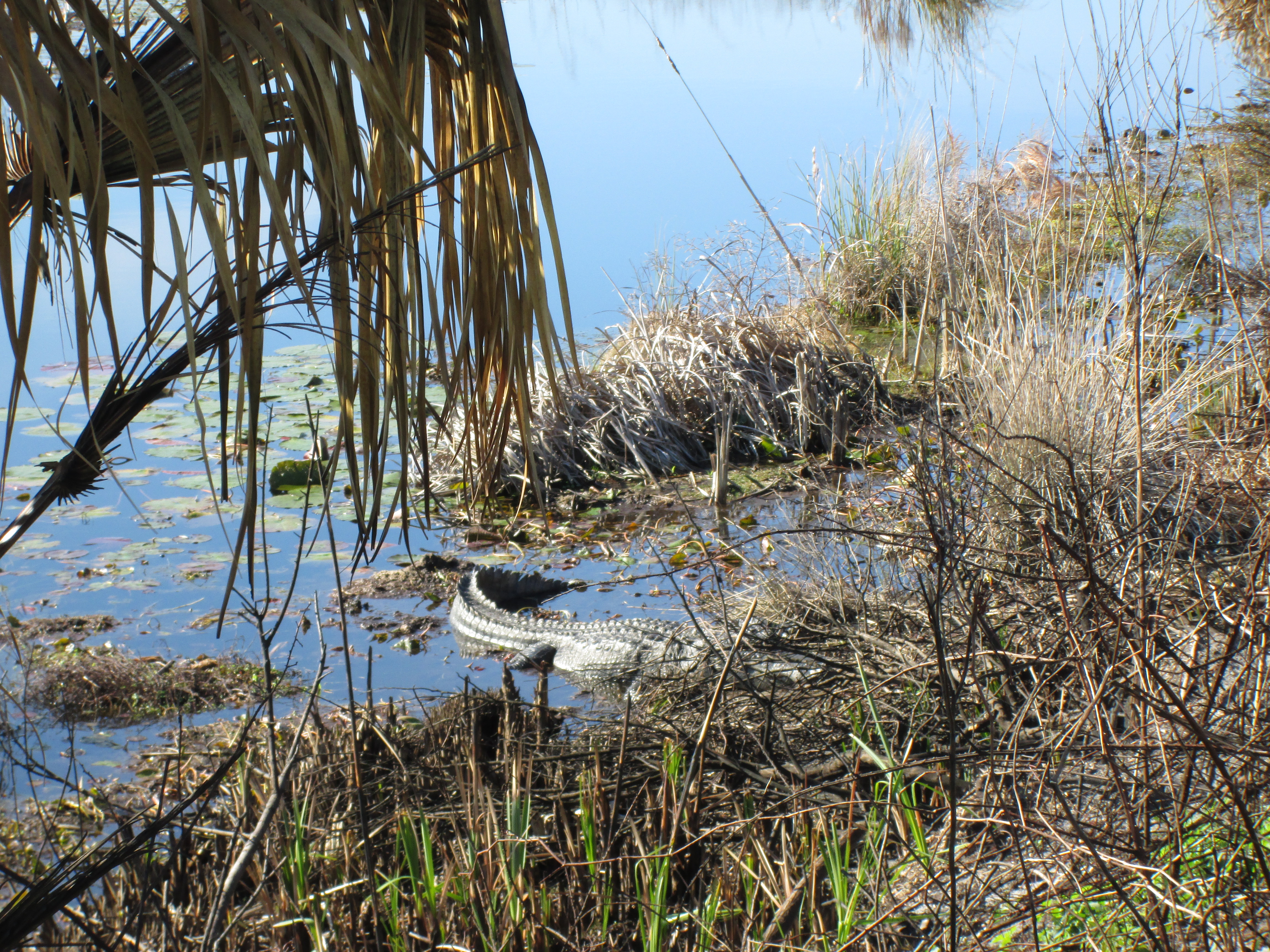
Here’s an example of an almost monochromatic photo. From a distance, I might not have spotted the alligator given how well it was blending in with the water and lily pads.
Finally, this post would not be complete without a photo or two of a dragonfly. My husband has placed several bamboo poles around our house, and the dragonflies love using them as hunting perches.
Besides attracting dragon- and damselflies, the poles have enabled me to photograph these delightful insects at my leisure. Yes, they fly off frequently to snatch a snack, but they just as quickly come back to the pole.
In the following photo, I blurred the background so I would capture more detail of the dragonfly.
Many thanks to Donna of Wind Kisses who challenged us to think about and illustrate our conceptions of “Connections.” The responses to her challenge were wonderful and demonstrated just how connected we are to each other and to nature.
Please check out Ritva’s post for inspiration for this week’s challenge. If you choose to participate, don’t forget to use the “Lens-Artists” tag so you can be found in the Reader.
Next week, Egídio will be our host. Check in with him at Through Brazilian Eyes on Saturday at 12 noon (EDT in the USA). Please see this page to learn more about the Lens-Artists Challenge and its history.
Without further adieu, I give you Raji and his impersonation of a Meerkat.
This week Donna from Wind Kisses challenges us to find connections using photographs.
Let’s photograph connections this week. Are you interested in the intricacy of mosaic art, or how the strings of a marionette bring it to life? How about railroads, rivers and bridges connecting spaces and places? Personally, I can’t have bacon without eggs, or paper without a pen. And it is impossible to ignore interactions of people connecting with each other and the world around them.
I’ve thought long and hard about this challenge, and I might (I said, might) step outside my comfort zone to meet it. Donna’s post is truly inspiring, expanding the idea of connections beyond what I usually consider the word to mean. And that’s a good thing.
Of course, I see connections in Nature, such as how my (finally) blooming Indian Blanket plant follows the rotation of the sun.
Every morning, and sometimes in the afternoon, I rotate the pot wherein this plant currently resides. It sits on my deck, and I see it through my window while I’m sitting at my desk working. The plant keeps me connected to the outside world just by being available to me visually.
Now, this might sound strange, but I feel connected to myself when I work with fiber, whether it be knitting or weaving. When I was about 9 or 10, I taught myself (not very well) to knit, and so knitting is part of who I am. I’ve used my knitting to connect me to others. Weaving came to me later in life at a private college where I was floundering. I was very unhappy at that college until I signed up for a weaving course. Long story short: the class had such an impact on me that I elected to take my tuition money and buy a loom rather than continue at the college.
I wove a few things but not very well and eventually sold my loom to a friend. Fast-forward a few decades and I yearned to weave again so I bought a modest 20-inch rigid heddle loom. My first project:
I wove this scarf with wool and alpaca yarns meant for knitting socks. Needless to say, weaving the scarf went a lot faster than knitting socks would have. Still, I made mistakes, wasted a bunch of yarn, but … I wear it. I love it. And the process itself connected me all the way back–40-some years–to when I first learned to weave.
I try to connect myself to the environment by upcycling and recycling. From a poster on a Facebook group I was in, I got the idea to cut up all our old t-shirts. Some were so worn that I knew they would only end up in a landfill if I gave them to Goodwill. I used a rotary cutter to slice through the shirts, tied the ends together, and then rolled the strips into balls. A weaving project was born.
I wove the above with no real end in mind. I just wanted to practice weaving. At worst, whatever I made could be used as a cat blanket. Then I wove another piece, only this time I untied the strips as I went, making the weaving process more meditative, connecting more closely with the threads and fabric.
This work I do with my hands often connects me to other people. I can’t wear all the scarves, shawls, socks, and potholders that I make. Sometimes I work with a special person in mind.
I knitted this blanket (above) for my mom. She’s no longer here and the blanket is with someone else now, but I still remember her saying that she loved it.
Connections.
I grew up among women. My mom and my two sisters, my aunts. My uncles were around but disinterested in a pouty-faced little kid.
Out of the seven sisters, only one is left, my Aunt Orvetta, the blonde in the middle. My mother sits to my aunt’s right. I look at photos like this and pine for the days when connections could be made with a letter or a phone call or a visit. Now the connections are made through memory.
I am so grateful for how photography, over so many years, has helped me stay connected to my family. So many of them have died, but when I see photos like the one above, I can almost hear their laughter.
Many thanks to Donna for this thoughtful and expansive challenge. If you choose to participate in this week’s challenge, take Donna’s words to heart:
Have you ever thought about how photography connects the world? Nobody sees the world exactly the same way you see it, and our impressions are as unique we are. How you interpret this week’s challenge is up to you.
Please include the Lens-Artists tag and/or link in the comments so we can find you.
Also, thanks to John for last week’s challenge, AI. What fun that was! Participating in John’s challenge helped me feel a bit less intimidated by AI, and I really enjoyed the contributions and conversations around it.
Ritva will host next week’s challenge starting Saturday 12:00 EST. Visit her site and get ready to be inspired.
Interested in knowing more about the Lens-Artists challenge? Click here for more information.