The premise of this novel–that a woman dies and becomes a sentient tree–is intriguing enough, but that the tree is also a witness to a murder and actually tries to help in the resulting investigation is truly original. Two stories are laid out and told with sympathy, utilizing two distinct POVs, one being that of a 19th-century young female medical student (Catherine), and the other a soon-to-retire hardboiled female investigator (Lani). The women could not be more different from each other, except they both want justice.
Catherine was murdered and, through a trick of molecular biology, became a tree. As this tree, she witnesses a murder. While that murder is being investigated, her own murder, unsolved for generations, weighs on her mind as well as Lani’s mind. While the connection between the two women is a bit of a leap, it had a logic that I was happy to accept.
The novel is psychologically deeper than a cozy mystery, but the ending(s) were what one might expect with a cozy. While the reader knows who the contemporary murderer is, the mystery is in if and how Lani gets her man. I don’t mind knowing who the killer is as long as I’m kept in doubt as to whether he’ll be caught and brought to justice. In contrast, the reader is kept in suspense about Catherine’s generations-old unsolved murder until the very end.
All in all, Fractured Oak is a very satisfying read, and I applaud Dannie Boyd for making it seem so effortless to tell a story about two murders through the POVs of two very different but courageous women.
Dannie Boyd is (yet another) pseudonym for Carrie Rubin, the physician-turned-novelist who is already well-known and highly regarded for her medical thrillers. You can get a full account of Carrie’s books at this link.
What is a wolf if not the hungry wildness in the heart?
–“Human Origin”
I read fairy tales when I was a child and was often hoodwinked by them. I tended to take things literally so, for example, when reading about Rapunzel, I considered whether I go could grow my hair as long. Or, after reading Hansel and Gretel, I became suspicious of my neighbor who liked children and liked to bake. Little Red Riding Hood made me afraid of the woods and the wild creatures that might hunt me there.
For that reason, Little Red Riding Hood always bugged me. So I was eager to devour (pun intended) Luanne Castle’s latest chapbook, Our Wolves.
We meet all sorts of wolves in this slim volume. There’s the father whose eyes turn yellow when he loses his temper. There’s the young man who taunts the young girl taking diabetic jelly to her diabetic grandmother. There’s the wolf as victim, as the misunderstood protector of the girl from the huntsman.
I took the precautions of locking granny in her closet and when the girl got there, put her in with the old lady, then waited for the hunter to show up with his knife and leering face. But it didn’t go well for me.
–“You All Been Waiting for a Wolf Confession”
In “What Happens in the Dark When It’s Cold Outside,” even the grandmother doesn’t entirely blame the wolf. Castle twists the tale of the grandmother who is faulted for
being old and needy. I am old and need to be heard.
She also twists the tale of the huntsman or woodcutter, noting the history of variation and revision, a man less of a protector and more of a slacker:
When the wolf came back to the forest, he wanted to work off some calories and offered to chop some trees while I took a nap in the echoing silence.
–“I’m a Woodcutter, Dammit”
I enjoyed Castle’s versions of the fairy tale, giving each character voice and showing how any one of them could be a wolf. Her interpretations encourage me to rethink the story and its multitude of meanings.
The poems where she describes living with wolves in real life chill me more than any fairy tale. In “How to Digest the Wolf,” we learn about a girl who would
Study his face for bared teeth or curled lips.
Take the belt without crying.
[…]
Find a wolf hunter to be your boyfriend.
Having been a follower of Luanne’s blog (Luanne Castle: Poetry and Other Words (and cats!)) for several years and an avid reader of her poetry and other writing, I’m aware that some of these poems might be autobiographical. (Perhaps we can call them “autopoetry”?)
Ultimately, though, the girl–the poet–wins.
You’re in charge. Tip your hand, open the mouth, and howl at the moon, all aquiver.
–“How to Make a Hand Shadow Wolf”
I hope you enjoyed this review. I highly recommend Our Wolves. You can purchase a copy at Amazon.com.
I always review a book of poetry with some anxiety and exhilaration; anxiety because poetry is in the eye (ear/mind) of the beholder, and exhilaration because poetry is in the eye (ear/mind) of the beholder. I’d argue that I don’t know what “good” poetry is, only that if I like it, I like it. That’s the anxiety part, the sense of feeling like an impostor for reviewing work for which I have no expertise. But what I find exhilarating about reviewing poetry is that sense of discovery as I consider the language of the poems, the images and the feelings provoked by the poems.
And so … I approach my review of Luanne Castle’s latest poetry collection–Rooted and Winged–with both anxiety and exhilaration. Let’s put aside my anxiety … no, wait … let me address my anxiety briefly because it is important.
For a long time after I received this lovely volume, I couldn’t read past the first poem, “Tuesday Afternoon at Magpie’s Grill.” It was the anxiety of self-recognition. This poem immediately stirred memories of myself at various stages of life, scribbling away in a notebook in a feverish worry that, without a record, I wouldn’t exist.
Without a record, will I hear the ice crashing into the sink, the Dodger talk at the bar at the end of the room under the Miller Lite neon confident and beckoning?
Of both of us, our mothers would say, “In one ear and out the other.” Yet, with Castle, the words flow in and swirl around and busy her mind and set up shop, with no intentions of leaving her head anytime soon. Further into the poem, she writes, “I will never / capture the ease of wind-filled wings.” Oh, how wrong she is there. Although this is the first poem in the book, I’m already lifted into flight.
Now for my exhilaration in reading these poems.
How can a poem do so many things:
–“Tuesday Afternoon at Magpie’s Grill”
How can poems lift one into flight but also root one into the earth? Castle’s poetry does just that. She intersperses poems of her familial history and memories …
Even before us, they plowed fields and sewed leather onto soles, their lives spun from the loom beneath them.
–“Gravity”
… with poems of furred and feathered visitors to her home, where she is rooted …
But I remember hawks heavy-winged above me, the gliding and patterns and power in the sky. […] To catch her without flight is the catastrophe.
–“Without Flight”
I soar as I read these poems, yet I also feel grounded, recognizing that while I am of the earth, I’d give a lot to fly with the birds.
We could puff into the blue like clouds. Why hasn’t one of us learned to fly? What keeps us pointed downward?
–“Gravity”
And yet …
Even birds and bats fall to earth when they die
–“The Purpose of Earth”
Eventually, we are all–furred, feathered, and naked creatures–part of the earth. We are all rooted, even if some of us are winged and can soar. And with these poems by Luanne Castle, we can all enjoy “the ease of wind-filled wings.”
Recently I was the lucky recipient of a free AUDIO version of Fatal Rounds, Carrie Rubin’s latest novel. Y’all know how much I enjoy audiobooks. Although I disdain multitasking, audiobooks are what get me through hours of housecleaning, walking, and knitting. So when I learned there was a raffle for a free audiobook, I got as many raffles as I could. And, yay, I won!
Fatal Rounds is the first in what appears to be a series (well, part of the title is Liza Larkin Book 1 … heh heh). Larkin is an odd character, although you don’t know that right away. She’s a new pathology resident at her second-choice hospital, second-choice not because her first choice turned her down, but because the second choice is where her stalker works. Yes, Larkin has a stalker and she’s decided to stalk him in order to find out why he is stalking her. This is all in chapter one. Talk about hitting the ground running.
The decision to stalk her stalker is the reader’s first clue that Larkin is not your average pathology resident. She’s different, and Rubin carefully and with great sensitivity teases out Larkin’s issues. First, her mother has schizophrenia, exacerbated by the untimely death of her husband. Second, Larkin herself has schizoid personality disorder. Her diagnosis is not interchangeable with her mom’s, and it’s a complicated diagnosis. Some labels fit her, and some don’t. What keeps her together is recalling her father’s words: “You are not a list of symptoms, Lisa. You are not a diagnosis. You are you, you are special, and you are wicked smart. Most importantly, you have a good heart.”
That Rubin includes all this info in the first couple of chapters is so important. Larkin and her mother are not stereotypes lifted out of the Diagnostic and Statistical Manual of Mental Disorders. That is made clear right away, as is the fact that people, even those who are well-meaning, will revert to labeling when they feel afraid, threatened, or just confused. That’s why I consider this novel a kind of short course on psychopathology. Not only does Larkin struggle with her own anti-social tendencies and anger management issues, but she also has to help manage the ebb and flow of her mother’s psychosis. The reader learns a lot about the fine lines some people like Larkin have to walk.
Off the bat, the reader is sympathetic to Larkin. She’s honest about her issues and protective of her mother. You don’t blame her for wanting to figure out why the stalker–Dr. Sam Donovan, trauma surgeon extraordinaire–seems to have an interest in her. But, also because of her issues, as she takes risks to follow Donovan, snoop on him, and build a case against him, you start to wonder whether she is imagining things. At least I did.
I started doubting Larkin’s mental stability, but, as if Rubin knew that would happen, Donovan started showing his ugly side, the cracks in his otherwise perfectly polished armor. Rubin’s timing in this novel is perfect, and the boxing metaphors that Larkin uses to describe her challenges with Donovan are well done.
Larkin goes so far as to risk her residency, ultimately her career, when Donovan wins a few rounds. Before Larkin realizes it, a lot more than her residency is at stake. Donovan knows that losing her residency won’t stop her from trying to prove he’s guilty of murdering former patients. So he goes after those closest to her, the few people in her corner.
Whoa. While I didn’t listen to the audiobook in one sitting, I did do about five hours of housework listening to it. And, believe me, only a riveting thriller such as Fatal Rounds could get me to do five hours of housework.
The story didn’t end when I thought it would end, and at first, I wondered, what more needed to be said? As it turns out, plenty needed to be said. There were the usual loose ends that needed to be tied up, but I really appreciated the final chapter. The reader, at least this reader, needed to sit with Larkin in her psychiatrist’s office and consider the questions he poses to her. Were there alternatives to the choices Larkin made in her pursuit of Donovan? Did she have to take the risks she took? You tell me after you’ve read Fatal Rounds.
I always feel apprehensive when reviewing poetry, maybe more so than when I’m writing the poetry myself. Some time ago, I took an online writing course, and the instructor mentioned in passing that she liked writing poetry because you didn’t need to explain poetry like you would explain a story or an essay. While that idea frees me to write poetry, it definitely makes it more difficult to review poetry.
Poetry is like music, like art. You can admire the technique, the skill in putting words (or notes or paints) together in a pleasing way. But the poetry I’m attracted to does more than please me. It lifts me out of myself and sets me to ponder ideas and feelings I either hadn’t considered or had been afraid to acknowledge. So ends my long introduction to this review of Merril D. Smith’s book, River Ghosts.
Cover art by Jay Smith
But before I begin my review: Just look at that cover! River Ghosts is published by Nightingale & Sparrow, and what a gorgeous book to hold in my hands. When I first saw the cover on Smith’s blog, I knew I had to have a printed copy. I have not been disappointed. In fact, when I wasn’t reading Smith’s lovely poetry, I had her book displayed on a bookshelf so I could enjoy seeing the cover.
The first poem in this collection–“River Ghosts”–sets up the reader for a journey into the past and present, into if and when, with “echoes / over the river.” The reader is invited to “Observe again.” but also to “Now solve the problem.” And that’s just in the first two poems. Smith might not intend for the reader to “solve the problem” presented in all the poems, but she definitely intends (in my humble opinion) for the reader to observe again and again, whether she is observing “a train to hell,” a first love or dark matter. Like a river, these poems meander–at turns edging toward grief (“our mother stopped eating before she died, / now I hear her ghost-laugh in my dreams”), then sisterly fun (“we rubbed the laughing Buddha’s belly for good luck”), but always listing toward the mysteries of the universe, encompassing life and death:
Once some brilliant star breathed time
in the after-wake of explosion and danced across a universe
exploring eternity
The poems were compiled after Smith’s mother died of COVID-19 in April 2020, and so a number of the poems feature her mother in her youth and old age. She (and others long-deceased) also features as a ghost; not a scary, haunted ghost, but:
Not living,
no longer here,
yet not completely gone.
In her poem “Family Ghosts,” Smith makes clear her calling and intent:
Subsisting, existing
their ghost voices sing to me
I hear them
I feel them–ancestors calling me,
this is what we do, generate, create the songs of our hearts forever.
These are poems I will be turning to often as I seek comfort when my own family members become “not living, / no longer here.” I will find comfort in knowing that they are “not completely gone.” Smith demonstrates how a writer could (and, perhaps, should) allow ancestors to speak through her, echoing through the years, so we always remember not just when but if.
Imagine a world of endless Cold War, with the U.S. and Russia continuously threatening each other with annihilation. Imagine you are living in the panhandle of Florida during this time, an English grad student with a peculiar sensibility:
“For me, I hear unheard voices, important ones. Hear how? By an inner ear as I read another’s words and sing them to myself. Through sound, I know what’s truly brilliant and what’s not.”
You are one of the unfortunate to have been radiated while still in your mother’s womb during the The Accident aka Incident ’80. You were thus born with radiation sickness, which is why your body is rapidly aging, why you hear voices, why your eyes have a glow, and why you want to go where no one knows you.
You are John Needle and you came up from south Florida to escape the notoriety of being “Rad Sick,” one of those “radiation sickness weirdos.” While your relocation gives you new friendships and romances, you also find others like you, which is good and bad. You see, there are people who want to collect Rad Sicks like yourself, to control your preternatural abilities, to use you for their own nefarious plans. Before too long you find yourself in the midst of a conspiracy on campus that involves a LSD-like drug called TallaTec and strange human experiments at the pool.
Meanwhile, you romance at least two women, discover the natural and mysterious beauty of north Florida, and have long drunken debates with your college friends about the best places to submit writing. Your body might be 35 years old, but you think and act like a 20-year-old grad student.
Rad Sick Record is written in the form of a diary, giving Needle’s story an intimacy and immediacy that well suited this strange but entertaining novel. Michael Trammell is also a poet, evident in how he weaves words together:
“The Arctic cold must be brutal, so bitter they can’t think for the pain, are sick from it, noses raw like beef jerky. Freezing dew must stick to their hair. If sleet drummed atop the ships, the cold would become an encircling, unsolvable misery.”
Trammel’s novel is not strictly science fiction or speculative fiction or a coming-of-age novel, or a thriller, or a romantic comedy. It blends all these genres fluidly, immersing me in Needle’s sometimes quirky, sometimes scary world. It is a character-driven novel, with a finely drawn cast that continue living in my head long after I put the book down. I highly recommend Rad Sick Record. The novel pushes boundaries in wonderful prose written by a talented and gifted writer. Once I dipped into T-Town with John Needle, I was all in.
You can purchase Rad Sick Record on Amazon or Bookshop. You can also learn more about Michael Trammell by clicking here.
–End of review–
Confession: I know Michael Trammell. We were in grad school together at Florida State University in the early 1990s (the novel takes place in 2000). Michael was in the doctoral program, myself a lowly Master’s student, but we had a few classes together, including a fiction workshop with the late Jerome Stern. I didn’t see Michael again for years after I graduated, but I’ve always remembered him as a kind and honest reader in our workshop, a wonderful poet, and a really nice guy. When I next saw Michael in early 2020, almost thirty years after I had graduated, it was at a book reading for his wife, the poet Mary Jane Ryals. He mentioned having written a novel and planning a reading for the next month. Cue the pandemic. I believe he went on with his book reading, but by then it was mid-March 2020 and I was avoiding human contact as much as possible. I still got a signed copy of Rad Sick Record and promptly read it. My bad for taking so long to write a review.
An interesting experience for me in reading Rad Sick Record was trying to identify people that we both knew. “Oh, I bet this character is based on Mary Jane and that other one must be Ron!” I think I might even be in the novel: “A woman beside me was clicking plastic sticks. No flip, she was knitting!” Maybe, maybe not. I remember I used to knit during some of my social work classes, but I don’t remember if I’d had the courage to knit in any of my English classes. Still, I like to think it was me.
I always enjoy reading stories that take place in familiar locations, and this was no exception. Trammell’s description of the campus took me back the 90s when I spent most of my life in the Williams Building, a maze of stairwells and half-floors reminiscent of the Winchester Mystery House. As John Needle, he reminded me of the first times I visited the sinkholes and rivers of Florida, getting to know local flora and fauna. This added a layer of pleasure to my reading, but you don’t need to have been on the FSU campus in the 1990s to enjoy Rad Sick Record. The novel stands on its own.
–Insert gratuitous cat photo–
Raji and Junior snuggling on a lazy rainy morning.
P.S. Maxine had her last checkup, at least for a month. Her creatine is down to 4.1, close to where it was before the craziness. Her urine is still clear so we stopped the antibiotic injections. She’s looking good, eating and drinking well, grooming more than most cats her age, and likes to lie on my lap when I’m watching TV. I like it too.
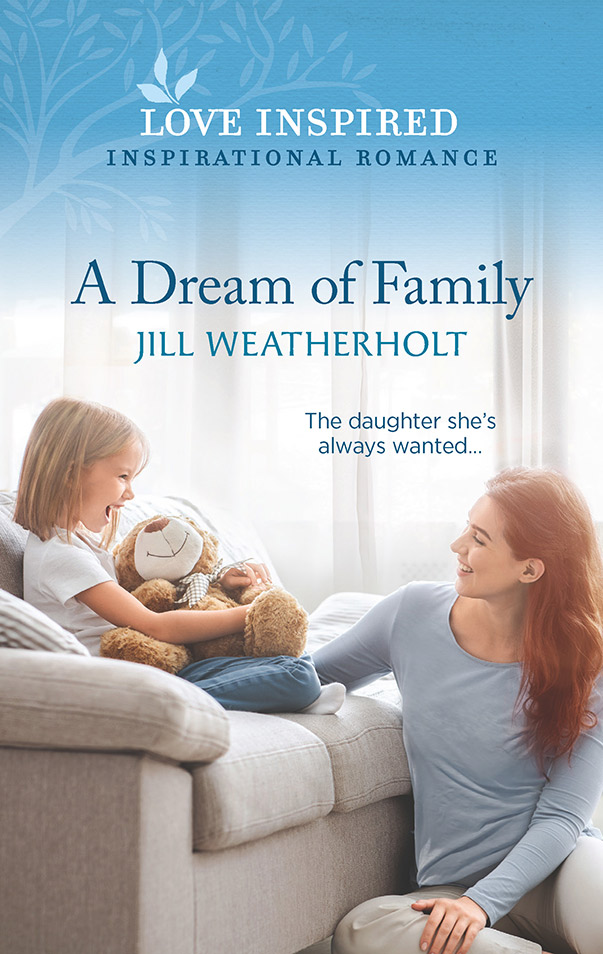
Friend of the 1WriteWay blog and all-around exceptionally wonderful person, Jill Weatherholt, recently came out with a new novel, A Dream of Family. Since I knew I’d be retired at its launch, I requested a copy from Jill in exchange for an honest review. I will readily admit to some bias here since I think Jill is the nicest person I’ve ever met online. I mean, just look at that smile!
Bias or not, I always intend to be honest with my book reviews which is why I share my biases upfront as well as any necessary caveats.
I’ve shared my bias. Now the caveat: Romance is not a genre I naturally gravitate to. I’m a mystery/crime fiction/gothic/literary kind of gal when it comes to novels. But, you know, sometimes I need a break from mist-filled cemeteries and pungent morgues.
A Dream of Family is a sweet, comforting story. Molly Morgan is a young woman trying to salvage her bookstore in the quaint town of Whispering Slopes and desperate to adopt a little girl named Grace. Derek McKinney is a successful business man who comes to Whispering Slopes to extend his coffeehouse franchise. He and Molly have crossed paths before, and Molly blames Derek for the unhappy turn her life took just a few years previous. Derek’s excuse for what he did is a secret that he struggles to share. Can they bridge their troubled past to help Molly realize her dream of having a family?
Of course they can. That’s the kind of romance novel this is. How they overcome events of the past to save Molly’s business is the story here. How they work together to ensure that Grace will have a permanent, happy home is also the story here. I read A Dream of Family believing I knew how it would end, and I am happy to say I was right!
Jill is a deft writer, carefully detailing her characters until they get up and start walking around in your head. With Whispering Slopes, she creates a small town that anyone would want to live in, full of kind, sensible, and patient people. Where Molly and Derek are concerned, patience is definitely needed. Everyone else in Whispering Slopes feels the chemistry between the two of them, but patience is required by both reader and townspeople as Derek and Molly figure it out for themselves.
Faith is a value that Molly, Derek and even little Grace share. While I don’t share their faith, I know people who do. I know people for whom faith is the guiding light in their lives. I appreciate that faith is part of this story and why it makes reading A Dream of Family a comforting experience.
I recommend Jill Weatherholt’s A Dream of Family for anyone who wants to escape into a world where love, faith and forgiveness is abundant.
Here are links to where A Dream of Family is sold:
By Marie A Bailey Caveat: Cinthia Ritchie, author of the memoir Malnourished: A Memoir of Sisterhood and Hunger, is my friend, and I read her memoir keenly aware of my affection for her. I don’t claim to be objective in my review, but, in all honesty, I don’t know that I’ve ever been objective when […]
I’m thrilled to have my review of Deep Creek by Pam Houston published in Brevity’s Nonfiction Blog!
By Marie A Bailey The first time I saw Pam Houston was in 1991 or 1992. I was a graduate student in English at Florida State University. The university was hosting a creative writing conference and Houston was on one of the panels. I had not read her story collection Cowboys Are My Weakness in […]
In a perfect world, I would spend as much time reading as I spend writing, or as much time writing as reading, depending on the day. Reading inspires me to write and often when I’m reading, I yearn to write. Reading also teaches me how to write. What is it about that first page, first paragraph, or even first sentence, that makes me want to curl up with the book for a long afternoon? What is it about that poem that makes me linger and read again as something tugs at my heart.
I’ve got books on my mind. A book of poetry, a memoir, and a novel to be exact.
A Book of Poetry
Earlier this week Nightingale & Sparrow published my review of Birdy Odell’s chapbook, Cemetery Music, which you can read here: https://nightingaleandsparrow.com/review-of-cemetery-music-by-birdy-odell/. I’m usually hesitant to review poetry because I feel rather ignorant about it. It was not my favorite genre when I was studying literature a few centuries ago. Now, however, thanks to poets like Merril D. Smith, Luanne Castle and Jane Dougherty, I often feel I can’t get enough of it. So when N&S put out a call for reviewers, I raised my hand.
Here’s a snippet from my review:
Anyone who has spent time in a cemetery, particularly ones where the dead have lain for centuries, will read Odell’s poems as those epitaphs etched into granite, sandstone, or marble, some so worn by time and weather that words seem “rubbed with the balm of love.”
Cemetery Music should be available soon (forthcoming December 10, 2019). Click here to read more about Birdy. I also hope you pick up a copy of her lovely chapbook. I definitely want a print copy because, included with her poems, are lovely “whimsical little birds with silly hates and balloons.”
A Memoir
Cinthia Ritchie’s new memoir, Malnourished: A Memoir of Sisterhood and Hunger, has arrived … at my house!! This is a long-awaited memoir, and I am so thrilled for Cinthia. I pre-ordered directly from Raised Voice Press (here’s the link) which, I believe, is why I received my copy before the official release date.
I am so excited to support Cinthia, one of my favorite peeps in my writing community. I fell in love with her through her first novel, Dolls Behaving Badly, and been looking forward to another opportunity to hold one of her books in my hands. If you don’t already know Cinthia, head over to her website here. Order Malnourished through your favorite local bookstore, through Indiebound, or directly through Raised Voice Press.
Here’s a snippet from the Prologue:
Memory is a funny thing, isn’t it, how it adds and subtracts, takes something as simple as watching a whale swim along the shore and mixes it up in your mind so that your sister is there beside you, even though she’s been dead for years. Still, this is what you remember: the wind and the smell of the marsh, the silver-blue tint of an Alaska twilight spreading the water, and beyond it all, the small and simple feel of your dead sister’s hand slipping inside of yours.
A Novel
By now anyone who hasn’t been living under a rock should know that Kevin Brennan recently released a new novel called Eternity Began Tomorrow. EBT is kind of a road trip/political thriller/romance-type novel. In other words, it has something for every kind of reader. Of course, I snatched up a copy, as I do with all of Kevin’s books, and wrote a review: https://1writeway.wordpress.com/eternity-began-tomorrow-is-that-one-true-thing-bookreview/
You’ll want to get a copy of your own, of course, and you can do so by clicking here. But stay tuned for more! I’ll be posting an interview with Kevin later this week, and you’ll learn all about what went into writing such a timely novel. While you’re waiting to read the interview, take advantage of EBT being yours for just 99 cents. Yup, when you click this Amazon link, you’ll find an offer you can’t refuse.
Thanks for reading! If you’re anything like me, you might be groaning at the thought of more books to add to your leaning tower of TBR. But, if you are anything like me, you’ll also be excited to find new books to buy and read.
And here’s your bonus gratuitous cat photo … The Three Amigos: Junior, my husband, and Maxine.