My sister Shirley would have turned 79 today, August 2. Three years and 32 days since her death, and the ache of missing her is as deep as it ever was. No drugs, no time passing will change that.
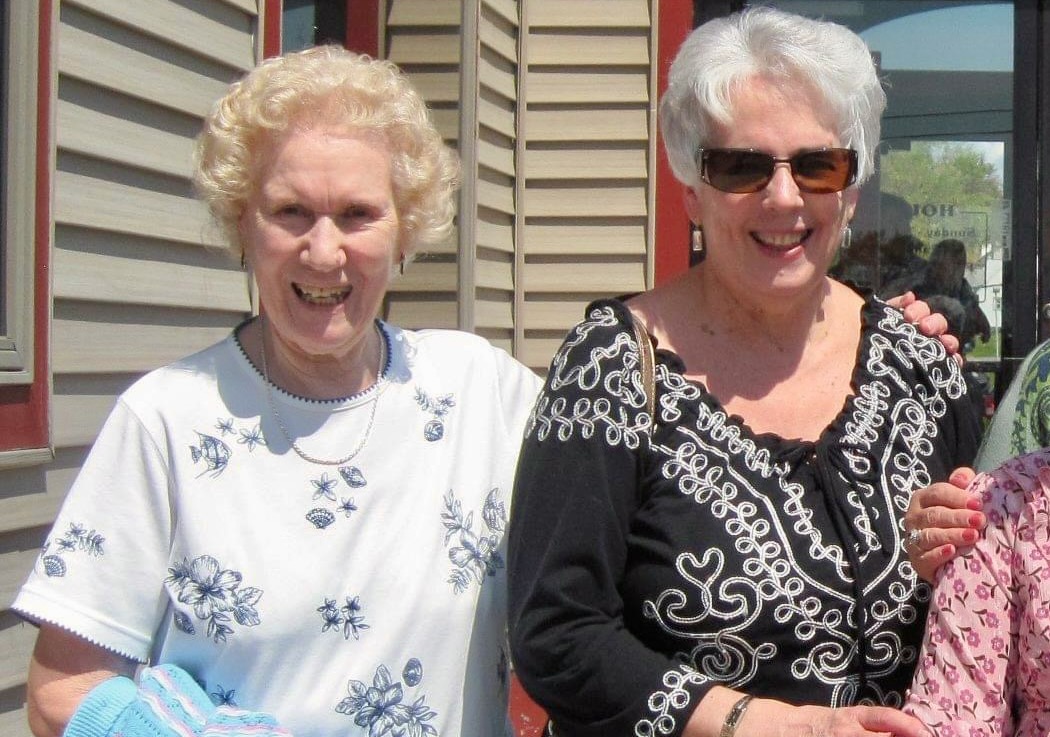
This photo is one of a series from a wedding in Arizona. Shirley brought her youngest son with her. He’s now a father of four. Time flies, but the heart never forgets.
I don’t know where you are right now. I don’t believe in Heaven or Hell, but if there’s a Heaven, then I imagine …
You sitting at a picture window, in front of a card table where a spread of 1,000 puzzle pieces wait for your attention which is distracted by the Baltimore Orioles and Cardinals and Bluebirds also vying for your attention outside your window.
Your oldest daughter Charlotte is watching TV which is permanently set to daytime soaps, the ones you and she would discuss on the phone when she lived in Florida and you in New York. She sits in her blue leather recliner, offering running commentary that you only half listen to.
Your other daughter Shirley is flipping through Amway receipts while she recites the latest accolades of her grandchildren. During commercial breaks she’ll pick up a James Patterson novel and read a bit. She sits in her chair, a facsimile of the recliner she left behind, the shawl I knitted for her draped over the back.
You watch your birds, piece together your puzzle, and maybe listen to your daughters. You don’t have to hear every word. It’s enough to have them near you.
Maybe you’re waiting for one of your siblings to drop by. Maybe Beatrice who was the first to go, or Alice who was the last before you. Maybe your brothers Virgil, Ed, Bob, or Leon will show up, or Mildred, Edith, or Leona. It’s been so long since you had seen your siblings. And you wonder about the last two–Howard and Orvetta. You want them to be well until it’s their time and then … no pain, no pain.
You miss berry picking and going to the casino, but then your daughters might take you when you’re in the mood. In this version of Heaven, Shirley does not have Parkinson’s and Charlotte can breathe easily on her own.
After your daughters–your girls–died, you missed them so much that you were relieved to miss your 100th birthday. You got close, very close. But the pull of your girls was too strong, the loss of them too much to continue to bear.
People ask me why your last two children–me and your son–weren’t enough to keep you going. Why did you openly lament the loss of your girls as if they were the only children you had?
They were the only children you had for eight years. You were in your twenties then. By the time your son and I came along, unexpectedly, you were nearly middle-aged with a sick husband and decades of hard and poorly paid work ahead of you.
I want to believe that those first eight years, when it was just you, my dad and your girls, were happy years. Maybe, when your girls died, that was the loss you felt most keenly. They were no longer around to remind you of that time.
No child should die before their parents. No parent should experience the death of their child.
I know you loved me as best as you could. I loved you as best as I could. Yes, I could have been a better daughter. My efforts paled compared to my sisters. Yes, you could have been a better mother. Hindsight is 20-20. There’s regret on both sides, but no point in it.
You were never one for regrets. You didn’t like to look back, and you didn’t pay much mind to the future. From you, I’m learning to live in the moment. That may be your greatest gift to me.
Yesterday, October 7, would have been my sister Charlotte’s 80th birthday. I meant to write a blog post celebrating her birthday. I felt that weird sort of self-consciousness that social media provokes: if I don’t publicly share what I’m doing, did I do it? By not writing a public post on my sister’s birthday, I can’t prove I thought about her that day. Trust me, I did.
Hurricanes
It wasn’t just her birthday that prompted me to think about Charlotte. It was also the hurricanes—one past, another on its way. Charlotte had lived in St. Petersburg, FL, in a mobile home park. If she were still alive, she’d be evacuating right now, trying to get as far away from Hurricane Milton as possible. Maybe.
When she was alive, and hurricanes had the Tampa Bay Area in their sights, I’d worry about Charlotte. I’d call her, ask if she had someplace to go. She’d get impatient with me, arguing that I didn’t need to worry. She’d argue that she didn’t have to evacuate, but then she would wind up staying with friends. I’d feel relieved but also guilty.
We didn’t have the kind of relationship where I’d drive almost 300 miles to pick her up and whisk her away. We didn’t have the kind of relationship where we were willing to risk being stuck with each other.
Health
It wasn’t always like that. Twenty-some years ago I spent a couple of weeks with her while she recovered from heart surgery. We had fun. We watched old movies, ordered pizza, ate Kentucky Fried Chicken. It was like a two-week slumber party.
While she was in hospital, I cleaned her tiny trailer, shampooing the worn carpet, replacing old appliances. And I cried. She was widowed by then, and she didn’t seem to have many friends. At least, not many that she could count on. I didn’t know yet that when she was very drunk, she wasn’t very nice. I cried because I saw how she was living on the edge. I wanted to fix things for her. I paid off her credit card that was several months past due. I told a bartender at the establishment she frequented that she had had heart surgery and should limit how much she drinks. I left her cash so she could pay her bills. I treated her like a child, much like our mother did.
History
Charlotte was almost 13 when I was born. Growing up, she was sometimes my favorite sister, sometimes not. I always saw her as tragic, fragile, fatalistic. Our mother infantilized Charlotte. Really, there’s no other word for it. My sister Shirley didn’t give our mother a chance. She went to nursing school and then married at 19, putting herself on the same playing field as our mother.
Charlotte, well, she was unlucky in love. She first married a guy who dealt in antiques and taught me how to pick the strings of a guitar. He was quiet and patient with me so I liked him.
Until Charlotte acknowledged that, yes, rape does occur in marriage. I was 12, a budding feminist, and I felt a chill when she responded affirmatively to what I had just read in a book. She didn’t look at me, and I had a fleeting image of her in a dark bedroom pleading No.
During that first marriage, Charlotte came down with scarlet fever. I didn’t know until years later that it was our mother who insisted that Charlotte go to the hospital. Her husband, apparently, was content to let her lie in bed. The fever weakened her heart, and she was told that she should never have children. All she ever wanted.
Sisters
A desire for children was something I never shared with either of my sisters. Maybe because I was the youngest. By the time babies entered my life—through my sister Shirley—I had turned inward, wanting to just be left alone. My family was crumbling. I was old enough to see that something was wrong with my dad, but too young to understand what it was. I was afraid of my mother and her cold temper. My brother was a boy.
Occasionally, I’d spent a night or two with Charlotte and her first husband. I guess it was my mother’s way of getting me out of the house. I remember Charlotte going with me to a quarry for clay and then making a mess of her kitchen trying to make little pots. I remember her being patient with me and quiet. And sad.
It’s taken me 67 years to realize that Charlotte and I were not destined to be friends. We were too alike in the wrong ways. Both of us had a wild side, no doubt spurred by our mother’s over-protectiveness. The things I didn’t like about myself, I saw in Charlotte: a tendency to drink too much, to judge, to be mercurial. I saw Charlotte as the woman I might have become if Greg hadn’t entered my life.
We’d been drifting apart when Trump decided to run for president. He made certain we wound up on different continents. Once Charlotte understood that I liked Obama and I didn’t like Trump, I was persona non grata.
And yet, I keep remembering our last phone call. How she called me “dear” in between her gasps for breath. How I wanted to say I love you but didn’t.
Thank you for reading. I’m very behind on reading, and I appreciate your patience as I try (and likely fail) to catch up.
Please keep everyone affected by hurricanes Helene and Milton in your thoughts and prayers. I’ve been reading wonderful things about World Central Kitchen if you want to help by donating: https://wck.org
My sister Shirley would have turned 78 today, August 2. I don’t know when the feature photo was taken but it was sometime in the 1960s. Even though the photo is decades old, it’s how I remember her. In my memory, no matter how much I change, she doesn’t.
I miss her. She knew how to party.
Having a lot of fun at our brother’s wedding reception (the first one).
I always like to save the best (or good) for last hence my list is in reverse order.
The Ugly (1 thing)
Shortly after my mother died, my brother–my last remaining sibling–cut ties with me. His choice. In fact, his last words to me were “We’re done here. Don’t bother to contact me for anything further.”
Before my sister Shirley’s death, I had not spoken to or seen my brother in roughly ten years. I admit that I didn’t make an effort to see him when I visited home, nor did he make an effort to see me. After our sisters died, we started communicating, mainly about our mother since he was now her primary caretaker. We talked or texted daily after she fell and was in hospital and then after she died. He seemed to want my opinion about things. There were moments when I thought we might have a normal brother-sister relationship again.
Silly me.
All I needed to do to piss him off was question how he was (or was not) executing our mother’s will.
The Bad (1 thing)
The bad was learning a lesson the hard way. When someone tells you, “it’s not about the money,” you can be sure that it’s always about the money.
The Good (3 things)
My mother is at peace. I remind myself of this as often as I can because I feel selfish in my sadness that she’s no longer with us. I hadn’t been with her at Christmas for many years, but I always looked forward to calling her. The reality of not calling her this year, and of not sending her the wreath I would normally send, hit hard. I took myself offline so I wouldn’t have to pretend to be jolly. But now that Christmas has past, I feel a bit stronger, more able to embrace the fact that my mother is at peace.
I am at peace with my mother. She had made certain stipulations in her will that were not being honored by her will’s executor. So I made it right in my own way. I honored her wishes and, in that way, eased some of my grief.
We have a butterfly nursery. In early December, when nighttime temperatures threatened to dip into the low 30s, my husband brought in a couple of passionvine stems that had a couple of larvae (caterpillars) on them. He wanted to try and save them. Little did he know that there were also eggs on those stems. Over the next few weeks, I counted at least 20 chrysalis in our little tent nursery. The first emergence of a Zebra Longwing butterfly seemed like a miracle. And then two emerged. And then three. We’ve released seven to our backyard, near their favorite plants. And now we’re waiting. Either we’ll have more butterflies emerge or the remaining chrysalis will die. We do our part; Nature does the rest.
A lonely (but not for long) chrysalis.
Zebra Longwing butterfly larvae.
Two butterflies almost ready to be released.
My husband giving one butterfly a helping hand out of the nursery.
Here’s goodbye to 2023. Hello, 2024! I hope the New Year brings you as much peace and contentment as brushing Raji brings to him.
On this day, October 25, my mother would have turned 100. She died on September 22, peacefully by all accounts, but, sadly, not in her home as she would have preferred. Up until September 3, she had been living alone in a double-wide mobile home, coveting her independence which was only possible because of my brother and our cousins who brought her food, cooked for her, cleaned up after her, and gave her company when she was in the mood for it.
My mother didn’t mind being alone. She had her phone if she wanted to talk to someone. She had the birds outside her kitchen window to entertain her. She had a front porch where she would sit on warm days and watch her neighbors come and go. She had her TV shows, and she dozed … a lot.
One could argue about how independent she truly was. The thing is, while others worried about her being alone at night, she didn’t.
Then she fell one night and wasn’t found until the next morning. From there, it’s textbook statistics. Hospital, surgery, rehab, COVID, comfort care, death. Just as with her life, her dying seemed to go on much longer than we thought possible. But, as far as anyone could tell, she was sleeping those last few days. At peace.
She missed “her girls” terribly.
My mom’s girls–Shirley and Charlotte.
First, Shirley died in July 2022, then Charlotte in November 2022. My mom might have been happy to live to 100 if my older sisters had still been alive. They had been her constants, more so than my brother or myself.
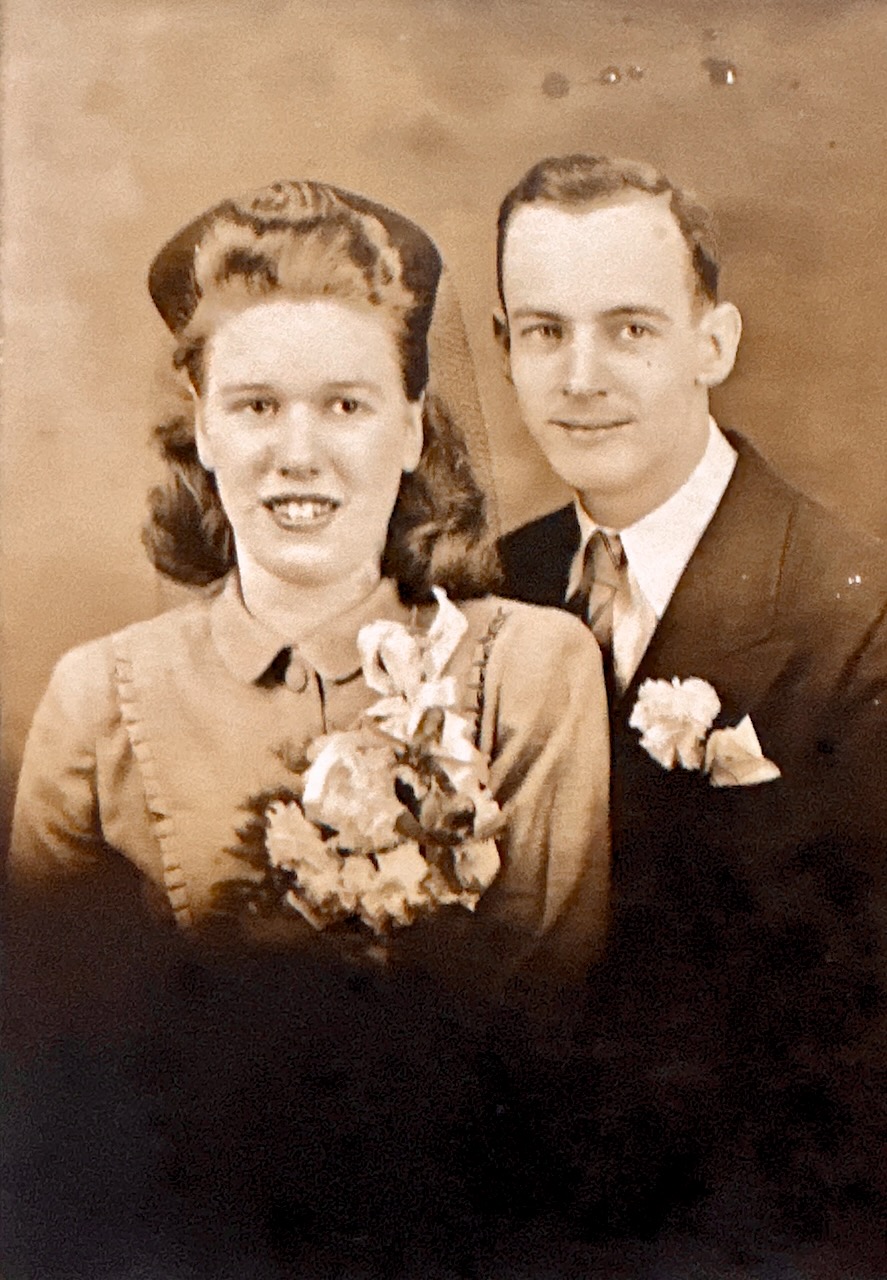
My mother married in 1942, I think. Pathetic that I don’t remember her wedding date.
My mother and father’s wedding photo.
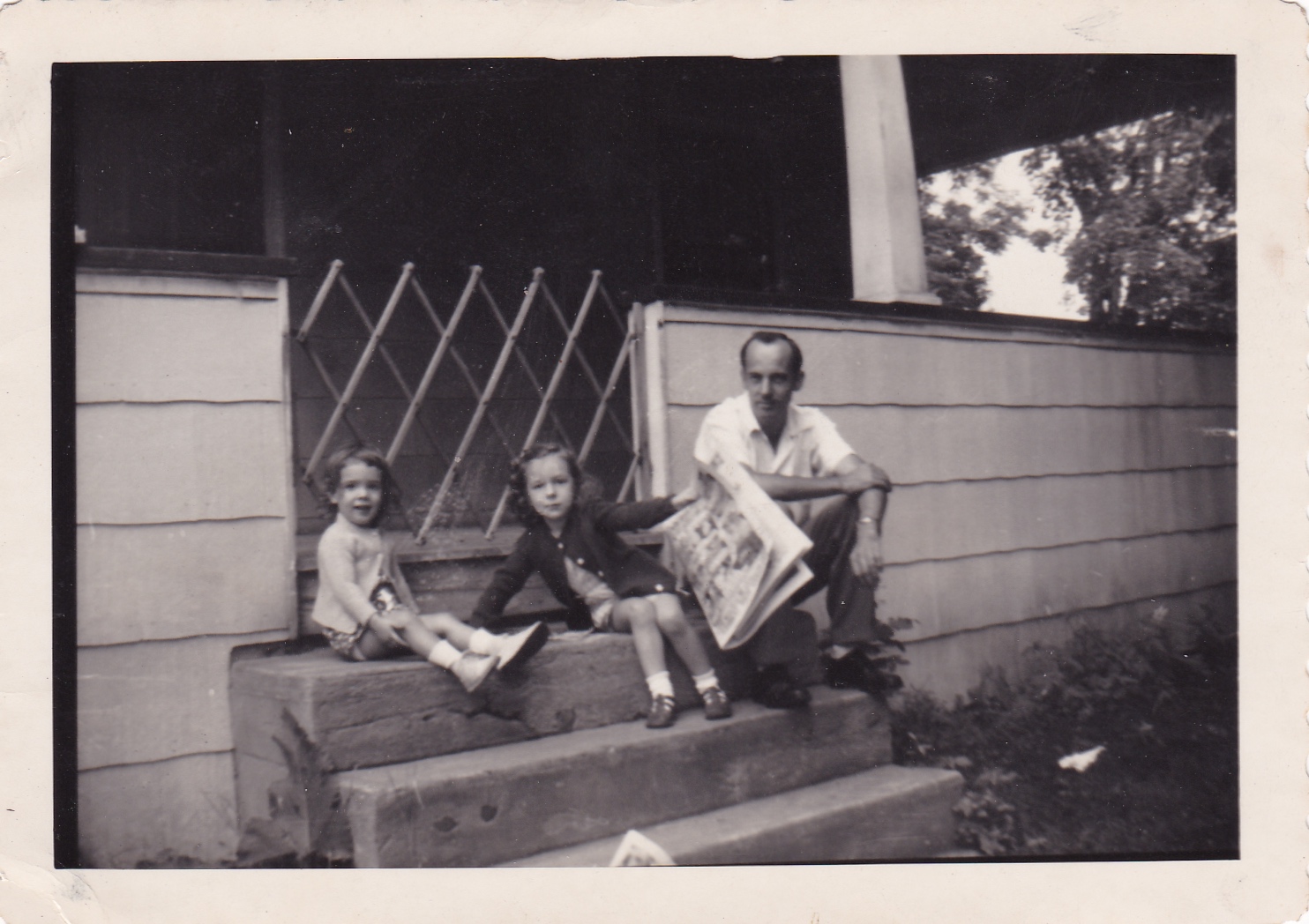
Charlotte came around in October 1944, Shirley in August 1946. For the next eight years, it was just the four of them: Dad, Mom, Charlotte and Shirley.
Dad with Shirley and Charlotte.
My brother didn’t show up until August 1954, then me in June 1957. I once made the mistake of asking my mom if she had planned our births so that Shirley and Charlotte would be old enough to babysit me and my brother. She admitted that she hadn’t expected my brother and me. She hadn’t planned our births and, she added, something like abortion wouldn’t have occurred to her because “it just wasn’t done back then.”
My mother was sometimes too honest.
Mom.
I remember my mother as always working, inside the house and out. If she wasn’t working at a grocery store like Philbrooks’ Market or a discount store like the Big N, she was busy working inside the home. Cleaning, cooking, fixing. Even when she finally settled down for the night to watch a TV show with us, she had mending to do. I used to watch as she slipped a glass jar inside the leg of her pantyhose and stitched up the runs. I wonder if she is why I always feel like I’m wasting time when I just sit and watch TV, my hands idle.
I remember our relationship when I was growing up as mercurial. One minute we’d be laughing at some joke together, the next we’d be throwing daggers at each other with our eyes. Of course, it was worse when I was a teenager. I was the youngest, but, by no means, did she spoil me.
She once said she didn’t want to make the “same mistakes” with me that she had made with my brother. Whatever that meant. My brother was in trouble no more or less than any other kid his age. But my mom took every mistake we made as a slight on herself, as an accusation of bad mothering.
My mother wanted to let me go but without me ever leaving home. She wanted me to learn but without the benefit of experience. She wanted something other than an early marriage and babies for me, but she was afraid of what that would be. For all of her independence, she didn’t want to teach me to be independent. So we fought and eventually I left.
We fought even while I lived in California, sending angry letters back and forth. I remember reading one of her angry letters while I was soaking in the bathtub. I remember tearing it up, but I no longer remember what she wrote.
When I was growing up, I rarely felt that her love for me was unconditional. I often thought that I bored her or exasperated her. Sometimes she even scared me, her anger unexpected, her silent treatment dropping the temperature in our house to freezing. And yet when she hugged me, she hugged so tight I thought my ribs would crack.
As I developed physical and emotional distance from my mother, I started to understand. She was one of 12, born somewhere in the middle to a middling farmer and his wife who died too young. My mother did what all her six sisters did, which was to marry and have babies. I don’t know how long she and my father enjoyed their marriage. I was about 10 when I witnessed for the first time my father having a nervous breakdown and listened to the soft brushing of her palm on his back while she tried to comfort him.
But it wasn’t his first breakdown, and it wouldn’t be his last. And here was my mother who was somehow expected to keep us all afloat while my father went in and out of the state hospital, then to a halfway house, then through a divorce and finally into the care of my sister Shirley.
My mom and dad when they were so young.
As I began to imagine the weight of responsibility she must have felt, I also began to be fascinated by her. I became less concerned with her as my mother and more interested in her as a woman who was once young like me, who used to watch sunsets with her sisters and wished she had clothes in those colors.
(She did eventually. At one time, after she remarried, she had a pair of polyester pants in every bright color that you might find in a box of 64 Crayola crayons. She was also quite proud of the fact that the pants only cost about $2 each. My mother was frugal from the day she was born until the day she died.)
In writing this post, trying to celebrate what would have been my mom’s 100th birthday, but, frankly, feeling tired of writing posts like this, I find myself struggling to avoid the obvious.
How could I have been a better daugther?
Let me count the ways.
[Insert list that never ends.]
My only comfort is I really believe she knew how much I loved her. That, despite all the struggles, the frequent shadow-boxing of our personalities, she made me fall in love with her by finally becoming herself, becoming something other than a wife and mother.
She became Florence, a woman who loved to watch birds, to pick berries, to play the slot machines, to eat two hot dogs with chili sauce, to gossip, to talk on the phone, to know whose birthday is when (and how old they are), to live in the moment because the past is past and the future might never be.
I’ll end this post with the verse I picked out for her prayer card:
Fill not your hearts with pain and sorrow, but remember me in every tomorrow. Remember the joy, the laughter, the smiles, I’ve only gone to rest a little while. Although my leaving causes pain and grief, my going has eased my hurt and given me relief. So dry your eyes and remember me, not as I am now, but as I used to be. Because I will remember you all and look on with a smile. Understand, in your hearts, I’ve only gone to rest a little while. As long as I have the love of each of you, I can live my life in the hearts of all of you.
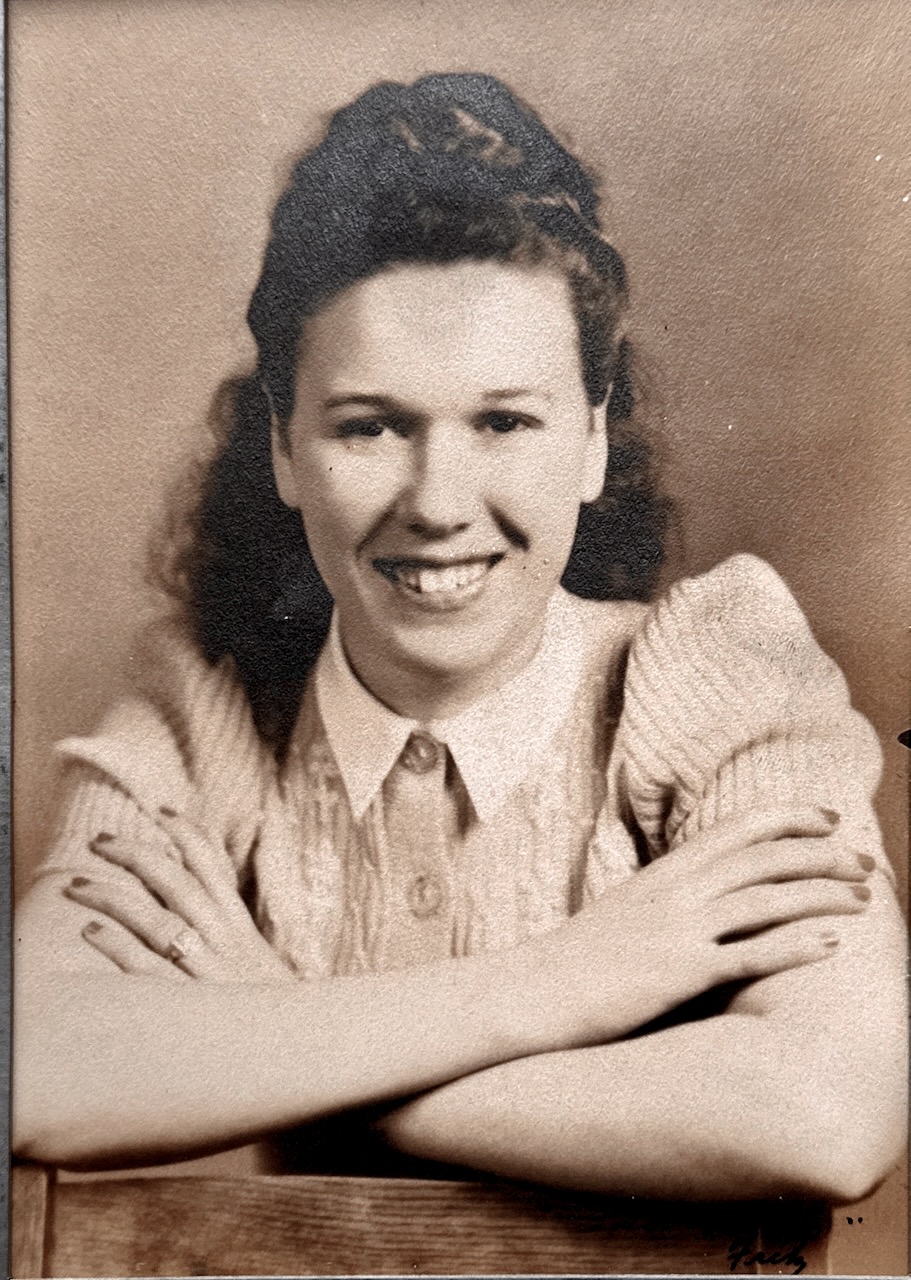
My oldest sister Charlotte would have been 79 today, October 7, if she had lived. She died on November 26, 2022.
Charlotte was my mother’s first baby.
My mom and Charlotte in December 1944
The first-born child of Florence.
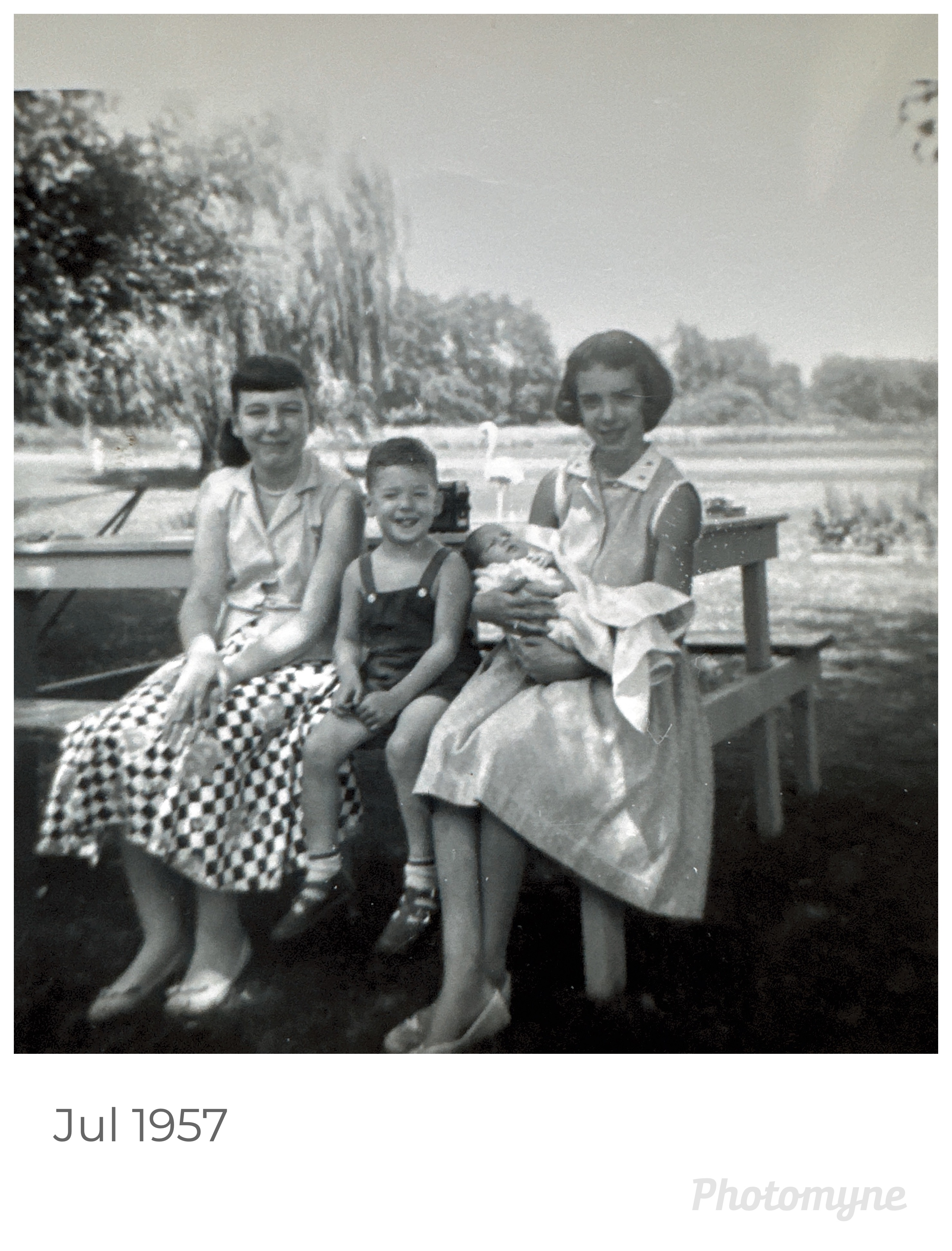
She was a few months shy of 13 when I was born. Here she is with my brother sitting between her and our sister Shirley. I am, of course, the baby in the photo.
The four of us: Charlotte, my brother, Shirley and me.
Over the years, Charlotte blossomed into a beautiful young woman. I was often gobsmacked by her beauty. None of these photos have dates so the order is possibly random.
This slideshow requires JavaScript.
My sisters Charlotte and Shirley took radically different paths from each other. Shirley married the man she first met when she was 16 and stayed happily content with him and their growing family until her last breath. Charlotte suffered through two failed marriages and then became a widow after six short years into her third marriage to a man who possibly loved her more than all the others that came before him. He also loved to sing as did she.
Charlotte being serenaded.
Charlotte had rheumatic fever when she was a young adult, leaving her with a weak heart. She was cautioned against having children because of it. According to one of my cousins, Charlotte had the fever during her first marriage, and it was our mother, not Charlotte’s husband, who got her medical care.
I often viewed Charlotte as a tragic figure, looking for love in the wrong places, struggling to support herself, pining for the children she could not have. She eventually found happiness in St. Petersburg, FL, which too quickly turned to grief, but through it all, she had friends who made her feel loved.
I failed at that. During the last several years, Charlotte and I shared a mutual dislike, due in no small part to our political differences. When my mother started spending winters with her, we would drive down from Tallahassee and visit, trying to be as pleasant as one could be with someone who didn’t welcome our presence. It hurts to remember those tense visits, the TV so loud that we could hardly converse, my sister quick to argue if I said something she didn’t like. I came away from one visit, the last one we had, feeling that my sister actually hated me.
We had had some good times together, times when we’d go out for a few drinks, long phone calls where she’d tell me stories about coworkers, the two-and-a-half weeks I stayed with her while she underwent heart valve replacement surgery. There was something about my sister that made you want to help her. I might have gone a bit overboard with that back then, helping her when she didn’t want or need it, and then feeling resentment it when she didn’t seem appreciative. That wasn’t fair of me.
Eventually our phone calls became shorter and farther between. I felt that the harder I tried to find common ground with Charlotte, the more I realized what little in common we had. It hurt. It hurt to call her and not be able to say something as simple as “How are you doing?” without her snapping back, “I’m fine. Of course, I’m fine. Why wouldn’t I be fine?” It hurt to think that the sound of my voice was enough to twist her mood into something ugly.
It hurt, but what hurts even more is that the last time we did talk on the phone, when she was in hospital because she couldn’t breathe on her own anymore, that last time I was so close to telling her I love her. The words were in my mouth, but I couldn’t say them. We had been so angry with each other for so long. Somehow I knew that by saying I love you, I’d be saying Good-bye. And I just couldn’t do that. I couldn’t admit that she was dying.
Friday evening, at about 7 pm, I got “that call” from my brother. Our mother had died. Florence Reynolds (Bailey) Minch left us before seeing her 100th birthday which would have been on October 25. Many of us believe she wanted to be with her girls (her oldest daugthers, Shirley and Charlotte, who died in 2022) more than she wanted to see another birthday.
Last year, she had her annual exam. Her doctor pronounced her a “fine specimen of a woman.” She corrected him: “I’m a lady.” After that, I and other family members often referred to her as “a fine specimen of a lady.” Indeed, she was.
Several years ago I wrote about her and my aunt Edith who was dying from cancer at that time: Meditation on Life and Mom Near the end of that post, I wrote “it’s listening to her talk about her birds and squirrels and the occasional woodchuck that I’ll miss.”
Over the last few years, she became entranced by Baltimore Orioles, particularly the males since they have more striking plumage. In fact, during the last couple of phone calls we had before she broke her hip and went to hospital, she’d say, “I just want to see the Baltimore Oriole one more time.” I never asked what she meant by “one more time.” I chose to think that she meant they were migrating, and she wanted to see another one before they were gone for the winter.
This past week, our feeder was being visited by a female Baltimore Oriole. I couldn’t tell my mom because she had stopped taking phone calls. Her voice was too weak and the effort too tiring.
This morning, while fixing coffee, I saw a male Baltimore Oriole at the feeder. Maybe I should have felt sad that I could no longer tell Mom of my sightings, that I couldn’t pick up the phone and call her or ask someone to pass my message along. But I didn’t feel sad. I felt a surge of joy. One of my mom’s favorite birds was visiting my home. Coincidence? I think not.
My mother over the years.
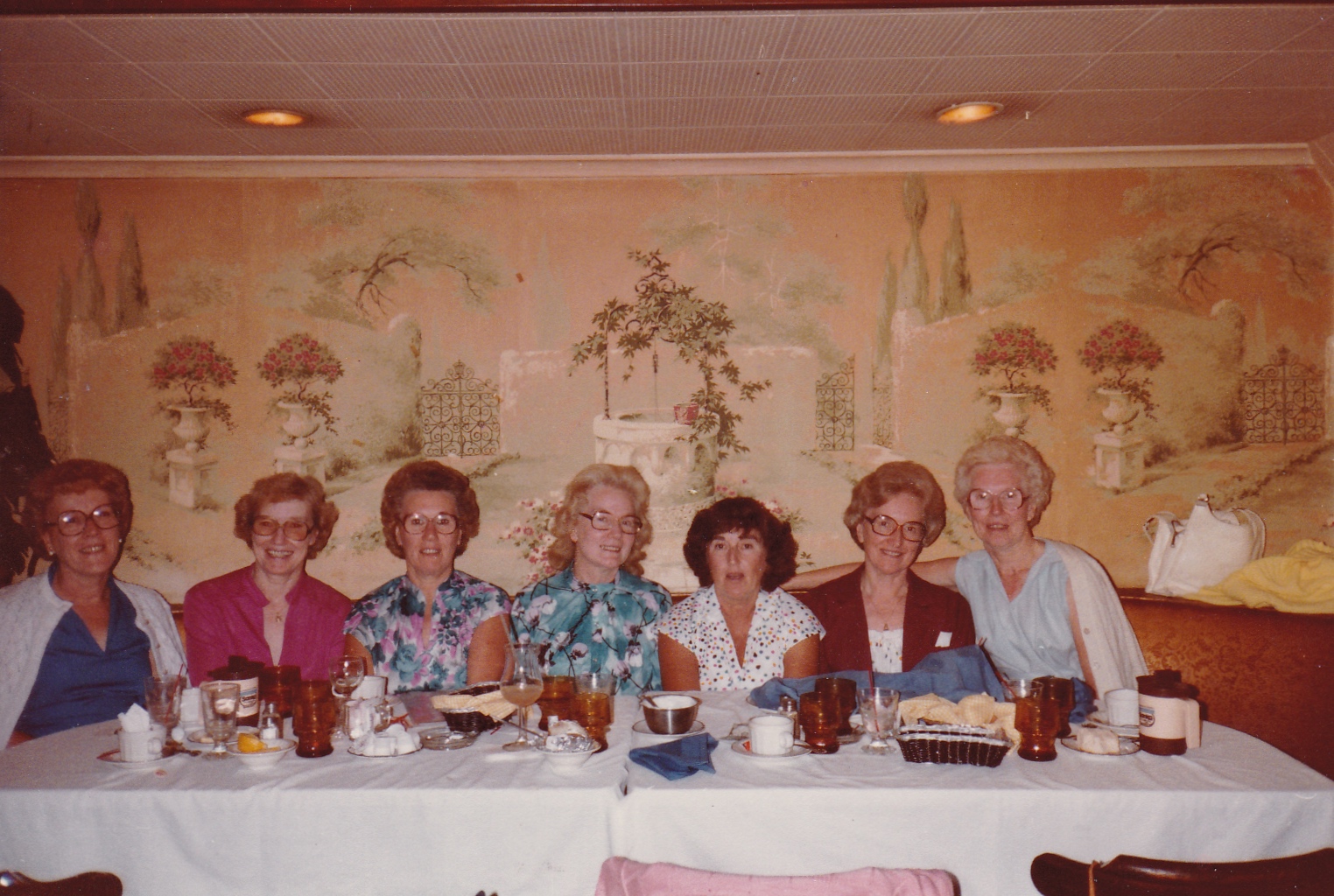
Aunt Edith, Aunt Bea, my mom, Aunt Orvetta, Aunt Lee, Aunt Alice, and Aunt Mildred. My aunt Orvetta is the only one of the seven sisters left now.
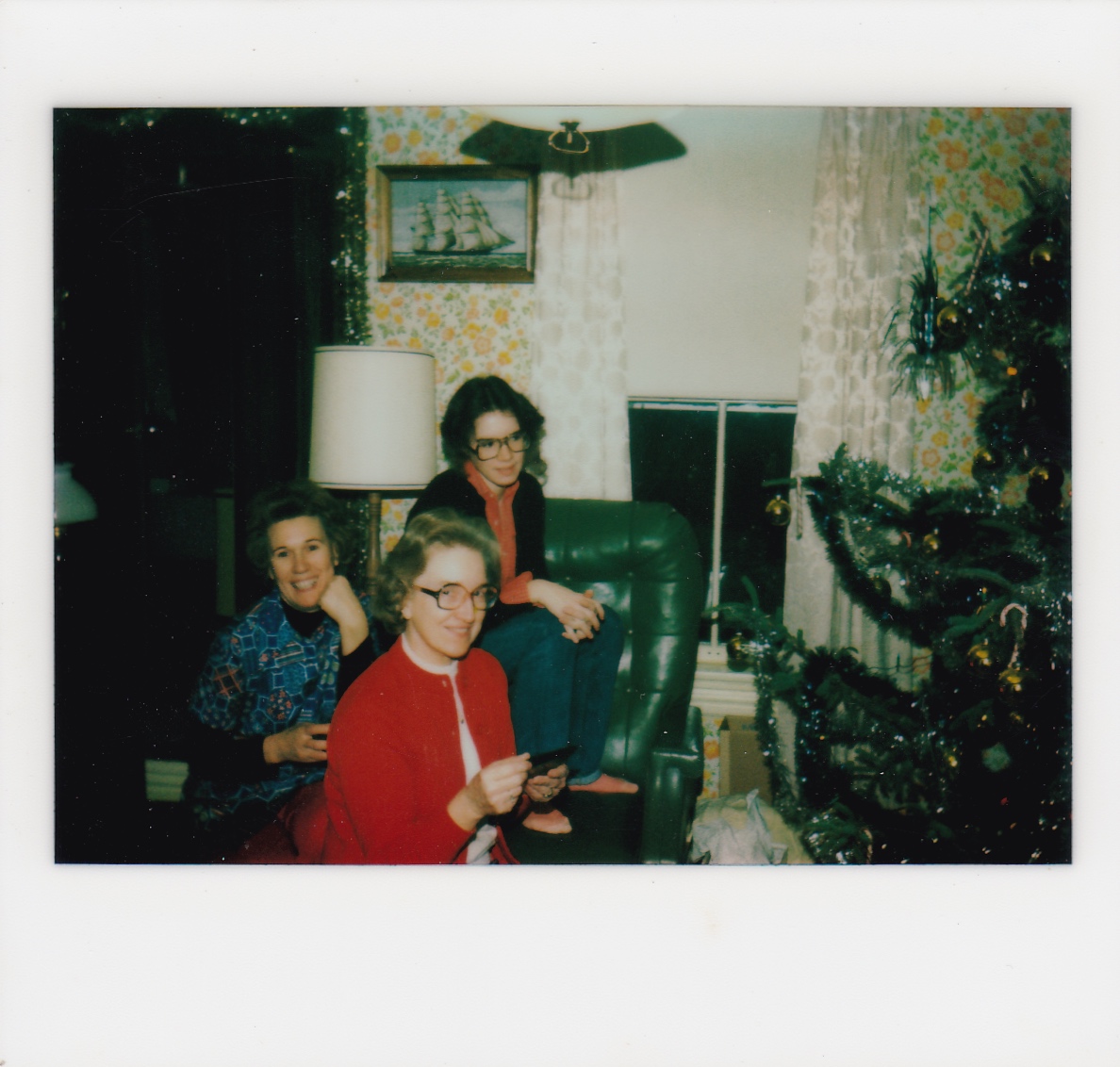
My mom, teenaged me, and Aunt Alice (in red). Sometime in the mid-70s.
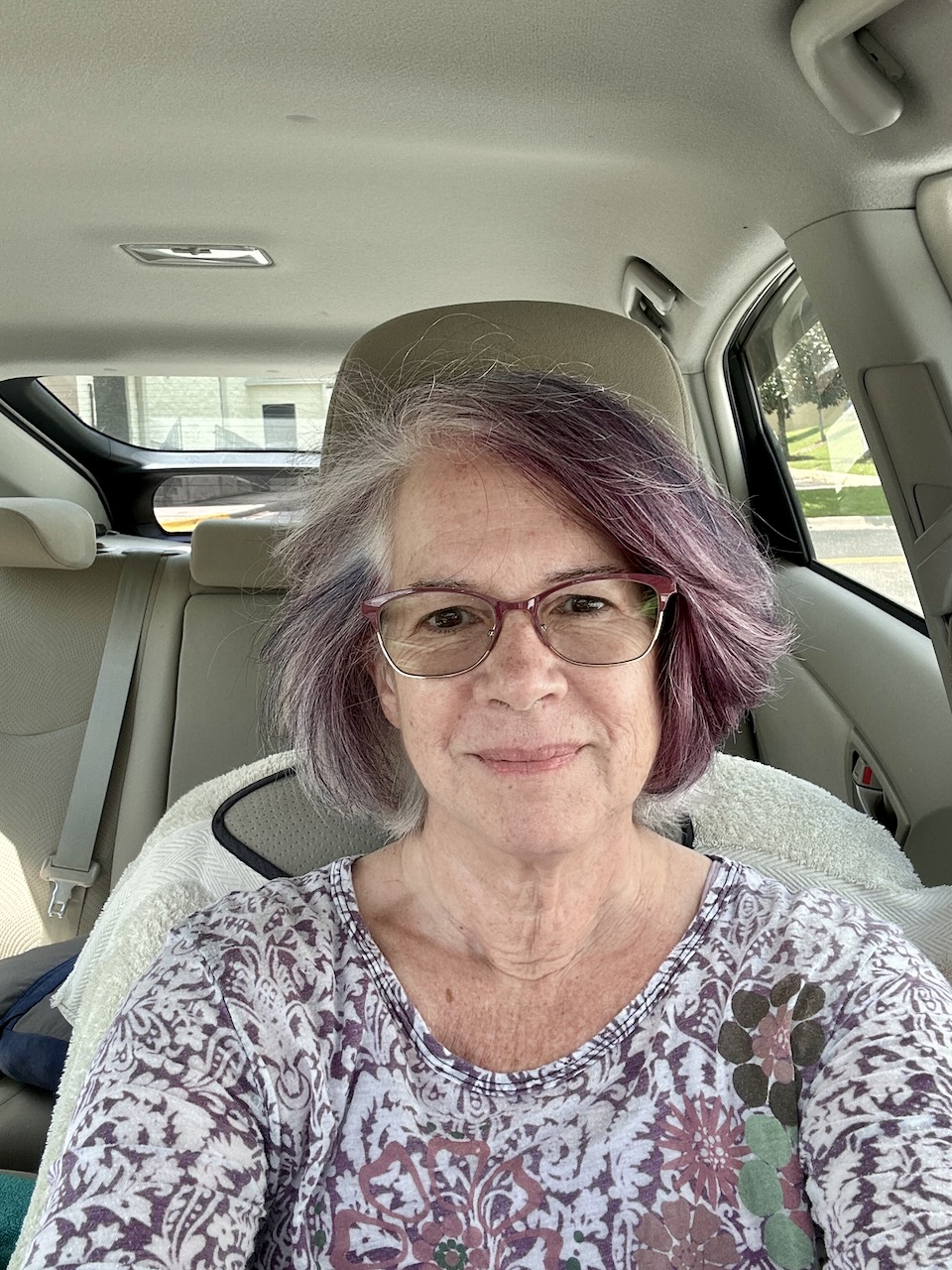
When the going gets tough, I get my hair dyed. Here’s my latest do courtesy of Chelsea Salon and Spa.
A selfie I sent to my husband to give him a heads-up about my dye job.
So what’s so tough?
Firstly, about ten days ago my mother fell while on her way to bed. Broke her hip. My brother found her the next morning. Yes, folks, the scenario we all dread when our elderly relatives live alone. She is fine right now. She had a simple surgery and was in hospital for a couple of more days before they scurried her over to a rehabilitation facility. My family has a long history with this facility.
It’s the same facility where my sister Shirley spent a couple of months recovering from a broken ankle. Also, a long, long time ago and known then only as “the infirmary,” it’s the same place where my father was cared for until his death. And it’s the same place where my surrogate grandfather Ted Albers was cared for until his death. It’s now called River Ridge Living Center.
My mother is in a safe place. She’s not quite the happy camper, but her see-saw moods could be post-anesthesia blues or side effects of morphine or the realization that her days of independent living are over. My brother visits her a couple of times a day, other family are there frequently, pretty much the same or more as when she was living in her trailer, but now we have the benefit of knowing that she is getting the kind of care she has needed (and resisted) for a long time.
I am hoping and praying that she relaxes into her new life at River Ridge. Even before her fall, she was already living in the “here and now.” She wouldn’t remember what happened yesterday or maybe even a hour before. She can’t conceive of the future. If you try to tell her about something that will happen the next day, she’ll just shake her head and tell you she won’t remember that.
So my brother (her primary caregiver) is doing all he can to make sure that all her needs are being met and will continue to be met. I don’t believe she will or even should go home again, not without 24/7 care which she can only get properly at River Ridge. I said as much to my brother, and it wasn’t easy. I’ve never wanted my mom to wind up in a facility, but it’s really the best place for her now. She has said she is being treated well, and that gives me hope that she’ll become more comfortable with the place as time goes on. I’ve only talked to her a couple of times. Talking on the phone tires her out quickly. I miss our daily phone calls, but as long as others are there with her, I’m okay.
Secondly, Junior’s chronic condition has worsened. He was getting better, but then the lining of his left nostril became swollen and inflamed. With Dr. C’s permission, I started giving him steroid nose drops again, but with no appreciable improvement. Worse, he stopped eating on Tuesday. He had been getting picky with his food over time, preferring dry food to the wet, then treats to the regular dry, and then skipping meals altogether.
His left nostril is congested. We suspect he stopped eating because he can’t smell his food or the congestion makes his food unappetizing or both. We have used a baby aspirator to suck some of the snot out of his nose, but apparently not enough to give him comfort. I take him into the bathroom with me when I shower, hoping the steam will loosen the mucous up. The problem is that he’s not sneezing, not expelling the mucous himself, and our efforts at aspiration are probably too little too late. I’m angry with myself for not scheduling a recheck, instead waiting until we were in panic mode.
In the meantime, my husband devised a system where we essentially force-feed him using a syringe and pureed wet food. We’ve done this successfully a few times now, although all of us wind up with squirts of cat food on our hair and fur.
His appointment with Dr. C is a drop-off, meaning I drop him off at the hospital in the early morning and then wait to hear from Dr. C. I try to avoid drop-offs because I don’t like leaving my cats at the hospital all day (separation anxiety), but this is the earliest we could get him in.
So stay tuned and thank you for reading! Here’s a few pics of Junior from this morning, obviously taken against his will.
Today–August 2–is my sister Shirley’s 77th birthday. If she were still with us.
I wrote this micro memoir a few months ago.
Sister
It wasn’t that hot, not that day. But a line of white crusted her open mouth, and the white hair capping her head was damp with sweat. She leaned sideways as if she would fall out from the passenger seat. I reached out to her, but she waved me off, holding onto the car door as she pivoted on the seat. I held down my scream as she jerked her body up and out of the car. A puppet missing a few strings, she was no longer its master.
I hovered behind her, torn between rushing up to her, making her take my arm, and running away, getting back in my own car, and flying south, away from the sight of her decline, away to my old photos of her when she was a teenager, holding me on her lap; or a young bride beaming next to her equally young husband; or the farmer’s wife, posing for the local newspaper with her husband and three boys; or a contented grandmother, toddlers on either side of her, intent on the book she was reading to them.
She walked through her house, me and our husbands close behind, but not so close to make her angry. She picked up one, then another of the shawls I had knitted for her. Purple, gray, and brown lacey patterns draped over the backs of chairs, ready for when she felt a chill or when she wanted to feel the love that grew within me as I ran to catch up and close the gap of 11 years between us.
When she called several years ago and told me she had Parkinson’s, I felt time fall away. I couldn’t be that mysterious hobo of a little sister anymore, a role I luxuriated in, so different from her openly traditional wife-and-mother. My heart ran ahead of me, trying to make up for the years when I was too busy living my own life, never realizing we couldn’t run fast enough.
My sister doing what she loved most. Here she is holding a relative’s baby. She wrote: “Lousy picture of me, but at least the baby is good.”













 Marie at 1 Write Way