In less than six months, I’ve lost both of my sisters. On July 1, 2022, my sister Shirley passed. And now, my sister Charlotte.
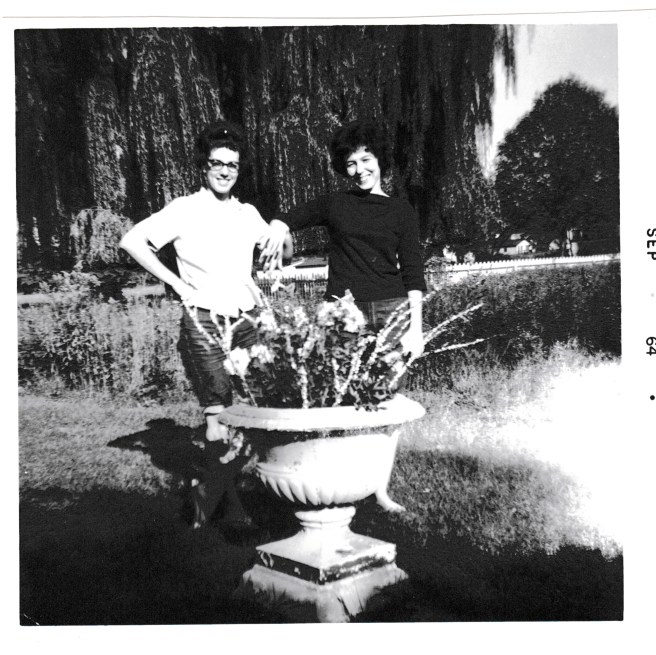
Shirley (18) on the left, Charlotte (19) on the right. September 1964. Photo property of Marie A Bailey.
Charlotte passed away on November 25, 2022. In the last few weeks, she went from being full of energy and living independently to needing oxygen 24/7 and home health services. Instead of stabilizing, her breathing got worse, and then she got pneumonia. The last time I talked to her, two days before she died, she could barely talk.
Although Charlotte lived in Florida and I saw her more than I saw Shirley, I didn’t know her as well. She was 13 years older than me and very private, at least with me.
I do know that she was resourceful, doing everything from working as a health aide at a nursing home to taking care of laboratory mice for a research team. I know she loved to sing. I know her favorite song was “My Way,” which was how she lived her life.
She thought she was invincible. Occasionally a health problem would push her down, but she’d get right back up, dust herself off, and carry on as if nothing had happened. If you asked her how she was doing, she’d respond, “I’m fine. Why wouldn’t I be?”
I had come to believe she was invincible until the phone call that told me she no longer was.
Circa 1980. Marie (me) on the left, Charlotte on the right.
My mother and Charlotte were very close, and so my mom is devastated … again. Where is the joy in old age when it means watching your children die?
Comments are closed. I’m going to crawl under a rock and hibernate until the holidays are over. See you all on the other side. And, please, never forget to say “I love you.”
This week, Anne leads the photo challenge with “Wildlife Close to Home”: “Stop. Look. Listen. Doing those three things will help you discover the abundance of wildlife you have nearby.” I stop, look, and listen a lot on my walks in the hood and even in my own backyard.
You might recall that my husband gave loaned me his Lumix GX85. So far I’ve been pretty pleased with the quality of photos I’m getting. As always, my favorite subject: the humble bumblebee.
We’re making an effort to attract bees, butterflies, and hummingbirds to our little slice of suburbia. The following photo shows a shrimp plant that, on any given day, will have two or three bees slipping in and around its flowers. I am utterly amazed by this plant. It wasn’t blooming at all the first couple of months. I transplanted it during that time, but still no blooms. Finally, I moved it to a much bigger pot and now I have 20-30 blooms on it!
Shrimp plant. Looks good enough to eat!
There are wilder places than our backyard. One of my favorites is St. Marks National Wildlife Refuge. We went out there this past Monday (a gorgeous, cool, sunny day) on our bicycles. We took a break at one of the two concrete bridges that we cross over. We delighted in the spectacle of a number of insects enjoying the yellow centers of the Climbing Aster.
This here is a type of bee making hay with a Climbing Aster. Taken with my iPhone 8 Plus.
I really struggled to get a good shot of the bees (they were moving too fast). Here’s a photo with just the flower so you can see how pretty they are.
Climbing Aster. This one I took with the Lumix GX85.
The refuge would not be a refuge without an alligator. We found this one “dozing” at the first concrete bridge we crossed. When we came back this way a few hours later, he/she/they were still there. The day wasn’t too cold, but cool enough for the alligator to go into a kind of stupor. Still, I was more than happy to stay on the bridge and just admire it.
Alligator doing what alligators do when they’re on the chilly side. (Taken with my iPhone 8 Plus)
Now for a change of pace. Several months ago we went to Mashes Sands Beach, a funky strip of sand along an estuary. I love going there because there’s always something interesting to see. On this day, I was playing with my old Canon T3i and a telescopic lens. This is an osprey on the hunt.
Osprey on the hunt. Taken with a Canon T3i and telescopic lens.
Last, but never least, one of my favorites from springtime at the St. Marks National Wildlife Refuge: the bum of a bumblebee as it tears through a thistle.
Bum of a bumblebee on a thistle.
Thank you for visiting!
If you care to join in the fun, remember to tag your post with Lens-Artists and make a link to Anne’s post.
A couple of months ago I signed up for SmokeLong Fitness Community Workshop. It’s all flash, all the time. I’ve since learned that I can write to prompts quite happily if I’m given an example of a response. My creative battery is apparently sparked by other people’s creativity. We’re given relatively small word counts (for example, less than 500 words), challenging us to make every word count. The word counts also make it manageable to read and comment on my group’s drafts.
I participated in September and October and am taking November and December off to work on my so-called novel. I do miss the community. Although we were put into different writing groups at the beginning of each month, each group quickly created a safe, supportive environment.
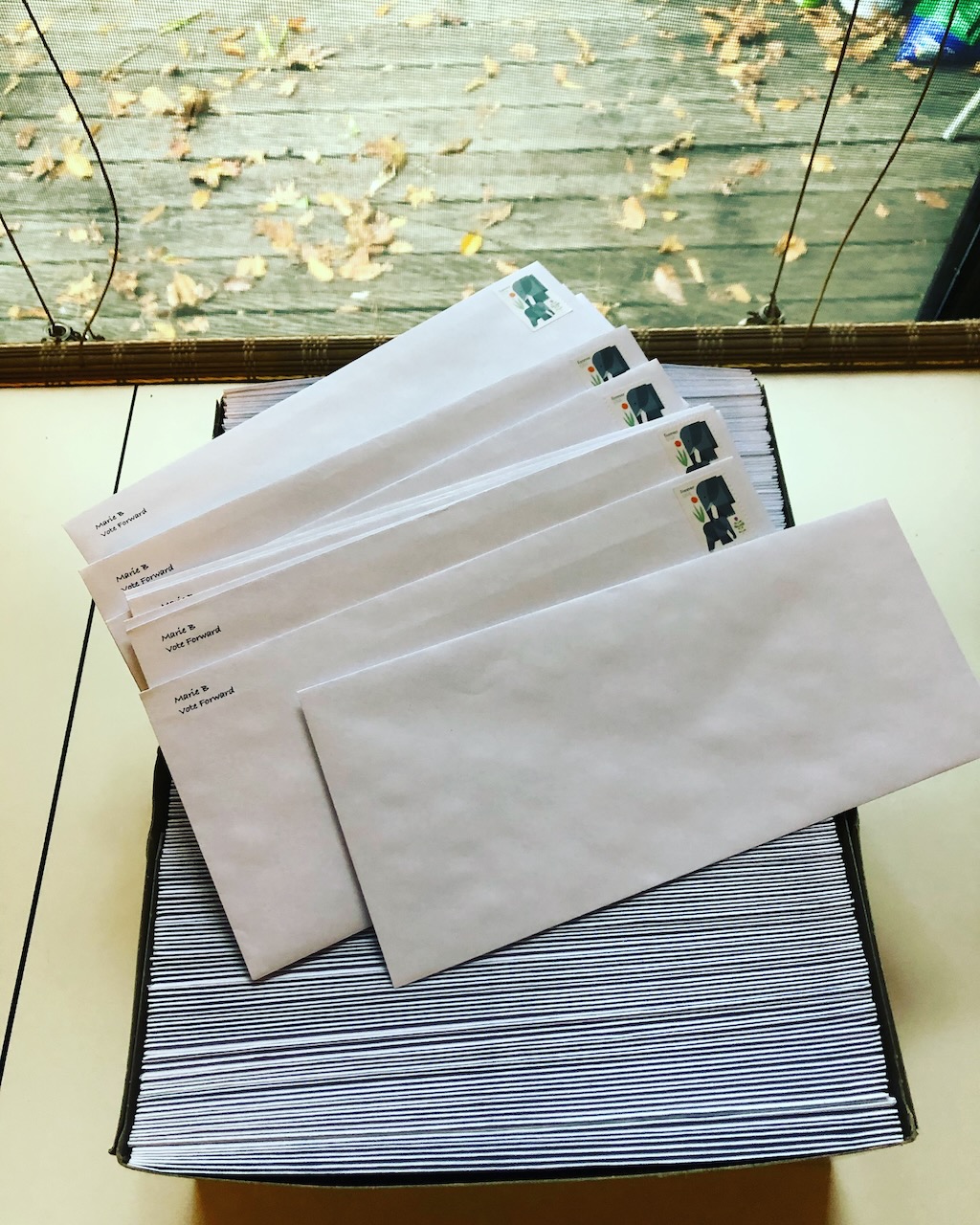
The other big thing I’ve done was write letters for Vote Forward. The organization provides the letter template and voter names and addresses. In turn, I provide a handwritten message encouraging the letter recipient to vote as well as envelopes, stamps, and the printer to print all the letters. (If you cannot afford to buy your own materials, Vote Forward has letter kits you can request.)
Based on their research, Vote Forward found that voters who receive these handwritten, personalized, and NONPARTISAN messages are more likely to vote. Yeah, I cannot encourage anyone to vote a certain way. Just. To. Vote. I managed to send out 250 letters on October 29 to voters in Florida and Pennsylvania.
My nicely packed box of letters encouraging people to vote.
Currently, Vote Forward has a call out for letters to Georgia. Guess I’ll have to participate in that too.
When not writing, I’ve been playing with photography. Although my husband knows I’m saving for an iPhone 14 (for its mega-megapixel camera), he’s given loaned me his last acquisition: a Lumix GX85. It’s smaller than the Canon T3i that I bought years ago and is fitted with a macro lens. The key is learning how to use it. In fact, he handed it over to me because he got impatient with trying to figure out how to use it. I have a steep learning curve with this one, but I’ve started playing around.
Below is a photo of an orb-weaver that has built a home between a corner of our house and a Sabal palm. This was taken with my iPhone 8 Plus, using the wide-angle lens, and is about the closest macro shot I can get with good detail.
An orb-weaver fixing up his/her web.
Now here is the same spider with the Lumix:
Spin little orb-weaver, spin it, spin it.
Obviously closer, but still not as detailed as I’d like.
But I’m working on it. The next two photos were also taken with the Lumix. I edited them slightly.
Macro of one of many Georgia Asters blooms.
Camilla from a neighbor’s tree (or bush … it’s pretty big so … tree).
Finally, here are a couple of photos I took of the Blood Moon with my iPhone and my husband’s big-ass binoculars.
First shot of Blood Moon on Election Day.
The Total Lunar Eclipse, or Blood Moon rising on Election Day.
I’m really not a morning person, but given that we could see the moon from our driveway, I got up with my husband at about 4:30 AM to watch the eclipse and take photos.
This brings me to the other “thing” that’s been going on with me: my chronic neck pain. It was pretty bad a few weeks ago, enough to send me to the chiropractor for treatment and guidance. During the next two-and-a-half weeks I applied a heating pad to my neck for 20 minutes several times a day and did stretching exercises. I also tried an assortment of anti-inflammatory drugs and CBD salve with mixed results. Trial and error. Finally, we got me to a point where my pain has lessened and my range of motion has improved, but I’m not 100%. In all likelihood, I will never be 100%. This isn’t “woe is me.” Now that the worst is over, I can always say it could be worse.
What I need to do–besides taking NSAIDs intermittently and applying heat and stretching regularly–is avoid activities that aggravate my arthritis. Activities like looking through my husband’s big-ass binoculars at the Blood Moon or working too long at my computer. I have to remind myself to take a lot of breaks … something I’m not really good at.
And, last but not least, I’m still grieving. Some days I’m okay. Maybe I can say most days I’m okay but as I type this, I feel the tears start to well up. Writing helps somewhat and since my last blog post, I’ve written two more essays about my sister for my publication on Medium:
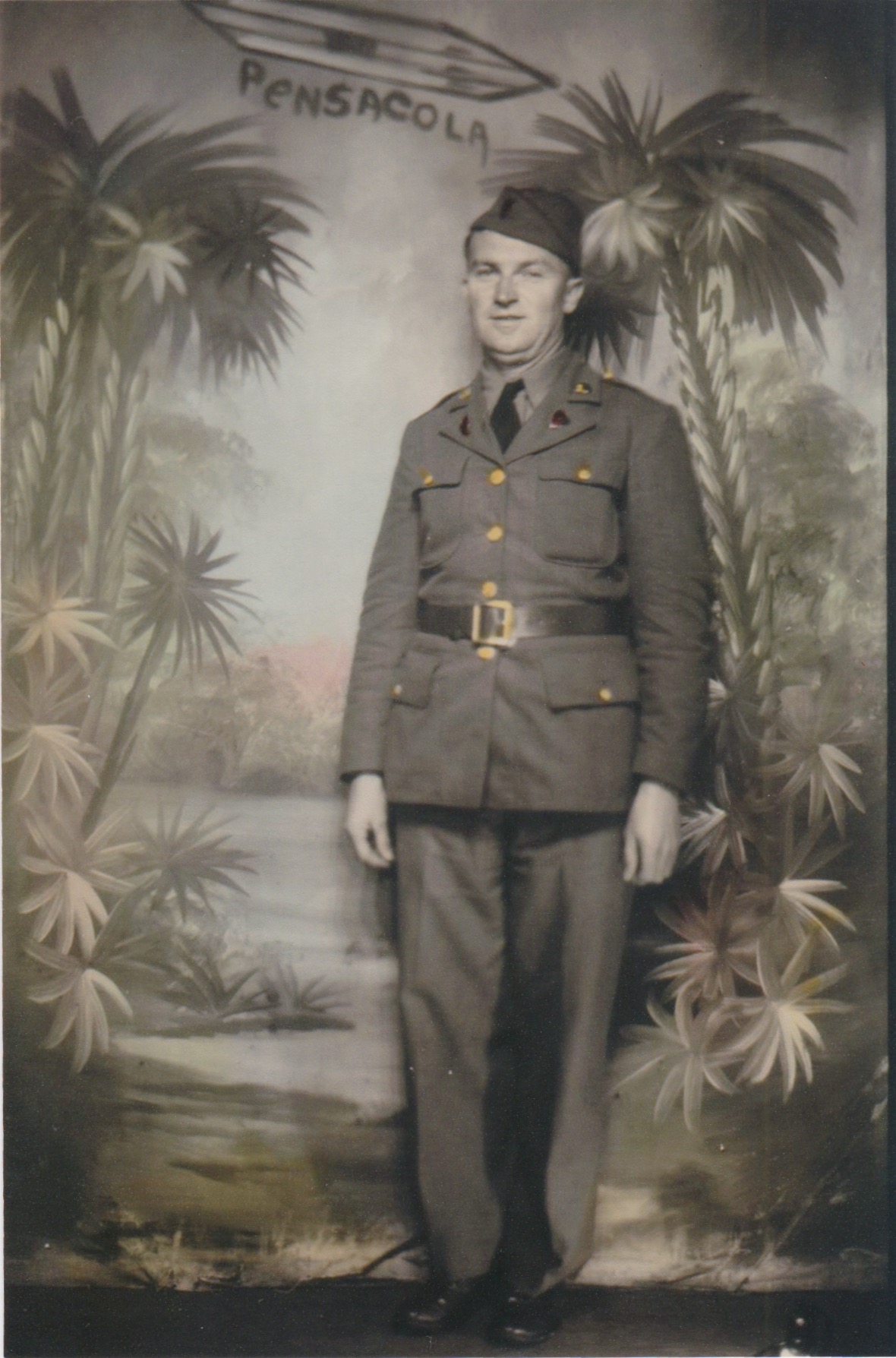
Ted Albers, all dressed up and ready to go serve his country.
To honor my many family members who have served in the military …
To honor my dear surrogate grandfather, Ted Albers (RIP), who was drafted into the Army at the age of 34, captured at the Battle of the Bulge, and held as a POW under the end of WWII …
To honor my husband, a Vietnam-era Navy veteran who flew in P3s looking for Russian submarines …
To honor them, I’ve made a donation to The New York Bar Foundation’s fundraiser to assist veterans in need of legal services (https://nylawyerslovevets.swell.gives/).
Don’t just thank a veteran for his or her service. Hug them. Hold them close and tell them you love them. Support them. Make sure what they fought for is not denied to them.
I always review a book of poetry with some anxiety and exhilaration; anxiety because poetry is in the eye (ear/mind) of the beholder, and exhilaration because poetry is in the eye (ear/mind) of the beholder. I’d argue that I don’t know what “good” poetry is, only that if I like it, I like it. That’s the anxiety part, the sense of feeling like an impostor for reviewing work for which I have no expertise. But what I find exhilarating about reviewing poetry is that sense of discovery as I consider the language of the poems, the images and the feelings provoked by the poems.
And so … I approach my review of Luanne Castle’s latest poetry collection–Rooted and Winged–with both anxiety and exhilaration. Let’s put aside my anxiety … no, wait … let me address my anxiety briefly because it is important.
For a long time after I received this lovely volume, I couldn’t read past the first poem, “Tuesday Afternoon at Magpie’s Grill.” It was the anxiety of self-recognition. This poem immediately stirred memories of myself at various stages of life, scribbling away in a notebook in a feverish worry that, without a record, I wouldn’t exist.
Without a record, will I hear the ice crashing into the sink, the Dodger talk at the bar at the end of the room under the Miller Lite neon confident and beckoning?
Of both of us, our mothers would say, “In one ear and out the other.” Yet, with Castle, the words flow in and swirl around and busy her mind and set up shop, with no intentions of leaving her head anytime soon. Further into the poem, she writes, “I will never / capture the ease of wind-filled wings.” Oh, how wrong she is there. Although this is the first poem in the book, I’m already lifted into flight.
Now for my exhilaration in reading these poems.
How can a poem do so many things:
–“Tuesday Afternoon at Magpie’s Grill”
How can poems lift one into flight but also root one into the earth? Castle’s poetry does just that. She intersperses poems of her familial history and memories …
Even before us, they plowed fields and sewed leather onto soles, their lives spun from the loom beneath them.
–“Gravity”
… with poems of furred and feathered visitors to her home, where she is rooted …
But I remember hawks heavy-winged above me, the gliding and patterns and power in the sky. […] To catch her without flight is the catastrophe.
–“Without Flight”
I soar as I read these poems, yet I also feel grounded, recognizing that while I am of the earth, I’d give a lot to fly with the birds.
We could puff into the blue like clouds. Why hasn’t one of us learned to fly? What keeps us pointed downward?
–“Gravity”
And yet …
Even birds and bats fall to earth when they die
–“The Purpose of Earth”
Eventually, we are all–furred, feathered, and naked creatures–part of the earth. We are all rooted, even if some of us are winged and can soar. And with these poems by Luanne Castle, we can all enjoy “the ease of wind-filled wings.”
Recently I was the lucky recipient of a free AUDIO version of Fatal Rounds, Carrie Rubin’s latest novel. Y’all know how much I enjoy audiobooks. Although I disdain multitasking, audiobooks are what get me through hours of housecleaning, walking, and knitting. So when I learned there was a raffle for a free audiobook, I got as many raffles as I could. And, yay, I won!
Fatal Rounds is the first in what appears to be a series (well, part of the title is Liza Larkin Book 1 … heh heh). Larkin is an odd character, although you don’t know that right away. She’s a new pathology resident at her second-choice hospital, second-choice not because her first choice turned her down, but because the second choice is where her stalker works. Yes, Larkin has a stalker and she’s decided to stalk him in order to find out why he is stalking her. This is all in chapter one. Talk about hitting the ground running.
The decision to stalk her stalker is the reader’s first clue that Larkin is not your average pathology resident. She’s different, and Rubin carefully and with great sensitivity teases out Larkin’s issues. First, her mother has schizophrenia, exacerbated by the untimely death of her husband. Second, Larkin herself has schizoid personality disorder. Her diagnosis is not interchangeable with her mom’s, and it’s a complicated diagnosis. Some labels fit her, and some don’t. What keeps her together is recalling her father’s words: “You are not a list of symptoms, Lisa. You are not a diagnosis. You are you, you are special, and you are wicked smart. Most importantly, you have a good heart.”
That Rubin includes all this info in the first couple of chapters is so important. Larkin and her mother are not stereotypes lifted out of the Diagnostic and Statistical Manual of Mental Disorders. That is made clear right away, as is the fact that people, even those who are well-meaning, will revert to labeling when they feel afraid, threatened, or just confused. That’s why I consider this novel a kind of short course on psychopathology. Not only does Larkin struggle with her own anti-social tendencies and anger management issues, but she also has to help manage the ebb and flow of her mother’s psychosis. The reader learns a lot about the fine lines some people like Larkin have to walk.
Off the bat, the reader is sympathetic to Larkin. She’s honest about her issues and protective of her mother. You don’t blame her for wanting to figure out why the stalker–Dr. Sam Donovan, trauma surgeon extraordinaire–seems to have an interest in her. But, also because of her issues, as she takes risks to follow Donovan, snoop on him, and build a case against him, you start to wonder whether she is imagining things. At least I did.
I started doubting Larkin’s mental stability, but, as if Rubin knew that would happen, Donovan started showing his ugly side, the cracks in his otherwise perfectly polished armor. Rubin’s timing in this novel is perfect, and the boxing metaphors that Larkin uses to describe her challenges with Donovan are well done.
Larkin goes so far as to risk her residency, ultimately her career, when Donovan wins a few rounds. Before Larkin realizes it, a lot more than her residency is at stake. Donovan knows that losing her residency won’t stop her from trying to prove he’s guilty of murdering former patients. So he goes after those closest to her, the few people in her corner.
Whoa. While I didn’t listen to the audiobook in one sitting, I did do about five hours of housework listening to it. And, believe me, only a riveting thriller such as Fatal Rounds could get me to do five hours of housework.
The story didn’t end when I thought it would end, and at first, I wondered, what more needed to be said? As it turns out, plenty needed to be said. There were the usual loose ends that needed to be tied up, but I really appreciated the final chapter. The reader, at least this reader, needed to sit with Larkin in her psychiatrist’s office and consider the questions he poses to her. Were there alternatives to the choices Larkin made in her pursuit of Donovan? Did she have to take the risks she took? You tell me after you’ve read Fatal Rounds.
I thought Wednesday was Saturday but I knew Thursday was Thursday and, so far, I’m confident that today is Friday (and my calendar says so too). Tomorrow should be Saturday and I just hope I don’t think it’s Wednesday because I have a couple of appointments and getting my days wrong would really screw things up.
I’m still backsliding on blogging and keeping up with blogs (as in, I’m not keeping up with blogs), but I have been writing a bit. Most of my writing has been on Medium mainly because I submit to publications there. I don’t crow about these publications because, although some of them do offer some good reading, I frankly don’t equate getting published in a Medium publication with getting published in a mainstream literary journal. The truth is, I’m always suspicious when my writing is accepted generally as-is, with perhaps only minor reformatting or editing. But maybe my writing is that good. What do I know?
In any case, here are a few of my most recent essays and stories. The following are “friend” links meaning you do not have to be a paid subscriber to Medium to read them, although you will probably have to open a Medium account if you don’t already have one:
I also started my own publication on Medium but it’s only for my writing. It’s called “One Sister’s Journey Through Grief,” and I’ll be using it to share my journey of learning to live with my grief over losing my sister. So far, I’ve published two essays there:
I’ve been toying with the thought of also using Substack for my writing. I follow a few writers on Substack, and I’ve only seen one writer (so far) who has the same readers on both Substack and Medium … but she writes about Medium so that’s probably why. Anyway, the idea is to expand my “audience” so to speak. And, while I’m used to WordPress and have had this blog here for a gazillion years, the platform can be clunky and temperamental. Life is getting shorter. I like going with the flow but feel I have less time for the ebb.
Meanwhile …
I’ve joined the SmokeLong Fitness Community Workshop which started on September 1 (that was Thursday). You can read about it in detail here: SmokeLong Fitness Community Workshop. Basically, I pay a monthly fee to be part of a small group online workshop. Every week we’ll be given a writing prompt, and we’re expected to provide feedback on each other’s writing. SmokeLong Fitness also includes monthly webinars, discounts on intensive workshops, and “surprises.” It’s only been a couple of days but I’m feeling psyched (and anxious) about writing and reading in a small group. I still have my novel to work on, but I’m hoping that being prompted to write flash [fill in the blank] will oil my writing gears and get me back on track.
Meanwhile …
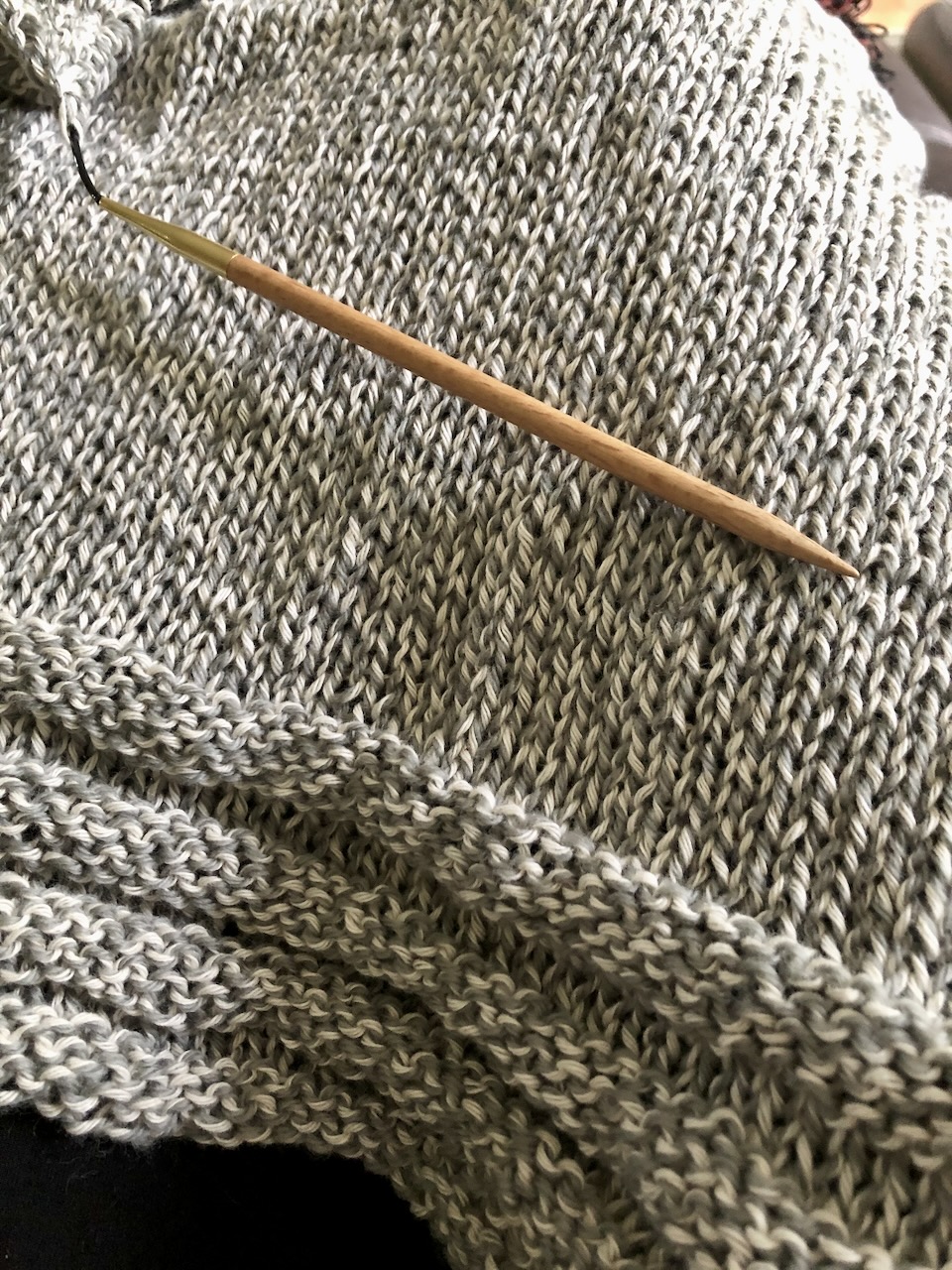
I’m knitting.
The beginning of a cardigan!
We decided to get out of town for a couple of days and at the last minute, I grabbed a kit for a knitted cardigan to take with me. That was Tuesday, August 23. Today is Friday, September 2, and I’ve completed the back, left and right front panels, and one sleeve. Woo-hoo! At least I’m on a roll with my knitting. This might be the fastest I’ve ever knitted a cardigan. The key thing for me is to keep momentum and not stall when all the pieces have been knitted and it’s time to stitch them together. Finishing a project (much like editing a novel) is my least favorite part of the process.
Did I mention that I now take two Excedrin first thing in the morning, followed by a caffeinated drink? Caffeine is this writer’s little helper.
I close this post with one of my favorite photos of my sister Shirley (courtesy of my niece-in-law).
Anne Sandler from Slow Shutter Speed leads this week’s photography challenge with “what’s your photographic groove?” What a great question!
At heart, I’m a minimalist … although if you saw my bedroom/workroom, such a thought would have you laughing your arse off. By minimalist, I mean I don’t like having a lot of gear, which is why I really regret attending the going-out-of-business sales of a local quilting shop several years ago. I still have a lot of that stuff! But back to photography …
I still play around with a Canon Rebel T3i that I bought over ten years ago. My husband (who does love gear) provides me with nice macro and zoom lenses, and I can neatly fit the camera with the two lenses in a small case … which then weighs a ton. I fantasize about taking the camera and lenses with me on my morning walks, but I always have an excuse not to. One excuse is that it might be picking-up-litter morning, in which case I’ll also be carrying my gripper and a 13-gallon bag, which, in all likelihood, will be full by the time I get home. Another excuse–the more common one–is that I have my phone if I feel compelled to take photos. Besides, isn’t it more important to enjoy the sights and sounds of nature without always trying to “capture” it?
I try to do both.
Here’s where we get to my groove. My iPhone 8 Plus suits my minimalist nature. While I might have gotten better photos with my Canon, I feel satisfied for now with what my iPhone can capture. Case in point: the Pleated Inkcap (Parasola plicatilis), a fungus I found on a recent morning walk.
For scale, here’s my left index finger pointing to a Pleated Inkcap.
Dainty little things, aren’t they? One of the things I enjoy about photography in general and macro photography, in particular, is that I “see” more. These fungi sit close to the ground, and there was just one bunch of them. Still, to my delight, my eye caught them.
Don’t they look like dainty little flowers or parasols?My iPhone was almost flat on the ground in order to get this photo.This should give you some perspective on how low to the ground these fungi are.
So I guess my photographic groove is macro with an iPhone 8 Plus. For now, anyway. I’ve heard that the iPhone 14 is supposed to break new ground in iPhone photography. We’ll see …
If you want to participate in this challenge, please link to Anne’s original post (click here) and use the Lens Artists tag. As the LAPC team resumes rotation, Patti will present next week’s challenge. Be looking for her post. In the meantime have fun and stay safe.
Yesterday Road is my all-time favorite novel by Kevin Brennan. This week the Kindle version is free. Here’s a snippet of the review I wrote: “Yesterday Road is a humorous, poignant, action-filled, meditative literary novel. To describe it with these adjectives makes me feel like I’m contradicting myself, but I’m not. Brennan has managed to write a novel that is as much a page-turner as a thoughtful exposition on memory.” You can read the whole review at https://1writeway.wordpress.com/2013/10/22/a-traditional-kind-of-book-review-yesterday-road/. But I’d prefer it if you read the novel itself. Click here.
Time for another Summer Reading freebie, and this month it’s my second novel (and first indie), Yesterday Road.
I have a special place in my heart for this book because it brings together three of my favorite characters: Jack Peckham, the octogenarian who just wants to find his way home; Ida Pevely, the diner waitress with a heart of gold who’s called into service to help two wayward innocents; and Joe Easterday, a young man with Down syndrome on the adventure of his life. I really came to love all these guys in the writing of this one.
Here’s the blurb, in case you’ve forgotten:
In this “coming-of-old-age” tale, Jack Peckham finds himself on a journey into his distant past, helped along the way by Joe Easterday, a young man with Down syndrome, and Ida Pevely, a middle-aged waitress with her own mountain of regrets. Jack has…
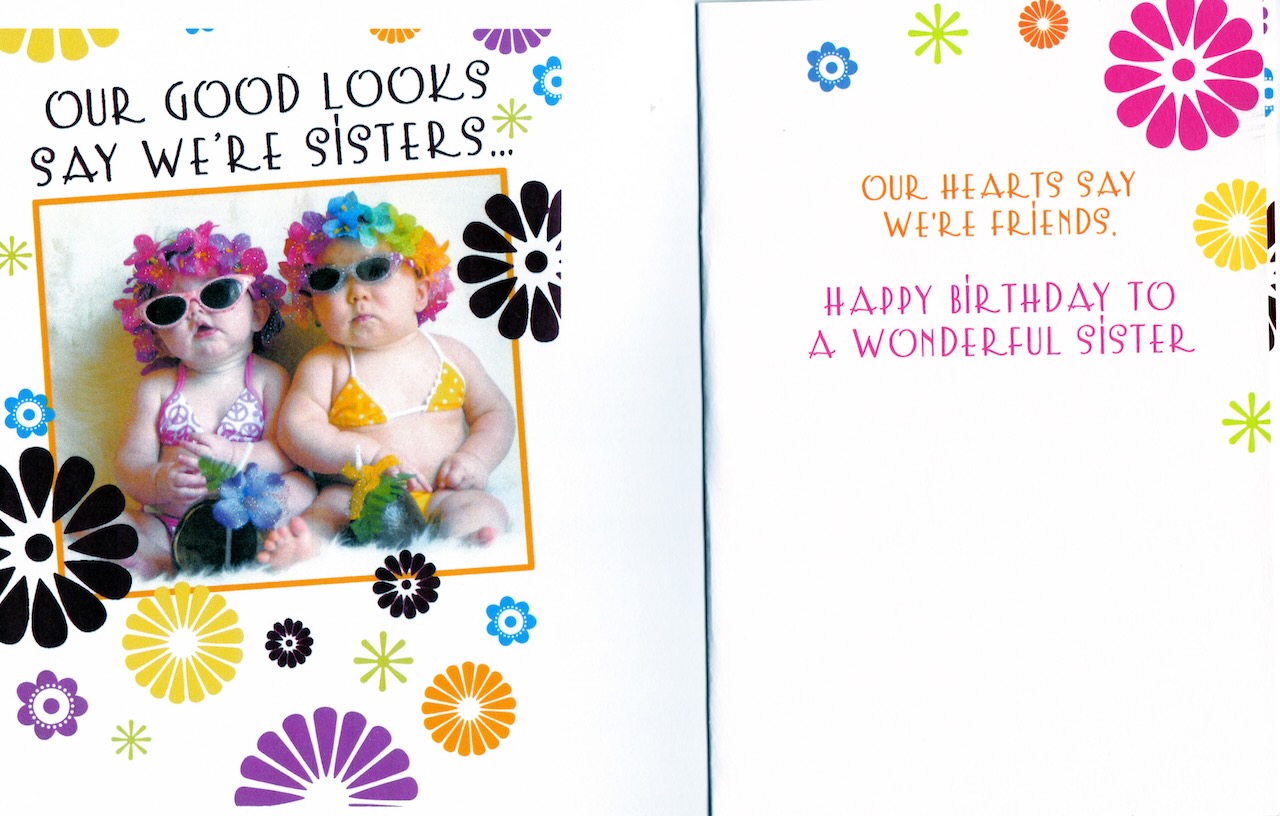
August 2 is my sister Shirley’s birthday. She would have been 76 today. Here’s the birthday card I bought for her a couple of months ago.
I think she would have gotten a kick out of it.
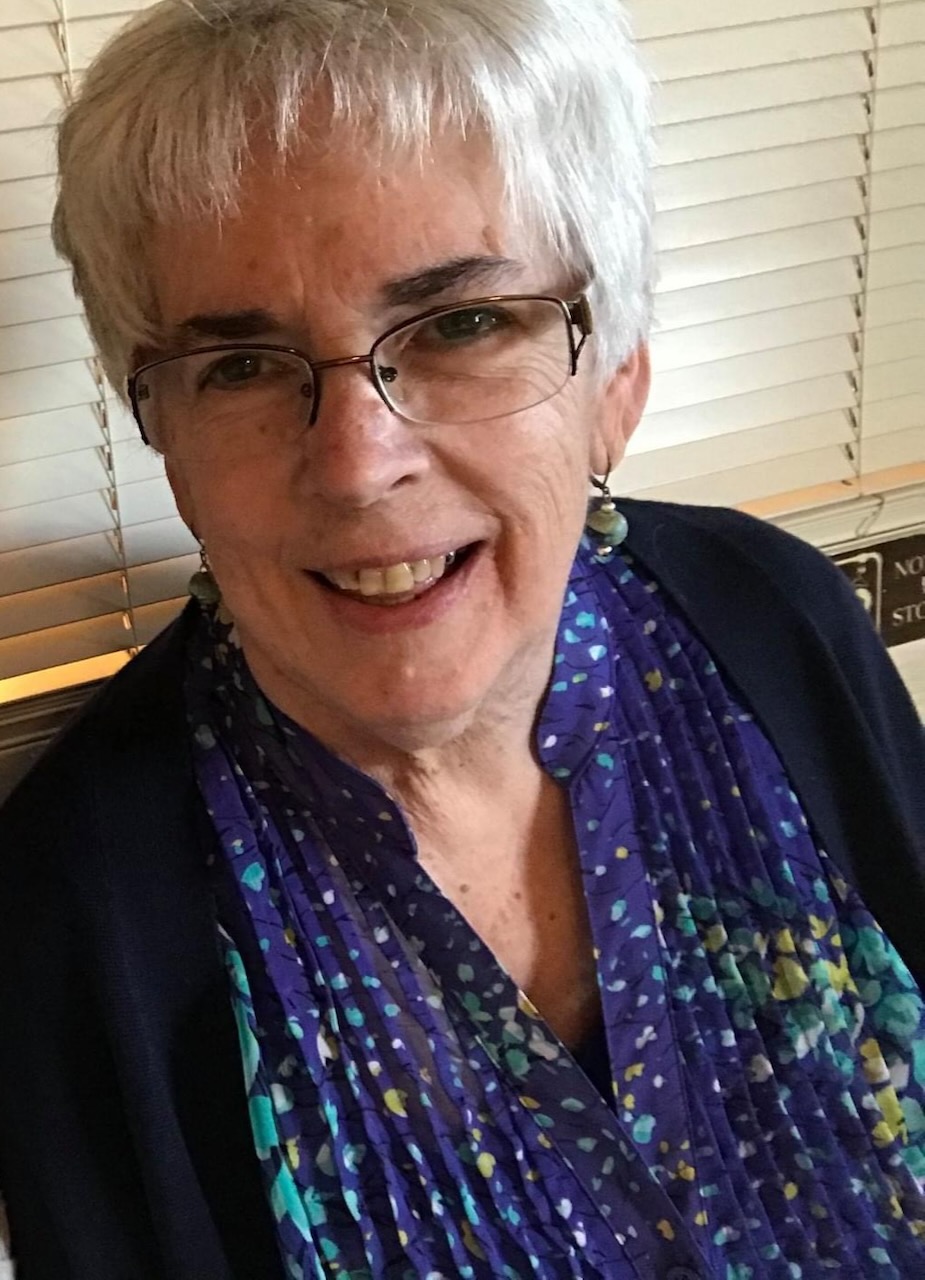
During the viewing and funeral in early July, many people came up to me and said I looked just like Shirley, that I could be her twin. Growing up, I never really saw the resemblance.
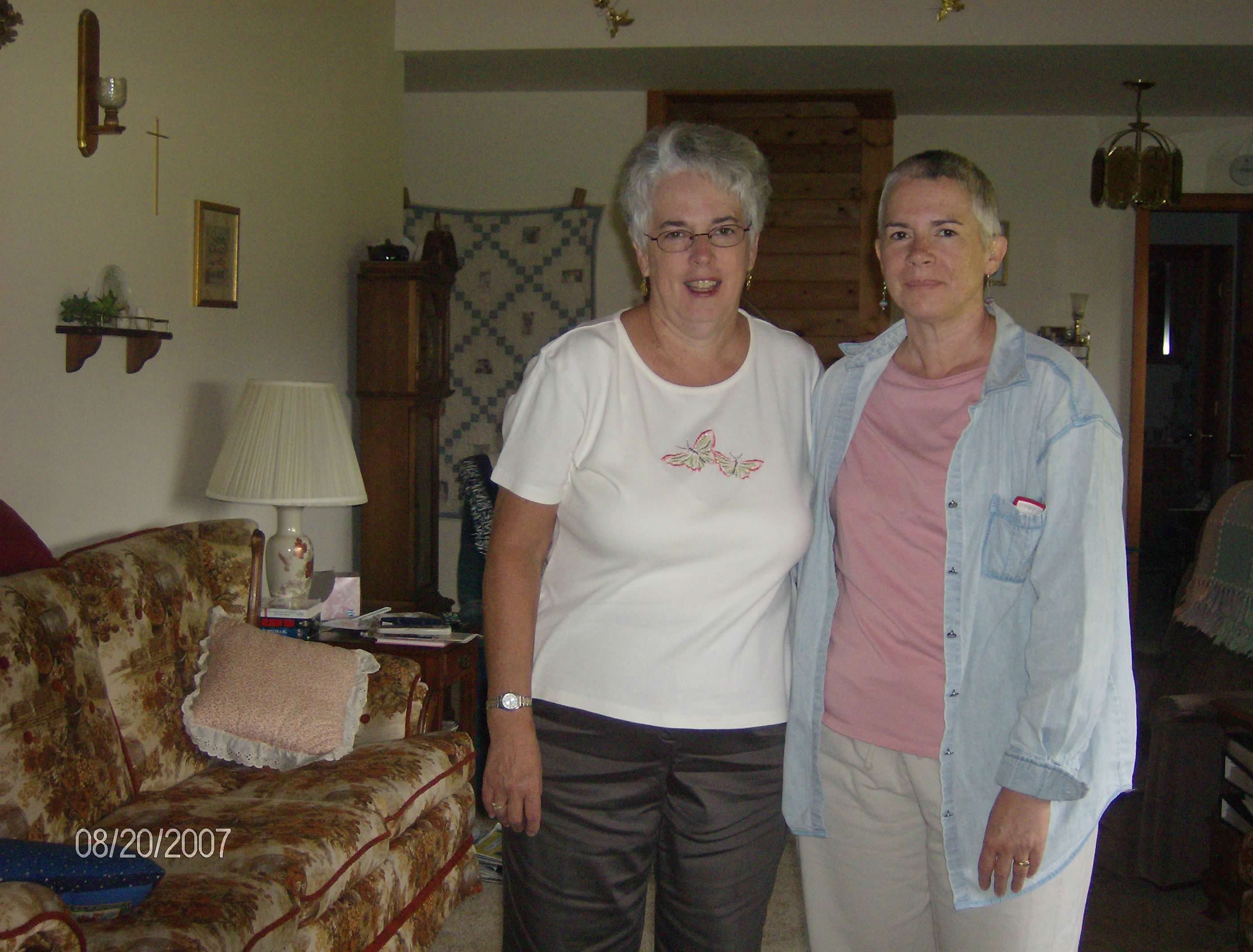
The sisters in 2007. Shirley is on the left, me on the right. Note that in this photo I have 20% less hair and 20% more body fat than I do now. Just saying …
I was blinded by our age gap. Now when I see photos of her, especially those from when she was in her 20s, I’m stunned by how much I looked like her when I was the same age. It makes me both happy and sad. I’m happy that when people see me, they see her too. I’m sad that I only came to know this now.
In any case …
Happy Birthday, Shirley! I love you and miss you bunches.








 Marie at 1 Write Way