For this week’s challenge, Tina encourages us to “explore the habitats of both human and/or animal “residents.” She includes a quote by the Dalai Lama:
The reality today is that we are all interdependent and have to co-exist on this small planet.”
Sadly, interdependence, biodiversity, climate change are all “dirty” words here in Florida. At least, officially “climate change” can no longer be referenced in any government document. As if climate change won’t exist if the words aren’t spoken or written.
Thankfully, near us is a very special habitat that nurtures biodiversity. A place that I frequently write about.
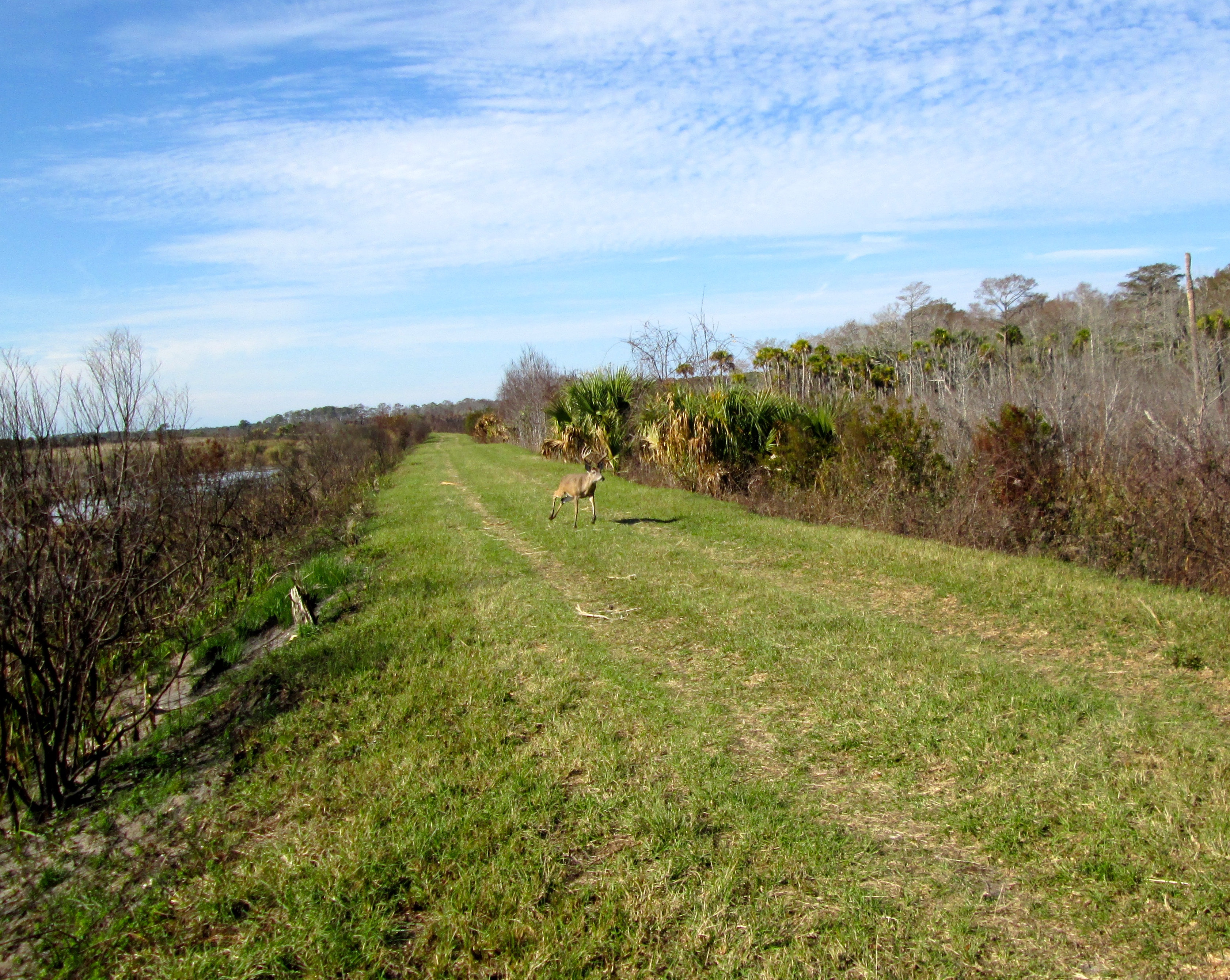
Some of the following photos are old, of the BCP (Before Cell Phone) Era. They represent various views of the St. Marks National Wildlife Refuge (SMNWR) over the years. As many of you know, SMNWR is a favorite place of ours for bicycling. (It used to be a favorite place for hiking, but our feet, knees, and backs won’t tolerate those long walks any more.)
SMNWR provides habitat for deer and a safe haven since the Wildlife Management Area next to the refuge allows hunting during certain times of the year. We see a lot of deer in the refuge when it’s hunting season.
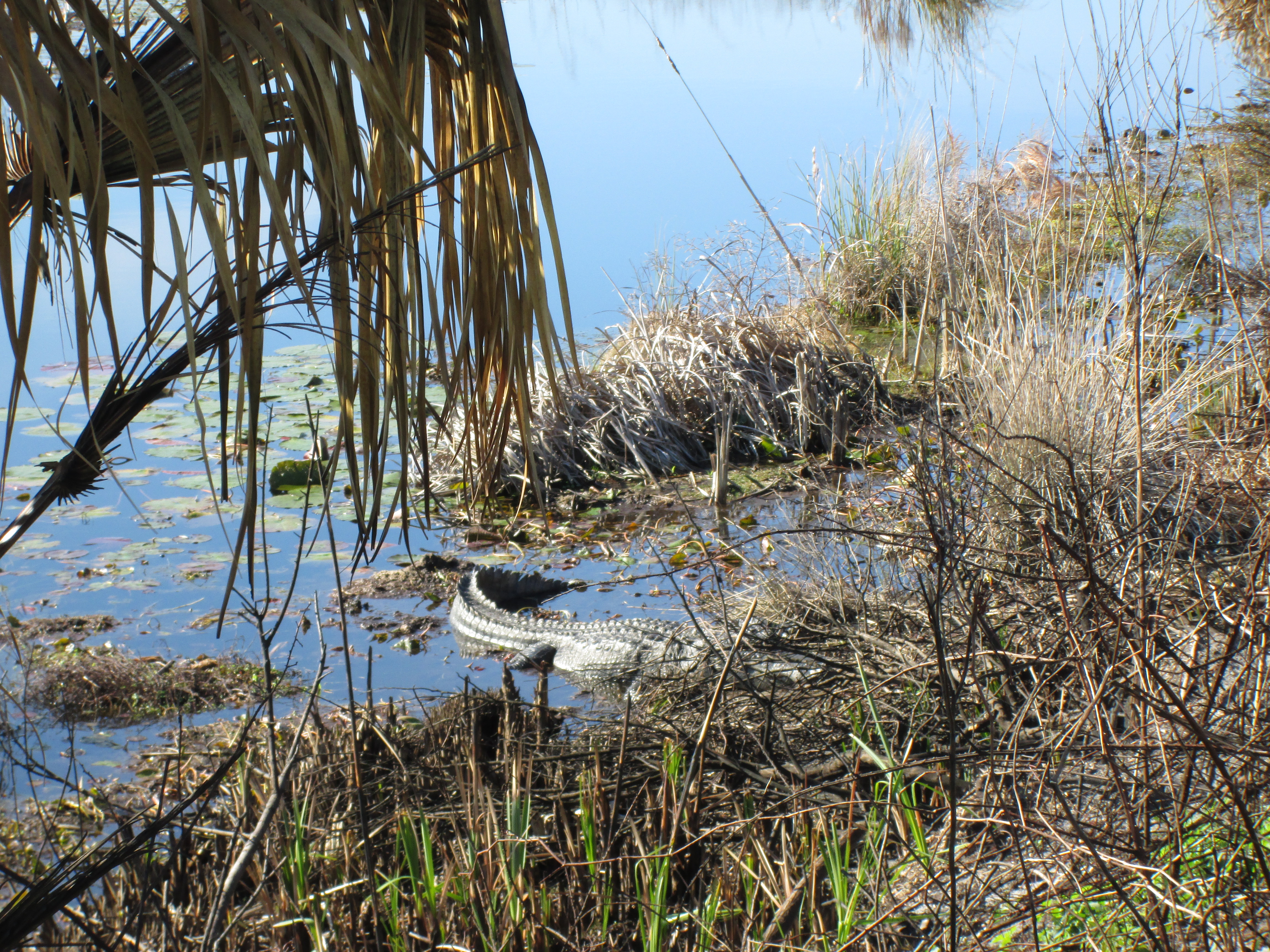
You can’t have a sustainable habitat without allowing some impressive predators to co-exist whether they be snakes, alligators, or bald eagles.


Another favorite habitat is Mashes Sands Beach. It’s what I call a “poor man’s Riveria” as it’s a small beach on an estuary. It harbors a delicate ecosystem. Such as a tiny hermit crab in a tiny shell.

Or many hermit crabs burrowing in the wet sand.

Or an osprey on the hunt.

Then there’s the habitats we create in order to encourage and nurture biodiversity. My husband and I are members of the Xerces Society for Invertebrate Conservation. A modest membership includes a subscription to Wings, a seasonal collection of essays on invertebrate conservation. In the Spring 2024 issue, Scott Black wrote “Planting Habitat as an Act of Hope.” His brief essay did, indeed, give me hope.
Scott wrote about his family’s efforts to transform their lawn into a garden that would provide pollen and nectar for insects. He noted that because of these changes, their “yard has become a magnet for wildlife.” He added:
There is hope, despite what we see in the news. Insects are resilient, and we know that protecting and managing high-quality habitat can quickly produce positive outcomes for insect populations, sometimes within a few years, on a time scale that means we will see the difference.
In our little corner of the world, as my husband and I work to provide a nurturing habitat for bees, butterflies, hummingbirds, and dragonflies, to name a few, in less than two years we are seeing a difference.
An Eastern Carpenter Bee entangles itself in the tiny flowers of an Anise Hyssop.

A Gulf Fritillary feasts on the nectar of a Blue Mystic Spiral.

Another Gulf Fritillary prefers the flowers of a yellow lantana.

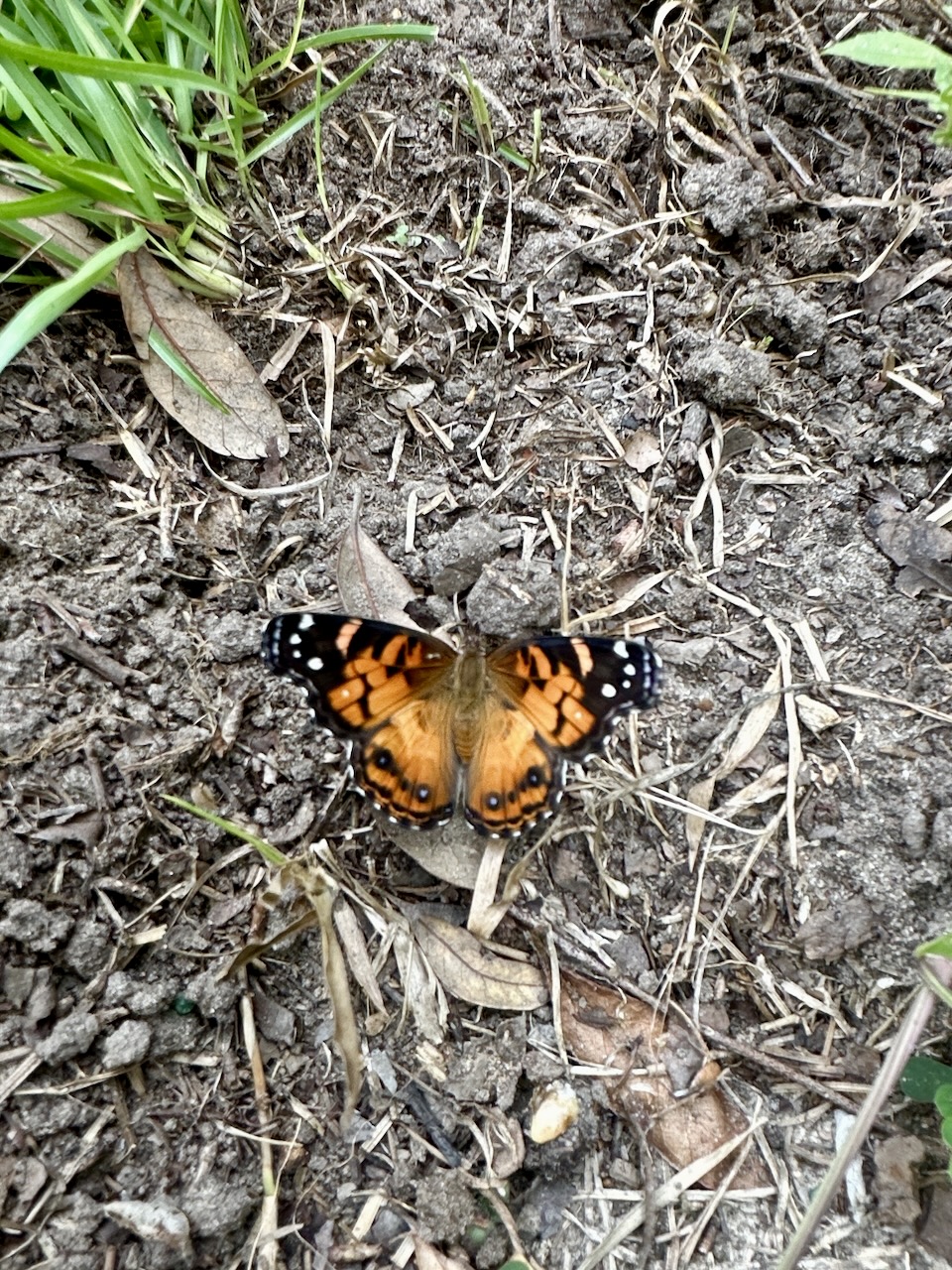
Last month I had the pleasure of an photo op with an American Lady. The butterfly must have just emerged from its chrysalis as it made no attempt to escape my lens.
And while we have several poles placed around our house to accommodate the hunting practices of dragonflies, this one decided he preferred a plant hanger.

Finally, a nurturing habitat is necessary for the domesticated animals in our lives. We are fierce believers in keeping our cats indoors. Over the years, we have had to allow for a few stray cats to live outdoors, although they would always have access to shelter in our garage. This wasn’t because they preferred to be outdoors; it was only ever because our house was already full of cats and we knew (through traumatic experience) that the then-indoor cats would not peacefully coexist with the outdoor cats. Eventually, though, as one cat died, one or two was introduced to the indoors … permanently.
The last cat we brought in from the outdoors was Raji. He was very young when he turned up in our yard almost four years ago. He was a shy, suspicious cat and it took some coaxing and a lot of patience to get him into our garage where we would feed him.
Because he was so young, we didn’t want to let him have free reign outside. We were afraid that he would disappear or get hit by one of the many cars that speed through our neighborhood. But we also needed time. We needed him to accept us before we introduced him to the rest of the household.
So we bought a two-level cat cage and my husband “installed” it on the side deck. We already had a cat-door on the garage door so once the “condo” was installed, Raji could enjoy the outdoors without getting loose.

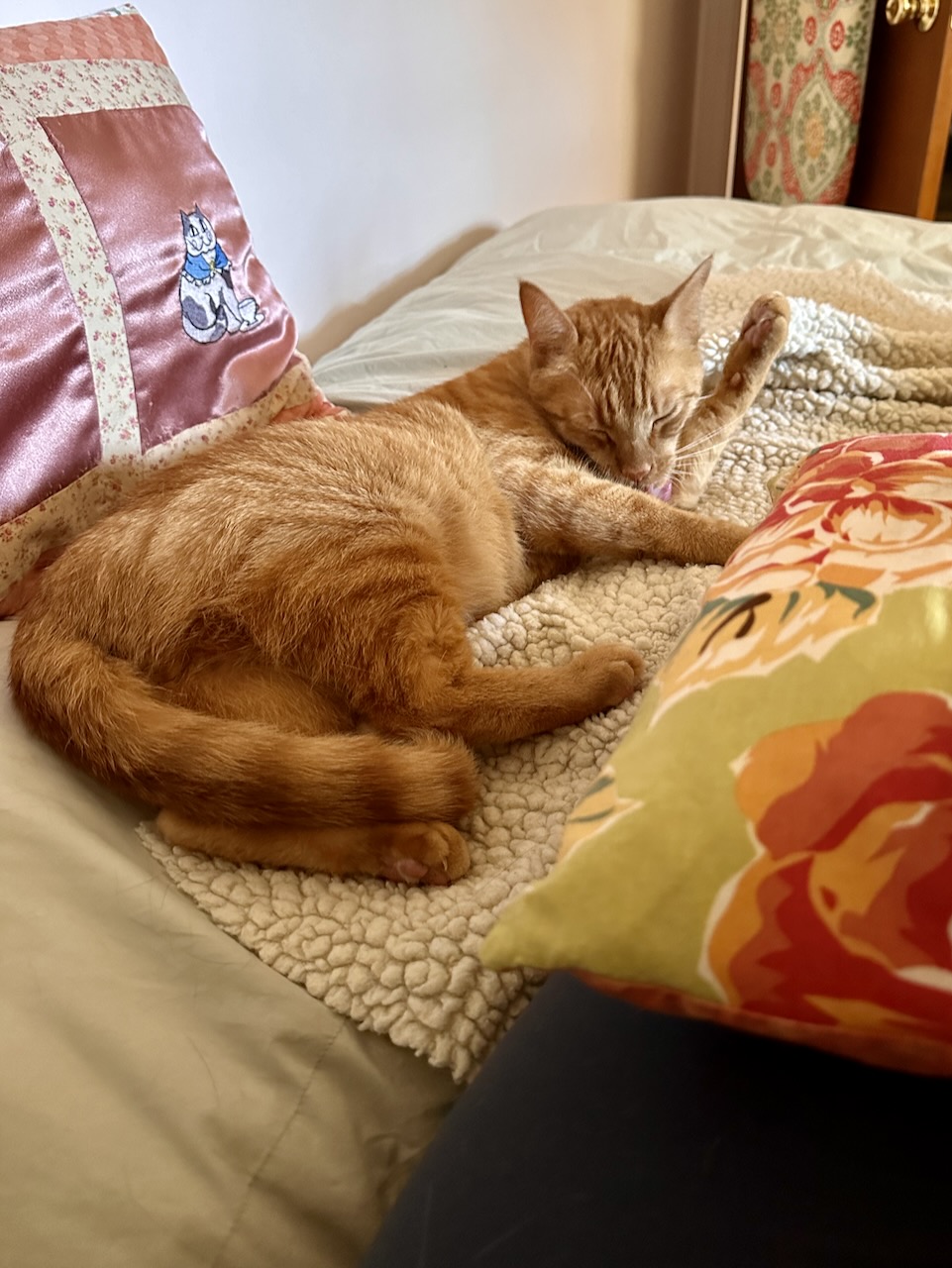
Thankfully, Raji’s habitat is now fully indoors with us and Wendy. Below is Raji in his natural habitat.
Many thanks to Tina for this challenge. I could have kept writing and sharing photos about all kinds of habitats, but, hopefully, the ones in this post will suffice. Habitats are many and varied, some more nurturing than others.
And many thanks to Egídio for last week’s challenge. I am still amazed by how his challenge changed how I see my photos, and how I now compose them.
An important announcement: As in previous years, the Lens-Artists team will be on hiatus for the month of July. There will be no challenge on July 6th, and the rest of the month will be led by several amazing Guest Hosts. They include:
July 13: Leanne of Leanne Cole explores TOURIST ATTRACTIONS
July 20: Elizabeth of Albatz Travel Adventures leads us with PAIRS
July 27: PR of Flights of the Soul presents BALCONIES
The Lens-Artist team will be back on August 3 when Patti once again leads us on her Pilotfish Blog.
For more information on joining our challenge, click here. Remember, if you’d like to participate in any challenge, always include a link to the original post for the challenge, and include Lens-Artists as a tag so we can find you.
Cheers, ciao, and hasta la vista.
 Marie at 1 Write Way
35 responses to “Lens-Artists Challenge #306 – Habitat”
An informative essay, Marie. Your photos were great and knowing you and your husband are helping nature sustain itself is inspiring.
LikeLiked by 1 person
Thank you, John! I do have to credit Greg for having the vision to have the garden planted. It’s a little too hot for us humans to enjoy it right now, but the insects love it 😆
LikeLiked by 1 person
Good for the insects.
LikeLiked by 1 person
You and your husband do good work!
LikeLiked by 1 person
Thank you, Liz! We try 🙂
LikeLiked by 1 person
You’re welcome, Marie!
LikeLiked by 1 person
Marie, it is posts such as yours that give me hope. More and more people are changing their gardens into wildlife habitats. Your photos and stories are beautiful.
LikeLiked by 1 person
Thank you, Egidio! I had read Scott’s essay only a day or so before Tina posted the challenge so that was good timing 🙂 I’m seeing more of our neighbors turning their yards into wildlife habitats which makes walking in my neighborhood that much more enjoyable.
LikeLiked by 1 person
Great photos. BCP! You used a real camera?!?! Love the cat cage.
LikeLiked by 1 person
Thanks, John! Yeah, I had a cheap point-and-shoot for a few years before I got my first iPhone. I pulled the camera out a few months ago and played around with it. Eh, my iPhone has spoiled me.
LikeLiked by 1 person
Wonderful photos, Marie. Wildlife is where it’s at!
LikeLiked by 1 person
Thank you, Jennifer!
LikeLiked by 1 person
Excellent, Marie. If we all did even a small thing we could be in a much better place. Well done to you! Love all your photos.
LikeLiked by 1 person
Thank you so much, Sofia! I’m hoping that we might be setting an example :-)
LikeLiked by 1 person
I loved this photo essay with its explanation of habitats for all types of creatures. You and Greg have worked wonders. Great photos. Of course, I love Raji! 💙
LikeLiked by 1 person
Ah, thank you, Merril! Raji is my star model :-)
LikeLiked by 1 person
You’re welcome. Well, he’s a handsome boy. 💙
LikeLiked by 1 person
:-)
LikeLiked by 1 person
Raji’s transitional living environment is quite impressive. You guys took a lot of time helping ease him into his new safe lifestyle. And he took to it quite well – HA!
LikeLiked by 1 person
Thank you, Laura! Yes, it took time and patience and my husband often worried that Raji would always be somewhat feral. Not any more. While I don’t doubt he would run outside if given the opportunity, he seems content living indoors and, lately, even “hangs out” with us when we’re watching TV :-)
LikeLiked by 1 person
An amazing post Marie, what wonders you have incorporated into your environments! I read a while back about someone in a suburban neighborhood who let his yard develop into an excellent natural habitat and his neighbors were up in arms about his non-conformance with the other homes. Sad but true. Here’s to those like you who are giving nature a better chance to recover. Also loved the habitats in the other areas you featured. Well done!
LikeLiked by 1 person
Thank you so much, Tina! I’ve read about people trying to transform their lawns into wildlife habitats and getting pushback from neighbors. Fortunately, my neighborhood is not like that, although the downside is some people have very junky yards ;-). I am seeing more of my neighbors letting parts of their yard go wild. It makes me happy :-)
LikeLike
So many places and so many differents takes on this post Marie, lovely. the snake would have stopped me on my tracks
LikeLiked by 1 person
Thank you, Ritva. The snake is a harmless one and quite beautiful (the photo doesn’t do it justice). It’s always good to be wary around snakes, though ;-)
LikeLike
Thanks for taking us along on your adventures. Your photos are beautiful. Not sure how I’d have reacted to the snake. You’ve done right by Raj. He’s a beautiful house cat now.
LikeLiked by 1 person
Thank you, Ally! Fortunately that snake is harmless and (obviously) rather docile. Raji is such a cuties :-)
LikeLiked by 1 person
What a wonderful essay. You and your husband are to be commended for all that you do for your ecosystem!
Raj is living the life, tell you what.
LikeLiked by 1 person
Thank you, Dale! We try … and it’s really a challenge when it’s so hot outside. Raji has a very good life, indeed :-)
LikeLiked by 1 person
I hear ya. We do the best we can!
LikeLiked by 1 person
Between palmetto bugs, alligators, and mosquitos that can carry a small dog off, Florida is a nice place to visit. Thank you for the photos and for helping to save the environment down there. My favorite animal lives there.
LikeLiked by 1 person
Thank you, Zazzy! Yeah, we have a few unpleasant things down here. Right now the worst is the heat and humidity. Nothing like having a hot wet towel slapped in your face when you step outside ;-) (What is your favorite animal?)
LikeLiked by 1 person
The Manatee, or course!
LikeLiked by 1 person
Oh, of course! Did I ever tell you how my husband and I almost got capsized by a pod of manatees? We were in our canoe and had spotted a pod of manatees across the river. (Actually, I don’t know if they are pods but for now … ). As we headed back to the boat launch, our canoe suddenly lifted. The pod had come over to us and were bumping into our canoe! One or two even poked their heads above the water to get a look at us … lol. Fortunately we didn’t capsize cuz they would have crushed us. The whole time I was exclaiming, “Oh, my god! Oh, my god!” over and over. The interaction probably lasted all of 10 seconds before they got bored and moved on. But what an experience! I will always cherish it :-)
LikeLiked by 1 person
What a wonderful experience! I’m sure they were just curious about you. Kind of a pity you couldn’t swim with them but they could accidentally crush you and we wouldn’t want that to happen. Did you get to pet them at least?
LikeLiked by 1 person
No, I was too busy trying to stay upright 😂
LikeLiked by 1 person